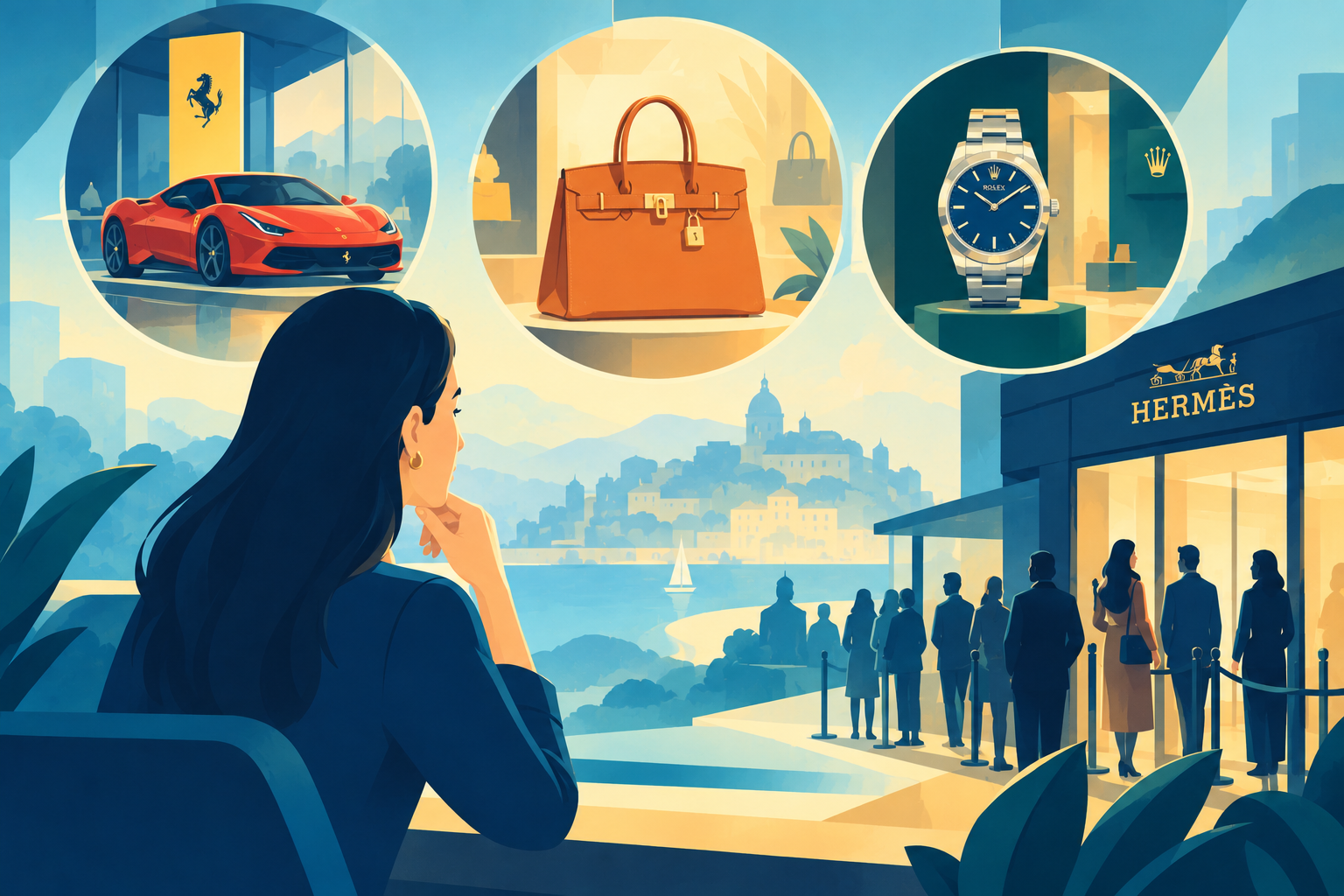
Mass availability is dangerous. See how mastering brand distance turns ordinary products into an unstoppable success.
Looking for a Shorter Overview?
AI Summary
Key Moments
Exclusivity as Core Luxury Model
Luxury brands rely on exclusivity, limiting production to create scarcity that fuels desire and justifies premium pricing.Ferrari Production Limits
Ferrari manufactures only about 13,000 cars yearly—fewer than demand—to generate strong brand distance and command higher prices.Birkin Bag Rarity
Hermès enforces strict purchase practices and long waiting periods, making each Birkin feel rare and driving its value up by roughly 42%.Quality Over Distance
Even wealthy customers reject high‑priced luxury if the product is low‑quality, so durability must underpin any brand‑distance strategy.Ordinary retail companies open stores in many locations to reach as many customers as possible. Luxury brands follow a different strategy by creating deliberate Brand Distance.
Marketing professor Jean-Noël Kapferer has written extensively about luxury marketing and explains that exclusivity is central to the luxury business model. These companies often limit production and availability, making their products harder to obtain. This scarcity can increase desire and allow brands to charge premium prices. Customers may be willing to pay more because the product feels rare, exclusive, and difficult to buy.
How Brands Use Brand Distance to Limit Production
Ferrari follows this strategy by deliberately limiting its production. While mainstream car manufacturers produce millions of vehicles each year, Ferrari makes only a limited number. The Italian factory produces roughly 13,000 cars annually.
Former Ferrari president Luca di Montezemolo explained that the company aims to produce fewer cars than the market demands. This deliberate scarcity creates strong Brand Distance and makes Ferrari vehicles difficult to obtain. Wealthy customers cannot simply walk into a showroom and buy a new red Ferrari immediately. They often have to request an allocation, while the company chooses which buyers can purchase a vehicle. Because the cars are rare and exclusive, customers may be willing to pay a significant premium.
French fashion house Hermès uses strict purchasing practices to preserve its exclusivity. Customers who want a leather Birkin bag usually cannot simply walk into a store and buy one immediately. They may need to build a relationship with the brand and wait months before receiving an offer.
This extended waiting period creates strong Brand Distance and makes the bag feel rare and difficult to obtain. Research from Art Market Research suggests that Birkin bags have increased in value by about 42% in recent years. Customers may be willing to pay more because the bags require patience and are associated with exclusivity, encouraging long-term spending with the brand.
Millions of physical products are sold online every day, but some luxury watchmakers deliberately avoid internet sales. Swiss brand Rolex, for example, often requires customers to visit authorized physical retailers instead of buying directly through a digital checkout page.
This lack of online convenience creates strong Brand Distance. Customers may need to travel to a particular location and speak with a sales representative before purchasing the watch. The added effort makes the product feel more exclusive and difficult to obtain. Some pre-owned Rolex watches even sell for twice their original retail price, showing how limited access can support a premium value.
As we discussed in our previous article about customer feedback, mainstream companies often change their products in response to customer requests. Luxury brands take a different approach and may ignore ordinary shoppers’ suggestions to preserve their exclusivity.
Research from Bain & Company suggests that luxury brands with strong Brand Distance can achieve profit margins of more than 30%, compared with less than 10% for many traditional retailers. Professor Kapferer argues that a luxury brand can weaken its identity if it constantly adapts to customer demands.
Instead, luxury designers create a distinctive style and maintain it consistently. The brand controls the design, colors, and production rather than allowing shoppers to dictate every detail. This consistency can strengthen the brand’s identity and help it lead the market.
Business owners should remember one important limitation of this strategy: Brand Distance cannot compensate for a poor-quality product. Even wealthy customers will not tolerate waiting two years for a leather bag that breaks quickly.
Also read: Why Does Customer Effort Matter Even Before Someone Buys?
Luxury brands must first create durable, high-quality products. They can then strengthen exclusivity by limiting production, controlling purchasing access, and restricting online sales. When the product justifies the waiting period, customers may be willing to pay a premium, allowing the company to generate strong profits without attracting millions of shoppers.
Loved this article? Read more insightful articles on Brand Custodian.
–Written by Rajnish Kumar, a copywriter and strategist with a background in fast-paced journalism, who explores the gap between what brands promise and how consumers actually behave.