Ignoring crowd behaviour is dangerous. See how mastering the bandwagon effect turns ordinary products into an unstoppable success.
Looking for a Shorter Overview?
AI Summary
Key Moments
Leverage Sales Numbers for Social Proof
Displaying high sales figures signals popularity and encourages shoppers to follow the crowd.Amplify Customer Reviews
Positive reviews provide proof that others trust a product, strengthening the Bandwagon Effect.Create Scarcity with Limited Stock
Showing few items left makes buyers think others are purchasing quickly, prompting faster decisions.Prioritize Product Quality
A solid product ensures repeated positive experiences, sustaining the crowd‑driven momentum.People naturally observe what others are doing. If one person buys a new mobile phone and several others see the purchase, they may become interested and choose the same model. This behavior is known as the Bandwagon Effect.
Psychologist Robert Cialdini has studied how people often follow the actions of larger groups, especially when they are uncertain about what to choose. Businesses use this tendency by showing that many people are buying or using a product. Seeing that social proof can encourage new customers to follow the crowd. There are six effective ways businesses can create this response.
How Brands Use the Bandwagon Effect with Sales Numbers
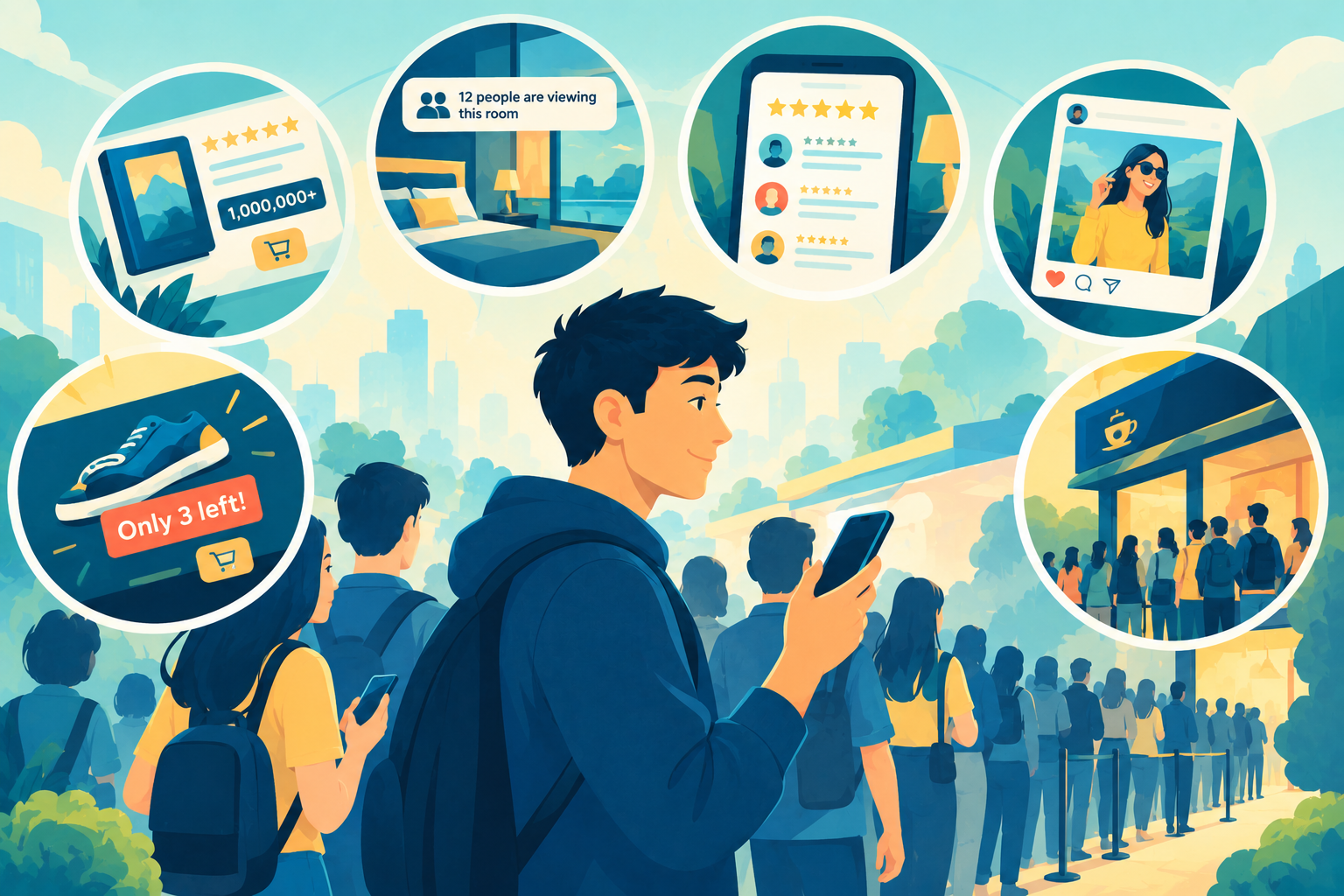
Retail websites often use numbers to create the Bandwagon Effect. For example, an online bookstore might display a message saying that one million people have purchased a particular book. Seeing that many buyers can reassure shoppers and encourage them to make the same choice.
McDonald’s has used a similar strategy for decades with the phrase “Billions and Billions Served.” Drivers see the message and may feel more confident stopping at the restaurant because so many people have already visited. In the same way, large sales figures can encourage online shoppers to purchase a book.
Hotel booking websites use live numbers to create a similar sense of popularity. A traveler may see a message saying that 12 other people are viewing the same room. This can make the room seem desirable and encourage the traveler to complete the booking before someone else takes it.
Online shoppers often read customer reviews before making a purchase. Research from Northwestern University’s Spiegel Research Center suggests that displaying reviews beside a product can significantly increase sales. Positive feedback creates a strong Bandwagon Effect because shoppers feel more confident following the choices of previous buyers.
Clothing brands also encourage customers to share photos of themselves wearing new products. When potential buyers see real people wearing the shirts, the images feel more authentic than professional advertisements. This visual proof can create a strong Bandwagon Effect and encourage others to buy the same clothing. Businesses can increase sales while spending less on expensive studio photography.
Retailers often use limited-stock messages to encourage quick purchases. For example, an online shoe store may show that only three pairs of a popular leather shoe remain. This message creates urgency and a Bandwagon Effect, making shoppers assume that many others have already bought the product. They may complete the payment quickly to avoid missing out.
Restaurants can create a similar effect through visible crowds. When a new coffee shop has a long line outside, passersby may assume the drinks are popular and decide to join. Nielsen research suggests that many consumers trust other customers’ opinions more than traditional advertising. By making demand visible, the Bandwagon Effect can encourage more people to buy and help the restaurant sell more coffee.
Business owners should remember one important rule: the Bandwagon Effect cannot rescue a poor-quality product. If a large group buys a mobile phone that breaks quickly, customers may return it and post negative reviews. New shoppers will see those complaints and avoid making a purchase.
Also read: Can Brand Distance Help Luxury Brands Protect Desire?
Businesses must first create reliable products. Once customers are genuinely satisfied, managers can highlight positive reviews and real customer experiences to build trust. When new shoppers see happy buyers using the product, they are more likely to follow the group and support steady sales.
Loved this article? Read more insightful articles on Brand Custodian.
–Written by Rajnish Kumar, a copywriter and strategist with a background in fast-paced journalism, who explores the gap between what brands promise and how consumers actually behave.