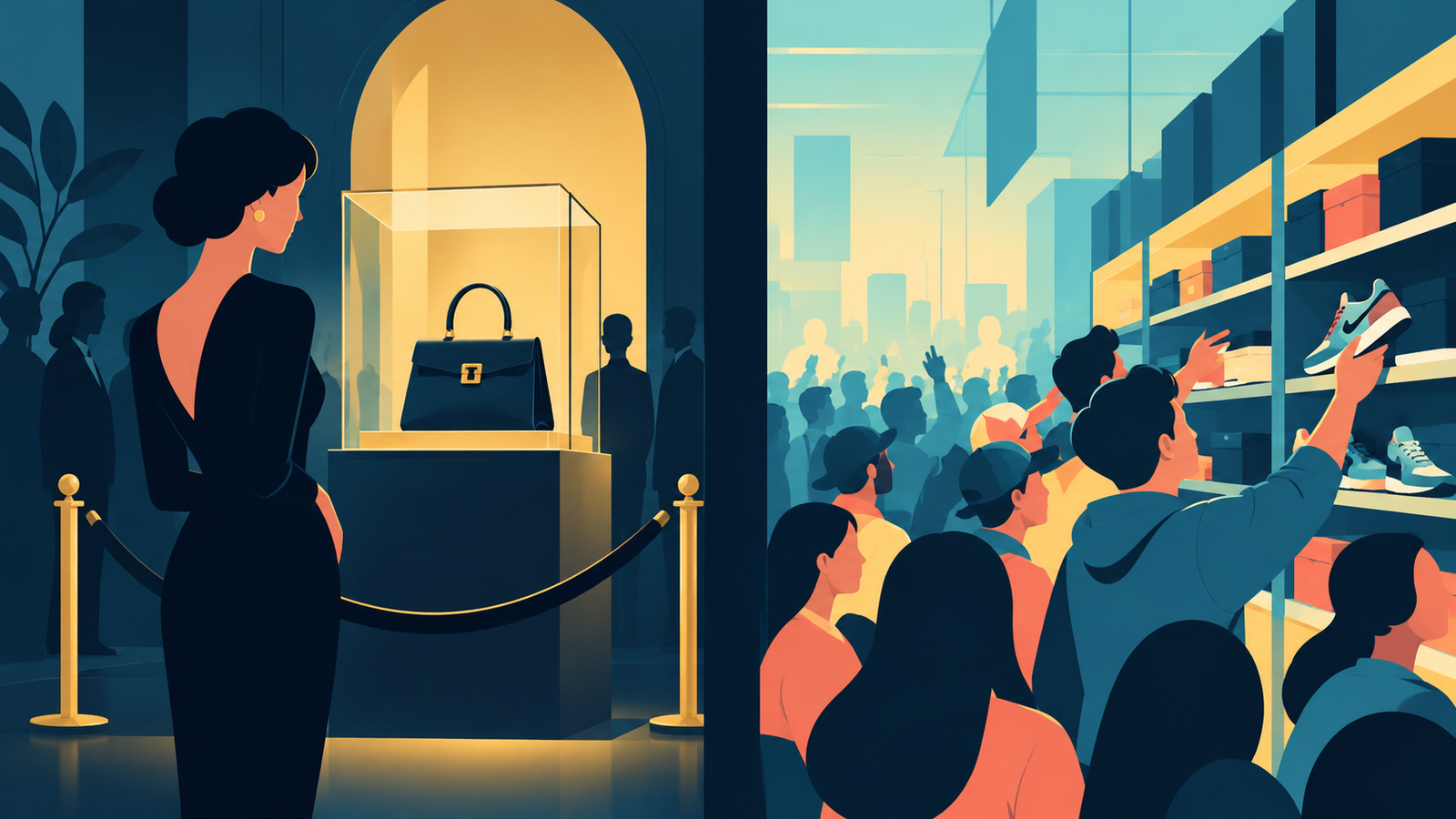
Why does the Scarcity Effect work for luxury brands but not mass brands? Explore how exclusivity shapes perceived value.
Looking for a Shorter Overview?
AI Summary
Key Moments
Luxury Brands Leverage Built‑In Exclusivity
Luxury brands already sell status and craftsmanship, so scarcity reinforces the desire that already exists.Mass Brands Need a Credible Reason for Scarcity
Limited collaborations or seasonal drops give mass brands a purpose‑driven hook that creates urgency.Overusing Scarcity Diminishes Its Power
Constant “last chance” messaging trains shoppers to ignore urgency, eroding the effect of genuine scarcity.Value Must Back the Rarity
Scarcity succeeds only when strong brand equity makes the limited offering feel truly worthwhile.A product being hard to get can make people want it more. But that does not mean scarcity works equally well for every brand. The Scarcity Effect is often used to create urgency, increase perceived value and encourage people to act before an opportunity disappears. Yet a limited-edition luxury watch and a mass-market pair of shoes can use exactly the same tactic and get very different results. The difference lies less in scarcity itself and more in what the brand has already taught consumers to believe about its products.
Why Does the Scarcity Effect Work Differently for Luxury and Mass Brands?
Luxury brands have a natural advantage when it comes to scarcity because exclusivity is already part of what they sell. Luxury is not simply about owning a functional product. It is often connected to craftsmanship, heritage, identity, status, and the feeling of possessing something that not everyone can access. When supply is deliberately limited, scarcity reinforces these existing associations.
Consider a luxury watch. If a relatively unknown watchmaker announces that only 100 pieces will be produced, limited supply alone is unlikely to create overwhelming demand. Consumers may simply question why they should want those 100 watches in the first place. But when an established luxury brand limits the availability of a particular model, scarcity can strengthen a desire that already exists. As Markus Kramer points out, scarcity can be real, such as limited materials or craftsmanship, or deliberately created through restricted distribution, availability, and access.
This is where the Scarcity Effect becomes more than a sales tactic. For a strong luxury brand, being difficult to obtain can become part of the brand experience. Waiting lists, selective distribution, limited production, and private access can communicate that the product is not intended to be treated like an ordinary commodity. Brand Affairs similarly notes that luxury brands often maintain demand at a level that exceeds supply, using controlled availability and selective distribution to reinforce exclusivity.
Mass brands operate under a different set of expectations. Their strength often comes from availability. Consumers expect them to be easy to find, convenient to buy, and reasonably accessible. If a mass brand suddenly removes products from shelves or introduces artificial restrictions, consumers may not interpret the move as exclusive. They may simply switch to another brand.
That does not mean scarcity cannot work outside luxury. It can, particularly when it is attached to something genuinely distinctive. Limited-edition collaborations, seasonal products, special launches and exclusive drops can make mass or mainstream brands more interesting because they introduce novelty and a reason to act now. Nike’s limited sneaker releases and H&M’s designer collaborations, for example, show how scarcity can be used to create excitement beyond traditional luxury.
The crucial difference is brand equity. Luxury brands can use scarcity to amplify existing desire, while mass brands often need scarcity to create a specific moment of attention. Research into luxury purchasing also suggests that scarcity can interact with consumers’ desire for uniqueness and Fear of Missing Out, although the effect is not universally positive. When consumers perceive scarcity as manipulative or inauthentic, it can create hesitation rather than desire.
This explains why countdown clocks, “only three left” messages, and permanent flash sales can eventually lose their power. If everything is scarce, nothing feels scarce. If every product is supposedly the “last chance”, consumers learn that another opportunity will probably appear tomorrow.
Also read: Can Word of Mouth Work Without Customers Actively Recommending You?
For luxury brands, restraint itself can become a signal of value. Recent thinking around luxury communication argues that brands do not necessarily need to maximise visibility or frequency. Selective communication, controlled access and even deliberate silence can reinforce the perception of exclusivity when the underlying brand equity is strong.
The lesson for mass brands is not to copy luxury by simply producing less. The smarter approach is to identify what genuinely deserves limited access. A collaboration, a special design, an experience, an early-access programme or a seasonal product can all create scarcity when there is a credible reason behind the limitation.
Ultimately, the Scarcity Effect works best when scarcity feels meaningful. Luxury brands have spent years building the trust, desire, and distinctiveness that make consumers willing to wait. Mass brands can use scarcity too, but they need to give people a reason to care before asking them to act quickly. Scarcity can create urgency, but it is the value behind the scarcity that determines whether people actually want what they might miss.
– Written by Saad Rashid, an experienced journalist with extensive experience across both print and digital media. He has worked with various publications in India and internationally and has reached millions of readers through his thought-provoking articles.
Enjoyed this article? Read more here.