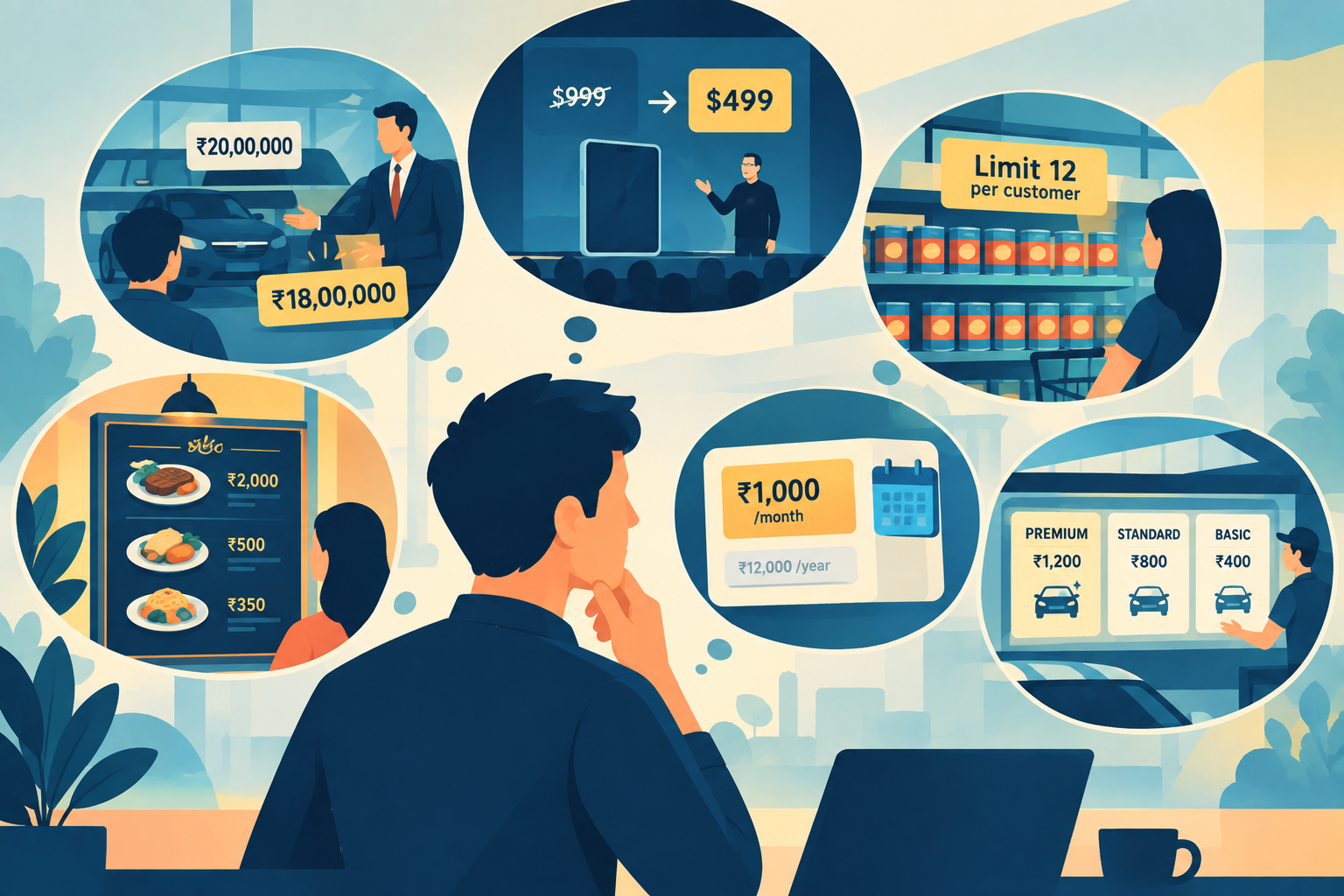
Flat pricing is dangerous. See how mastering the anchoring effect turns ordinary offers into an unstoppable success.
Looking for a Shorter Overview?
AI Summary
Key Moments
Apple iPad Price Anchor
Steve Jobs displayed a $999 price first, then revealed $499, making the actual price feel like an incredible bargain.Supermarket Quantity Anchor
A “Limit 12 per customer” sign caused shoppers to buy far more canned soup than usual, demonstrating how numbers set buying behavior.Restaurant Menu Price Contrast
Featuring a ₹2,000 meat dish at the top of the menu makes lower‑priced items such as a ₹500 chicken dish seem affordable.Car Wash Tier Anchor
Presenting the most expensive wash package first leads customers to choose the mid‑range option, perceiving it as a reasonable compromise.Imagine visiting a local car showroom and seeing a price sticker of ₹20 lakh on a new car. The salesperson then offers to sell it for ₹18 lakh, making the buyer feel they have received a significant discount. This pricing sequence demonstrates the Anchoring effect.
When shoppers see a high price first, any lower price afterward can seem like a great bargain. Psychologists Amos Tversky and Daniel Kahneman studied this behavior in their 1974 research, showing that the first piece of information people receive can strongly influence their final decisions. Businesses continue to use the Anchoring effect to shape how customers perceive prices and make purchases.
How the Anchoring Effect Uses High Prices
Apple used a similar pricing strategy in 2010 when Steve Jobs introduced the first iPad. During the presentation, he displayed an initial price of $999 on the screen, leading the audience to expect a very expensive product. A few moments later, he announced that the actual retail price would be just $499.
The audience reacted with loud cheers because the lower price seemed like an incredible bargain. This strong Anchoring Effect made the final price appear much more affordable. By presenting a higher number first, Apple shaped customer expectations and made the actual price feel like an obvious deal.
Supermarkets often use numbers to influence shoppers’ buying habits. In 1998, university researchers Brian Wansink, Robert Kent, and Stephen Hoch tested this idea with a display of canned soup. They placed a sign above the cans that read, “Limit 12 per customer.” Shoppers bought an average of seven cans each.
When the researchers removed the sign, customers bought only about three cans. The number 12 created a strong Anchoring Effect by becoming the first figure shoppers considered. Instead of thinking about buying just one can, they began considering a much larger quantity.
A restaurant owner may place a ₹2,000 meat dish at the top of the menu, even though very few customers order it. The dish serves another purpose: it creates a strong Anchoring Effect for the rest of the menu.
When customers see the expensive item first, a regular chicken dish priced at ₹500 may suddenly seem much more affordable. The premium dish is included mainly to influence how shoppers perceive the other prices. As a result, customers may order the chicken dish without feeling that it is too expensive.
Software companies often sell annual subscriptions to digital tools. Although a full year may cost ₹12,000, many customers hesitate to pay the entire amount at once. To make the price feel more manageable, companies often highlight the monthly cost of ₹1,000 instead.
By displaying the smaller monthly figure prominently and placing the annual total in less noticeable text, the company creates a new Anchoring Effect. Customers focus on the ₹1,000 monthly price, making the subscription seem more affordable. As a result, they may agree to pay the full annual amount because the monthly figure has shaped their expectations.
Car washes often display three cleaning packages on a signboard, with the most expensive platinum option presented first. Employees explain the premium package before mentioning the basic water wash, creating an immediate Anchoring Effect.
Once customers hear the highest price, the mid-range package can seem like a reasonable compromise. They may choose it because it feels more affordable than the premium option while offering more than the basic wash. This strategy shows how presenting a high price first can influence customers to spend more.
Business owners need to use the anchoring effect carefully because an anchor works only when it seems believable. If a local clothing store displays a basic cotton T-shirt for ₹10,000 and then offers an 80% discount, shoppers may feel deceived rather than fortunate.
An unrealistic starting price can damage trust and make the brand appear desperate. To use the anchoring effect effectively, sellers should ensure that the highest displayed price reflects genuine market value. This helps customers feel they are receiving a fair deal instead of being manipulated.
Loved this article? Read more insightful articles on Brand Custodian.
–Written by Rajnish Kumar, a copywriter and strategist with a background in fast-paced journalism, who explores the gap between what brands promise and how consumers actually behave.



