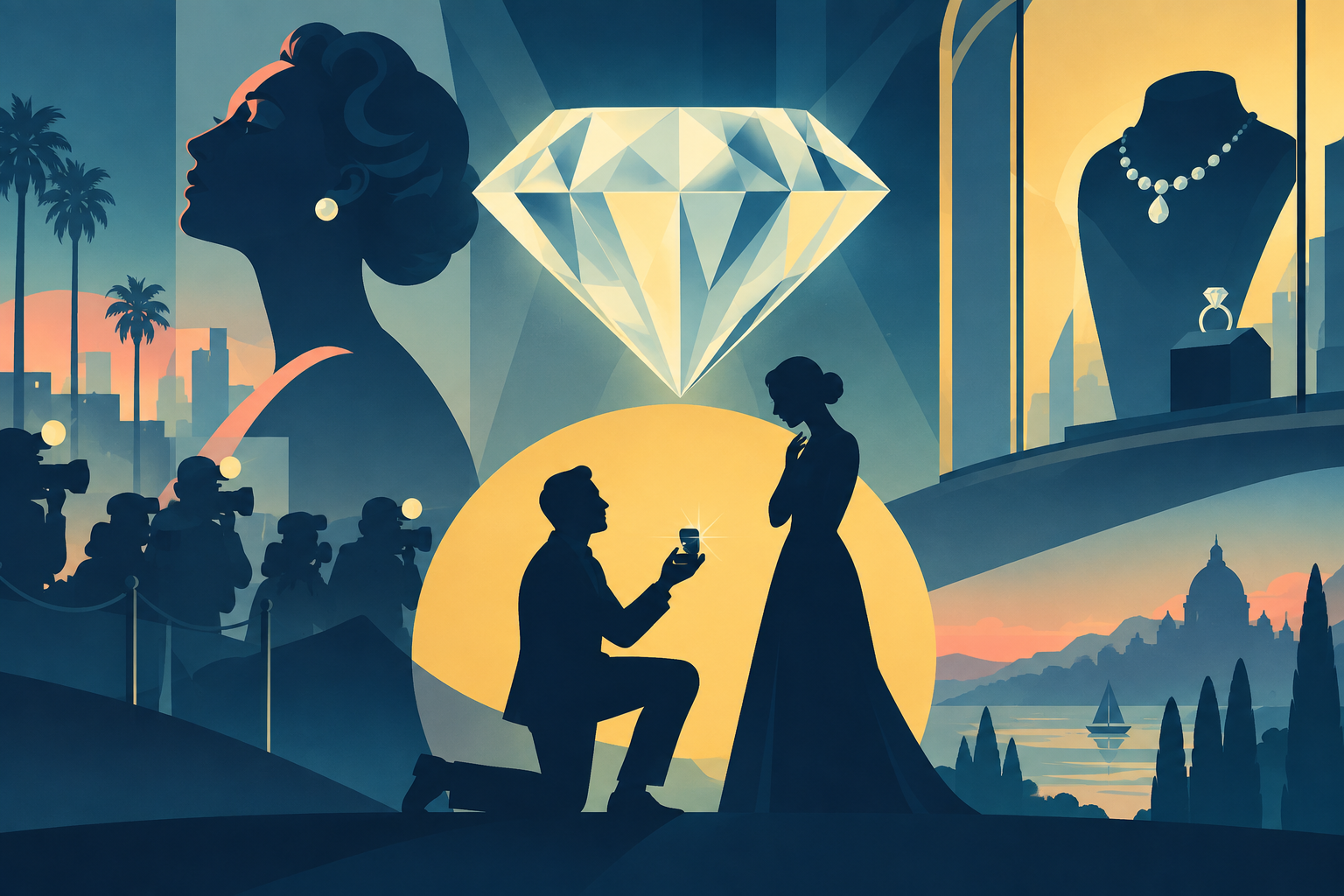
De Beers transformed diamonds into symbols of love and commitment, showing how marketing can create traditions that endure today.
Looking for a Shorter Overview?
AI Summary
Key Moments
Forever Slogan Birth
Copywriter Frances Gerety coined 'A Diamond Is Forever' in 1947, linking diamond durability to lifelong love.Emotional Campaign Shift
De Bees teamed with N.W. Ayer & Son in the 1930s, associating diamonds with romance, status, and commitment rather than just beauty.Social Expectation Formation
Through celebrity placement and publicity, diamond engagement rings became a cultural norm, skyrocketing U.S. adoption in the second half of the 20th century.Marketing as Tradition Builder
Consistent brand storytelling turned a durable gem into a cultural symbol, proving that powerful marketing can create new traditions around existing products.Diamonds have become almost inseparable from the idea of a marriage proposal. For many people, the image is familiar: a ring, a diamond, a question, and a promise of forever. But this association was not always as universal as it seems today. De Beers played a major role in turning the diamond from a precious gemstone into a cultural symbol of love, commitment and marriage. Its story is one of the clearest examples of how marketing can do more than sell a product. It can influence how people understand a tradition itself.
De Beers and the Marketing of Forever
The challenge De Beers faced was not simply how to sell more diamonds. It was how to create stronger demand for them. The discovery of large diamond deposits in South Africa in the late 19th century dramatically increased supply, changing a market that had once been defined by scarcity. By the early 20th century, De Beers had built significant control over the diamond trade, but selling diamonds as jewellery still required convincing consumers that they were worth buying.
The company began working with the advertising agency N. W. Ayer & Son in the late 1930s. Rather than simply advertising the physical qualities of diamonds, the campaign increasingly connected them with romance, status and commitment. Hollywood celebrities, fashion publications and other influential figures helped make diamonds desirable and aspirational. The objective was not merely to tell people that diamonds were beautiful, but to make the diamond engagement ring feel like a natural part of getting married.
Then came four words that would define the campaign: “A Diamond Is Forever.” Created by copywriter Frances Gerety in 1947, the line gave the product an emotional meaning that went far beyond its physical characteristics. A diamond was durable, but the message connected that durability with the permanence people associated with romantic commitment. As Sotheby’s notes, the slogan helped redefine diamonds as a lasting expression of love and played a significant role in establishing the solitaire diamond engagement ring as a widely recognised tradition.
What made the campaign particularly powerful was its simplicity. De Beers did not need to explain the entire history of diamonds every time it advertised. Instead, it attached one clear idea to the product and repeated it consistently: if love lasts forever, the diamond representing that love should last forever too. The physical characteristic of the stone became part of the emotional story surrounding it.
Marketing also helped turn the diamond engagement ring into a social expectation. Celebrity culture and carefully placed publicity made diamonds visible in the lives of people consumers admired. Over time, the practice spread well beyond the markets where it had initially gained traction. Business Leader notes that the proportion of American women wearing diamond engagement rings rose dramatically over the second half of the 20th century, while the tradition also expanded internationally.
Also read: Zoom: How Product Simplicity Won During a Global Shift
There was another clever element to the positioning: the diamond was presented as something that should be kept rather than casually traded or discarded. The idea of permanence supported the perception that a diamond was not simply another purchase, but something connected to an important life milestone. This helped reinforce its emotional and symbolic value.
The story of De Beers is therefore less about a single advertisement and more about the power of consistent brand storytelling. The company connected a product characteristic—durability—with a human emotion—lasting love—and then embedded that idea into popular culture. The result was a tradition that became familiar enough to feel timeless, even though its modern form was shaped significantly by 20th-century marketing.
That is perhaps the most important lesson from the diamond story. Great marketing does not always create a new product. Sometimes, it creates a new meaning around an existing one. De Beers understood that people were not simply buying a stone. They were buying what the stone was made to represent. And by giving diamonds a role in one of life’s most important rituals, the company helped transform a commercial product into a cultural symbol.