Clever advertising cannot beat years of trust. Learn why brand familiarity makes shoppers choose safety over logic.
Looking for a Shorter Overview?
AI Summary
Key Moments
Familiar Brands Win Without Ads
Consumers choose recognizable products like Uncle Chipps over newer, cheaper alternatives, ignoring ads.Trust from Repeated Exposure
Years of brand visibility build trust that discounts and new entrants struggle to break.Faster Shopping Through Recognition
High brand familiarity shortens decisions, letting shoppers buy instantly without comparison.Health and Safety Drive Loyalty
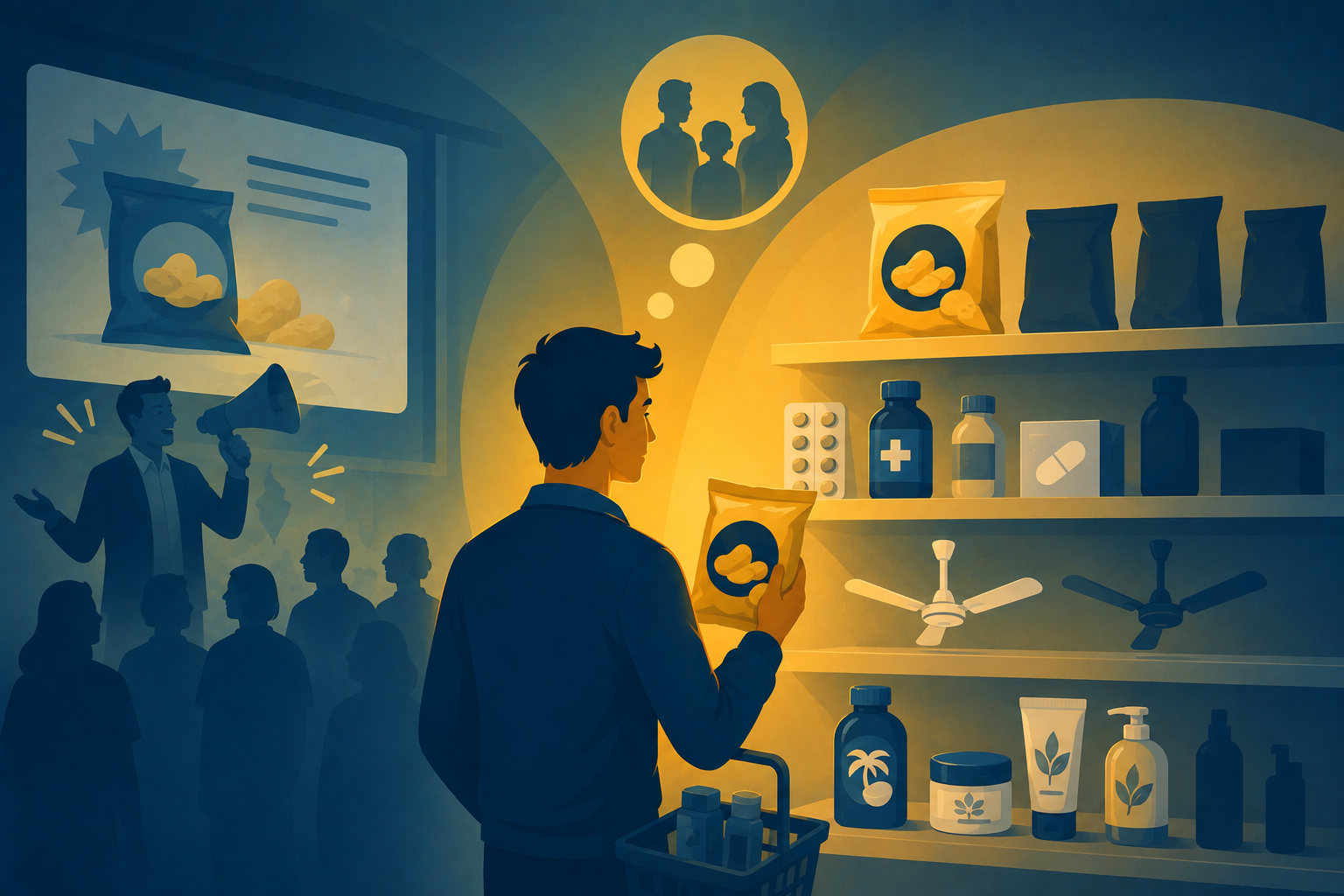
For medicines and personal care, people pick known brands to avoid risks and ensure safety.During a long train journey, a father steps out to buy potato chips for his children. The platform stall is packed with different yellow packets. A new company has a large poster right next to the shop. The poster claims their chips are cheaper and tastier.
But the father ignores the printed words and picks up a packet of Uncle Chipps. He does not stop to read the ingredients or compare prices; he simply chooses the name he has seen a hundred times before. This quick decision shows the real power of brand familiarity. When a company builds strong brand familiarity, it no longer struggles to get noticed. People naturally choose what they already know.
How Brand Familiarity Beats Clever Advertising
Look at how regular people buy medicine. If an office worker gets a bad headache, he walks to the nearest medical shop. The shopkeeper may show him a brand-new pill. The packaging looks great, and the price is very low. But the sick person will still ask for a Saridon or a Crocin.
A new company can write the best advertising lines in the market, but it cannot beat years of brand familiarity. The buyer feels safe swallowing a pill he recognises. He does not want to take a risk with his health just to save five rupees.
This same habit appears in electronics shops. A young couple goes to buy a new ceiling fan for their bedroom. The salesman tries hard to sell a newly launched imported fan. He explains that the motor is silent and uses less electricity. But the couple looks at the unknown name on the cardboard box and feels doubtful.
Then both of them look at a plain white Bajaj or Crompton fan kept right next to it. They immediately buy the older name. This happens simply because of brand familiarity. The salesman tries to convince them with clear facts, but the buyers trust what feels familiar. A known name feels safe, while an unknown name feels risky.
Companies spend crores of rupees trying to persuade shoppers to change their daily habits. They run massive television campaigns explaining why their cooking oil or toothpaste is better. But ordinary shoppers do not care about these facts.
When a shopper wants to buy coconut oil, she scans the shelves for familiar colours. If she spots a blue bottle of Parachute coconut oil, she immediately picks it up without stopping. She trusts it completely. High brand familiarity makes daily shopping much faster. The buyer avoids difficult decisions by simply choosing what she recognises.
Think of simple personal care items. A college girl goes to buy a basic face wash. A new brand might come in a beautiful pink box and promise clear skin in just a few days. The shopkeeper might even push the new box forward. But the girl remembers seeing Ponds or Himalaya on her mother’s dressing table since she was a child. She buys the older brand without thinking.
Strong brand familiarity means the company does not even need to speak to the buyer. Years of seeing the product at home make the final choice very easy.
Building this deep level of trust takes a lot of time. A business cannot create brand familiarity overnight. It happens when a name appears repeatedly in daily life, on billboards, on television, and in local shops. Once a company reaches that stage, rival companies cannot easily take away its customers with cheap discounts.
Also read: Why Brand Reach Still Matters in an Age of Precision Targeting
A clever advertisement might make someone look twice, but strong brand familiarity is what truly makes a person pay for a product. People will always spend their hard-earned money on things they have known for years.
Loved this article? Read more insightful articles on Brand Custodian.
–Written by Rajnish Singh, a copywriter and strategist with a background in fast-paced journalism, who explores the gap between what brands promise and how consumers actually behave.