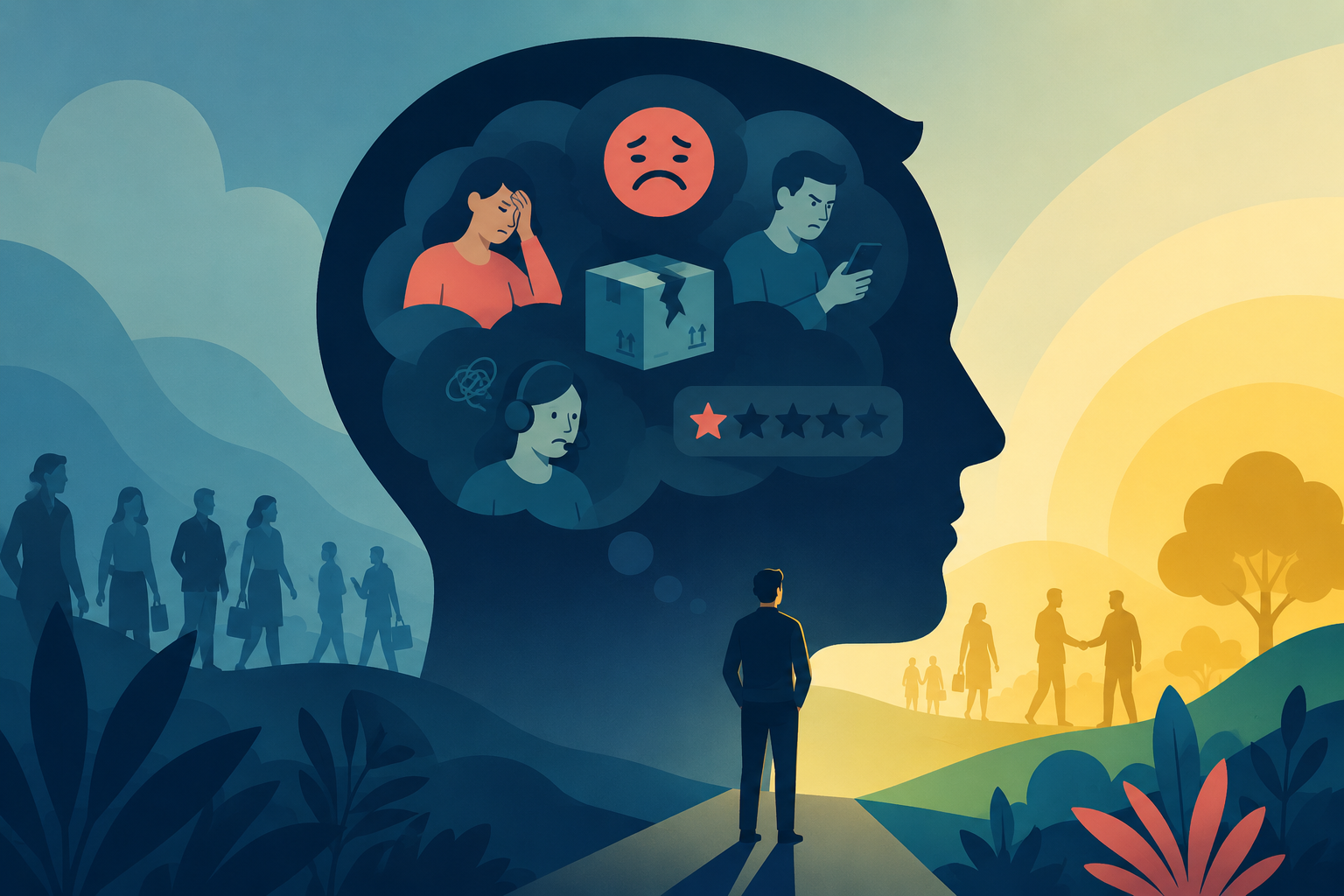
How Negativity Bias shapes customer perceptions and explains why bad brand experiences can stay with consumers long after the good ones.
Looking for a Shorter Overview?
AI Summary
Key Moments
Negativity bias definition
Cognitive tendency to overvalue negative experiences, making bad brand moments unforgettable.Customer journey vulnerability
One negative interaction can dominate overall brand perception, overshadowing many positive ones.Actionable mitigation strategies
Identify and remove friction points in the customer journey to prevent disproportionate negative impact.Responsive recovery importance
Quick, fair problem resolution can transform a bad experience into a positive brand memory.A customer can have a perfectly good experience with a brand for months and still remember the one time something went wrong. A delayed delivery, an unhelpful customer service interaction, a confusing checkout process, or a product that failed to meet expectations can sometimes leave a stronger impression than many positive experiences that came before it. This is partly explained by Negativity Bias, a psychological tendency to give greater attention, weight, and lasting importance to negative information than to equally significant positive information.
For brands, this creates an important challenge. Customers do not necessarily evaluate every part of an experience objectively and then arrive at a perfectly balanced conclusion. A negative moment can stand out, shape how the rest of the experience is remembered, and influence how a customer feels about the brand afterwards. That does not mean one bad experience will automatically destroy a brand relationship, but it does mean that negative moments deserve serious attention.
How Negativity Bias Shapes Brand Experiences
Negativity Bias is not simply about being pessimistic. It is a broader cognitive tendency that affects how people process information, remember experiences, and make judgements. Negative events often attract more attention and can be remembered more vividly than positive or neutral ones. One explanation is that paying close attention to potential threats would have had an adaptive value, helping people recognise and respond to danger.
This becomes particularly relevant in marketing because customer experiences are rarely made up of one isolated interaction. A customer may see an advertisement, visit a website, compare products, place an order, receive the product, and interact with customer service. Most of these steps may go smoothly, but one significant problem can become the part they talk about afterwards. As Search Engine Journal notes, the “bad portions” of a customer journey can be the ones that are remembered, potentially affecting the way the wider experience is perceived.
Consider a restaurant customer who enjoys the food, likes the atmosphere and receives friendly service, but then waits an unusually long time for the bill and struggles to get the staff’s attention. The meal may still have been good, but the frustration at the end can become the defining memory. The same principle can apply to an online retailer, airline, bank, or technology company. When something goes wrong at an important moment, the emotional impact can outweigh several routine interactions that went right.
For marketers, however, there is an important distinction to make. It would be a mistake to assume that consumers are constantly looking for reasons to dislike brands. Research discussed by marketing academic Jenni Romaniuk suggests that negative brand perceptions are less common than positive ones, and that lack of mental availability can be a much greater barrier to brand choice than outright rejection. Negative word of mouth is also not necessarily shared more often than positive word of mouth; it is simply less common overall.
Also read: How Campaign Consistency Can Make a Brand Easier to Remember
The lesson, then, is not to become obsessed with every negative comment. It is to understand which negative experiences genuinely matter and why. Brands should identify points in the customer journey where frustration, uncertainty or disappointment can occur and remove unnecessary obstacles wherever possible. Clear information, transparent expectations, simple processes and responsive customer support can all reduce opportunities for a negative experience to become disproportionately influential.
There is also a useful lesson in the way brands communicate. Negativity Bias can be used to draw attention to genuine risks or problems that a product helps consumers avoid, but this should be done responsibly. Highlighting a real consequence can make a message more memorable, particularly when the brand clearly provides a credible solution. Using fear or negativity simply to attract attention, however, can damage trust rather than build it.
Ultimately, brands cannot prevent every customer from having a bad experience. What they can do is recognise that negative experiences may carry disproportionate psychological weight. The goal is not to create a brand experience where nothing ever goes wrong. It is to make sure that when something does go wrong, the brand responds quickly, fairly and effectively. A problem may be remembered, but so can the way a brand chose to resolve it.