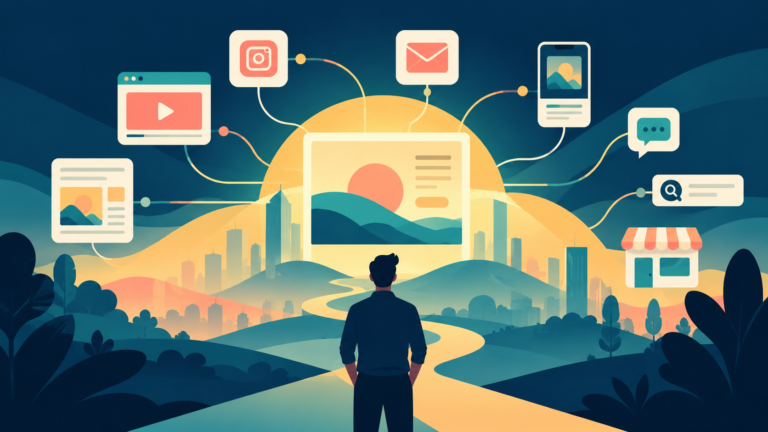
Brand Reach still matters in an age of precision targeting, helping brands build awareness, familiarity and future demand.
Looking for a Shorter Overview?
AI Summary
Key Moments
Precision alone isn’t enough
Relying solely on efficient targeting can limit brand visibility and future growth.Reach builds long‑term familiarity
Broad exposure keeps a brand top‑of‑mind for consumers not yet ready to buy.Balancing reach and precision
Marketers should use wide reach to create demand and targeted tactics to convert intent.Measurement challenges
Over‑optimizing for short‑term metrics can cut brand investment, slow growth, and ignore future demand creation.Marketing has become remarkably precise. Brands can now identify audiences based on interests, behaviours, search activity, purchase intent and other signals, and deliver messages designed to reach people most likely to respond. That precision has obvious advantages, particularly when budgets are under pressure, and marketers are expected to demonstrate measurable returns. But the growing focus on targeting and performance raises an important question: what happens when brands become so focused on reaching the right people that they stop reaching enough people?
Brand Reach still matters because not every future customer is actively looking for a product or service today. A person who is not currently in-market can still become a customer tomorrow, next month, or next year. If a brand is largely invisible until someone shows purchase intent, it risks missing the opportunity to become familiar before that moment arrives.
Brand Reach and Precision Need to Work Together
Precision targeting has changed the way marketers think about media. Instead of relying entirely on broad demographic assumptions, digital platforms allow brands to identify specific audiences and tailor messages to their interests and behaviours. This can make communication more relevant and reduce wasted impressions. In many situations, particularly when the objective is to generate an immediate response, reaching a highly relevant audience makes good commercial sense.
The problem begins when efficiency becomes the only measure of effective marketing. A campaign can generate strong click-through rates, conversions or return on ad spend while repeatedly reaching a relatively narrow group of people. In that situation, the numbers may look impressive, but the brand may not be building much visibility beyond its existing audience. Watauga Group describes this as the difference between delivery and genuine market presence: a campaign can appear extensive in reporting while remaining largely unseen across the wider market.
This matters because consumers do not suddenly become interested in a category at the precise moment a brand needs them to. Buying journeys can be messy, non-linear and spread over time. A person may encounter a brand through an advertisement, hear about it from someone else, notice it on social media and only much later begin actively searching for it. BCG’s work on moving beyond the traditional linear funnel similarly points to the need for marketers to recognise more complex paths between awareness, consideration and purchase.
Also read: Cutting Through the Clutter
Reach therefore has a role that performance metrics can struggle to capture. Being visible consistently can build recognition and familiarity, making a brand easier to remember when a purchase opportunity eventually arises. Broad visibility can also signal that a brand is established and credible, particularly when it appears in environments that consumers already associate with quality and authority.
This does not mean marketers should abandon precision. Quite the opposite. Targeting is valuable when the objective is to capture existing demand, communicate with a defined audience, or move people closer to action. The issue is treating it as a substitute for broader brand building rather than as one part of a wider strategy.
There is also a measurement challenge. The channels and tactics that are easiest to attribute to a sale can receive disproportionate attention because their contribution is immediately visible. But marketing that creates awareness and future demand does not always produce an identifiable conversion in the same reporting window. Marketing Architects highlights how an excessive focus on short-term performance can create a cycle in which brand investment is reduced, growth eventually slows, and marketers respond by optimising even harder for immediate results.
The smarter approach is not reach versus precision. It is reach and precision, with each doing a different job. Brand Reach can expand the pool of people who know and recognise a business, while targeted activity can convert relevant audiences when they show stronger signals of intent. Together, they create a more balanced marketing system: one that does not simply harvest existing demand but also helps create future demand.
In an increasingly fragmented media environment, broad visibility no longer happens automatically. Brands have to make a deliberate decision about where they need scale, where precision matters most, and how the two can reinforce each other. Precision can make marketing more efficient, but reach allows brands to become known before consumers are ready to buy. For marketers thinking beyond the next click or conversion, that distinction is too important to ignore.