Choice Overload explains why too many options can make purchases harder and how brands can simplify choices for consumers.
Looking for a Shorter Overview?
AI Summary
Key Moments
What Is Choice Overload?
The phenomenon where too many similar options overwhelm consumers, leading to indecision.Jam Study Shows Impact
The classic jam experiment found more choices attract attention but reduce actual purchases.When More Choice Helps
Consumers appreciate larger assortments when they already know what they want, boosting satisfaction.Simplify Navigation for Buyers
Brands can ease choice overload using filters, recommendations, and organized categories for smoother shopping.We live in a world where consumers can choose from more products, brands, features, and variations than ever before. That sounds like a good thing. After all, having more options should make it easier to find something that fits our needs. Yet sometimes, the opposite happens. A simple purchase can turn into a long process of comparing, second-guessing, and wondering whether there is a better option. This is where Choice Overload comes in. When the number or complexity of options becomes difficult to process, having more freedom can make consumers less confident about what to choose.
Choice Overload Can Turn Variety Into a Barrier
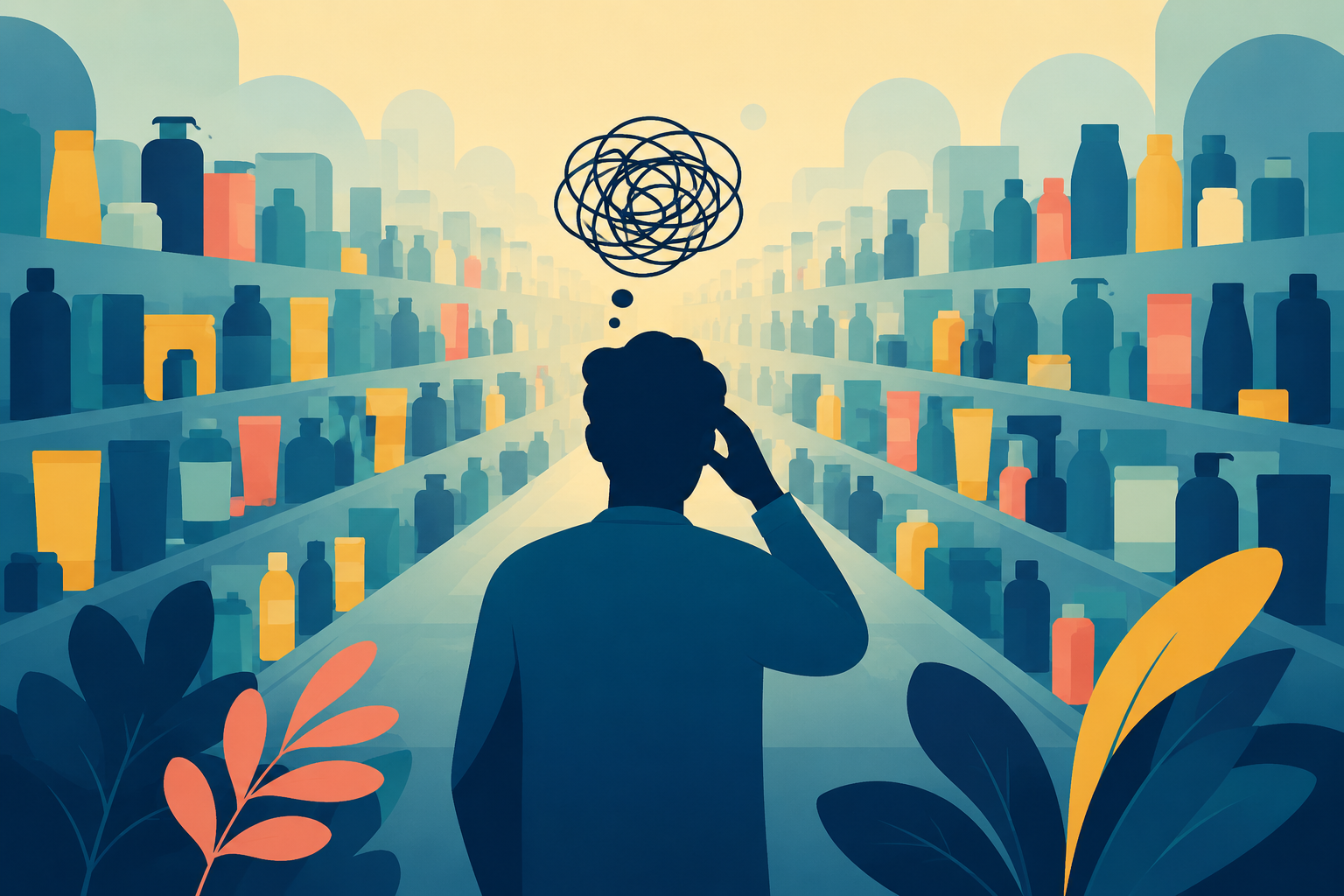
Choice Overload, also referred to as overchoice or choice paralysis, describes the difficulty people can experience when faced with a large number of alternatives. The problem is not simply the number of products available. It can also depend on how similar the options are, how much information needs to be considered, how difficult the decision is, and how confident the consumer already feels about what they want. Research suggests that choice overload is therefore not an inevitable result of having many options. It tends to occur under particular conditions.
Consider something as ordinary as buying coffee. A customer may begin with a straightforward intention: get a coffee and move on. But once the menu includes different sizes, beans, milks, syrups, preparation methods and flavours, the decision can become surprisingly demanding. Instead of helping the customer find exactly what they want, every additional option creates another comparison to make. The consumer may start asking whether one choice is better value, whether another tastes better or whether they will regret not choosing something else.
One of the most widely discussed examples comes from research by Sheena Iyengar and Mark Lepper, who compared consumers’ reactions to displays containing either six or 24 varieties of jam. Although the larger display attracted more attention, shoppers exposed to the smaller selection were more likely to make a purchase. The study became an influential example of how an abundance of choice can sometimes discourage action.
However, it would be misleading to conclude that more choice is always bad. Research has produced mixed findings, and later work has shown that the effect depends considerably on the circumstances surrounding the decision. Stanford research, for example, found that consumers can actually respond positively to larger selections when they first decide whether they want to buy a product. The larger assortment becomes more problematic when consumers first have to identify which specific option they prefer.
Also read: Why Premium Pricing Works for Some Brands and Fails for Others
This distinction matters for marketers. Consumers do value freedom and variety, particularly when they have clear preferences or are exploring a category. The challenge is making sure that variety does not become unnecessary mental work. A large range of products can be useful, but presenting every option with equal prominence may force customers to do the filtering themselves.
This is particularly relevant in ecommerce, where a customer can encounter hundreds or thousands of products within seconds. If several products have similar features and the differences between them are unclear, consumers may struggle to identify the right one. Clear filters, comparisons, recommendations, and explanations can reduce that burden by helping shoppers narrow the field.
For brands, the answer is therefore not necessarily to offer fewer products. It is to make the choices easier to navigate. A well-organised range can give consumers variety while still providing direction. Product recommendations, clear categories, “best for” suggestions and straightforward comparisons can all help reduce the mental effort involved in choosing.
Ultimately, Choice Overload is a reminder that consumers do not always need more options; sometimes they need more clarity. The strongest customer experience is not necessarily the one that presents the biggest selection. It is the one that helps people feel confident about the choice in front of them. When brands understand that distinction, they can preserve the benefits of variety without turning a simple purchase into a difficult decision.