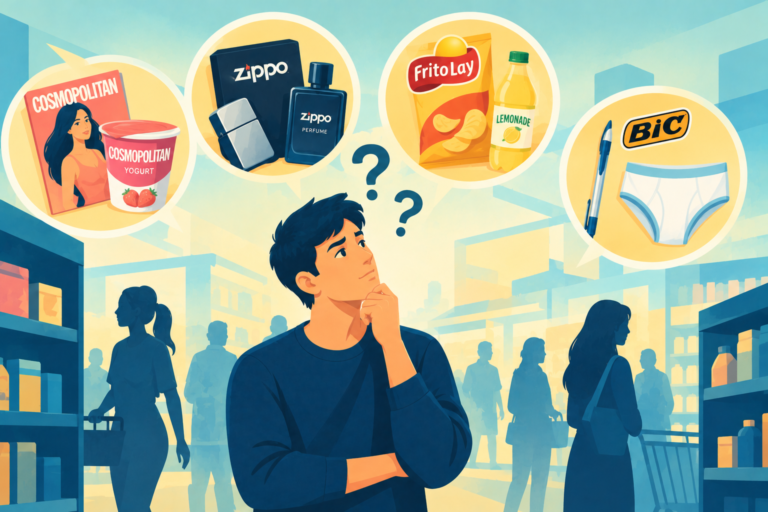
Information Asymmetry shapes buying behaviour by influencing consumer trust, perceived risk, decision-making and willingness to pay.
Looking for a Shorter Overview?
AI Summary
Key Moments
Definition of Information Asymmetry
Information asymmetry occurs when one party knows more than the other, creating a gap that can hinder confident buying decisions.Uncertainty and Risk
When buyers cannot judge quality or value, they see higher risk, influencing their willingness to pay and leading to market distortions.Price Impact and Market Effects
If buyers cannot differentiate high‑quality from low‑quality items, they base prices on average expectations, which can disadvantage premium sellers.Trust Signals and Mitigation
Brands can reduce the gap by providing clear information, warranties, certifications, reviews, and transparent policies, lowering perceived risk and encouraging purchases.Buying something is rarely just about price. Before making a purchase, consumers try to understand what they are getting, whether it is worth the money, and whether they can trust the person or company selling it. The problem is that buyers do not always have access to the same information as sellers. This gap is known as Information Asymmetry, and it can have a significant influence on how people evaluate products, perceive risk and ultimately decide whether to buy.
Information Asymmetry occurs when one party involved in a transaction has more or better information than the other. In many consumer transactions, sellers naturally know more about a product’s quality, limitations, history, or performance than buyers do. This is not necessarily harmful. Specialisation itself creates information differences: a doctor knows more about medicine than a patient, just as a car dealer knows more about a vehicle than a first-time buyer. The problem arises when the information gap makes it difficult for the less-informed party to make a confident decision.
Information Asymmetry Changes How Consumers Make Buying Decisions
One of the clearest effects of Information Asymmetry is that it increases uncertainty. When consumers cannot accurately judge the quality or value of an offering before buying it, they are more likely to perceive the purchase as risky. This is particularly relevant for products and services whose quality cannot easily be assessed in advance. A used car, for example, may look perfectly fine to a buyer while the seller knows about mechanical problems that are not immediately visible. This is the classic “lemons” problem associated with information asymmetry.
That uncertainty can change what consumers are willing to pay. If buyers cannot distinguish between high-quality and low-quality products, they may base their decisions on an average expectation rather than the actual value of an individual product. In markets where this happens extensively, sellers of genuinely high-quality products can struggle to justify higher prices, while lower-quality products may remain comparatively attractive. Over time, this can affect competition, pricing, and the overall efficiency of a market.
Online shopping makes the issue even more interesting. Consumers can access an enormous amount of information, but more information does not automatically mean better information. Product descriptions, photographs, ratings, reviews, specifications and terms and conditions can all help buyers evaluate an offer, but consumers still have to judge which information is reliable. Research examining online purchasing behaviour found that reviews and ratings can act as mechanisms for reducing consumers’ perceived information gap, particularly because shoppers cannot physically inspect a product before purchasing it.
This is where trust becomes important. When consumers cannot independently verify everything a seller claims, they often look for signals that make the decision feel safer. Reputation, warranties, certifications, transparent policies, customer reviews, and clear product information can reduce uncertainty. In effect, these mechanisms help consumers feel that they are not making a decision entirely in the dark. Market systems research similarly identifies price information, quality standards, and grading systems as ways of reducing information gaps between buyers and sellers.
Also read: What Notion Branding Gets Right About Product-Led Growth
Information Asymmetry can also influence whether consumers proceed with a purchase at all. If the perceived information gap becomes too large, a buyer may postpone the decision, search for additional information, choose a more familiar brand or move to another channel. The 2020 study of online purchasing behaviour in Albania found that participants often perceived sellers as having greater informational power, while reviews and ratings provided an alternative way to reduce that perceived imbalance.
For brands, this creates an important lesson. Consumers do not necessarily expect companies to reveal every possible detail, but they do expect enough information to make a reasonable decision. Hiding important limitations or making claims difficult to verify can increase uncertainty and damage trust. On the other hand, making relevant information easier to find can reduce perceived risk and make the buying process more comfortable.
Ultimately, Information Asymmetry is not simply an economic concept. It is part of everyday consumer behaviour. Every time a buyer wonders whether a product is really as good as advertised, whether a price is justified or whether a seller can be trusted, the information gap is influencing the decision. Brands that recognise this can do more than sell. By making important information accessible, credible and easy to understand, they can give consumers greater confidence to buy.