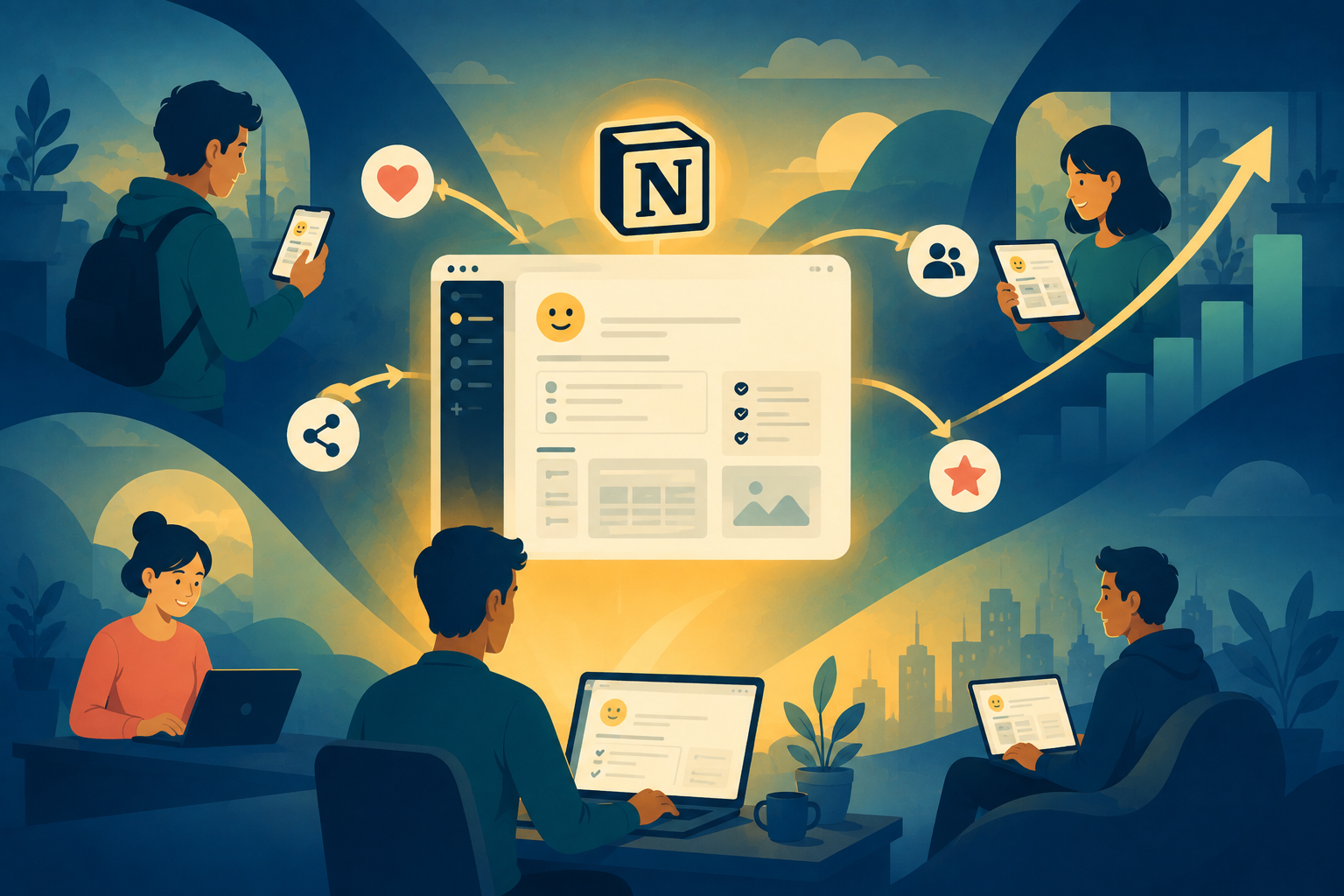
A software brand that feels like a personal diary. Discover why Notion branding is the gold standard for growth.
Looking for a Shorter Overview?
AI Summary
Key Moments
Radical Product Reboot
The 2015 rebuild discarded the flawed first version, delivering a clean, flexible platform that users could shape to their needs.Minimalist Design Appeal
Simple black‑white lines, generous white space and casual emojis make heavy tasks feel light and invite sharing.Free‑First Growth Engine
A generous free plan lets anyone experience the full value before paying, turning users into organic advocates.User‑Generated Marketing Loop
Students and creators showcase custom pages and templates online, providing free word‑of‑mouth advertising for Notion.Most freelancers and students have laptop screens cluttered with random sticky notes and messy Word files. Finding one old meeting note can take several exhausting minutes of searching. Then a friend sends them a simple web link. It opens to a clean white page with just a small emoji at the top. There are no confusing menus or pop-up boxes asking for a subscription.
Within an hour, that worker is building a custom daily planner without watching a single tutorial. They never spoke to a salesperson. This quiet growth is the core secret behind Notion Branding. By letting the software do all the advertising, Notion Branding shows that a great product is the best marketing tool a company can ever use.
But it did not start out this way. Back in 2013, founders Ivan Zhao and Simon Last wanted a single place for notes, documents, lists, and databases. They aimed to replace the many apps people used every day. But the first version worked very poorly: it crashed often and confused users.
Around 2015, the team nearly shut down the company. Instead of giving up, they rebuilt the product from scratch. The new version felt clean and highly flexible. Users could arrange pages in their own way, without strict rules forcing them into a specific style. This fresh start became the real foundation of Notion Branding, focused entirely on what the user actually wants to build.
How Notion Branding Wins Without Salesmen
Most office software looks boring, formal, and purely corporate. Notion Branding has completely changed this standard in the market. The platform uses simple black-and-white lines, plenty of white space, and casual emojis. This clean look makes heavy office work feel light and relaxed.
Even when someone is calculating boring monthly expenses, the screen still feels minimalistic and inviting. It doesn’t feel heavy or stressful to look at. This visual style makes Notion Branding feel less like traditional, formal corporate software and more like a highly personal digital diary.
Instead of spending millions on television ads, the company relied entirely on its own users. An engineering student creates a beautiful weekly study timetable and shares the link in a YouTube video. Other students see the clean design, click the link, and instantly copy the page into their own free accounts. This sharing culture is a huge part of Notion branding.
People proudly show off their customised pages online because they reflect their personal style. Some creative users even sell their custom templates to other users for real money. Every shared template serves as free advertising for the company.
Software companies usually try to pitch their products directly to a company’s top executives. They hope the boss will make all employees use it. Notion did the exact opposite. Notion Branding puts the product first. Anyone can start building for free. The free plan offers enough features for daily personal use.
Also read: Why PR Founders Are Bad Spokespeople for Their Own Brand (And What To Do Instead)
When a person invites team members or needs more space for large files, they actually need to buy a paid plan. This smart setup lets people experience the real value before paying a single rupee. Many users start completely alone and later bring their entire office into the system.
A software brand does not need pushy sales calls when the product is solving a genuine problem. The global success of Notion Branding shows that when a company respects its users, they will gladly do the selling for them.
Loved this article? Read more insightful articles on Brand Custodian.
–Written by Rajnish Singh, a copywriter and strategist with a background in fast-paced journalism, who explores the gap between what brands promise and how consumers actually behave.