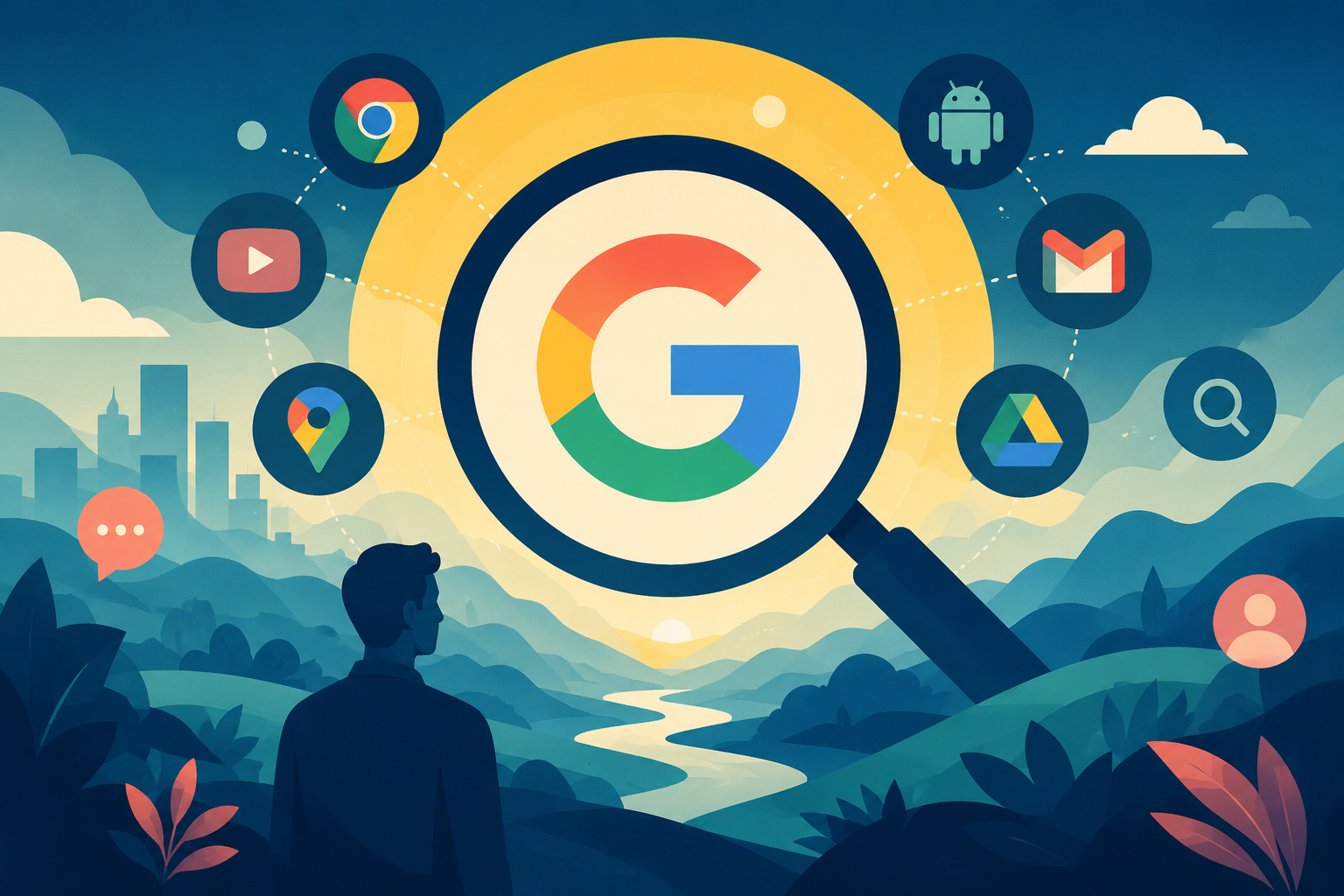
Google continues to dominate information discovery through habit, scale, ecosystem strength and a search experience built around user intent.
Looking for a Shorter Overview?
AI Summary
Key Moments
Ecosystem Integration
Google's interconnected services create frictionless user experiences across Chrome, YouTube, Maps, Gmail, and Android.Habitual Behavior
98.9% of users stick with Google by default, demonstrating powerful behavioral barriers to switching.AI-Driven Discovery
Google expands beyond search with AI features like People Also Ask, Discover, and proactive information surfacing.Brand Credibility Shift
Modern search results pages have become brand experience spaces, making visibility and credibility crucial.When people want to find something online, the instinct is still remarkably simple: they Google it. Even as ChatGPT, TikTok, Reddit, YouTube and other platforms change how people discover information, Google remains deeply embedded in everyday search behaviour. Its strength, however, is not simply about having a good search engine. Over time, Google has built an ecosystem, a habit and a level of familiarity that make it difficult for competitors to displace.
Why Google Still Holds the Advantage
One of Google’s biggest strengths is that it has become part of the way people navigate the internet. Search is only one part of the experience. Chrome, YouTube, Maps, Gmail, Drive, Android and other products create multiple points of interaction with the same brand. Each service can make the next one easier to adopt because users already understand how the ecosystem works. That familiarity reduces friction and gives Google an advantage that a standalone search competitor may struggle to replicate.
There is also a behavioural advantage. People often do not actively compare search engines before making a choice. They simply use the one that is already set as their default or the one they have become accustomed to using. Research discussed by Wharton found that only 1.1% of Google users voluntarily switched to Bing when given the option, while a much larger proportion continued using Bing after being paid to try it. The finding highlights an important point: market dominance is not only about product quality. Defaults, familiarity and habit can shape consumer behaviour just as strongly.
Google has also become much more than a page of blue links. Its search results increasingly answer questions directly through features such as People Also Ask, images, videos, local results and other information panels. For brands, this means simply ranking first is no longer the entire game. The search results page itself has become a space where brands establish credibility, answer questions and influence what people see about them.
That matters because discovery and brand perception are now closely connected. When someone searches for a company, product or category, the information surrounding that search can shape what they believe before they ever visit the brand’s website. Google effectively becomes part of the brand experience. This is why businesses need to think beyond traditional SEO and consider how their brand appears across different types of search results.
At the same time, Google’s position is not untouchable. The way people discover information is changing. Younger users increasingly turn to platforms such as TikTok, Reddit and YouTube for recommendations, while AI tools such as ChatGPT and Perplexity are becoming part of the research journey. Search is becoming more fragmented, with consumers choosing platforms based on the kind of answer they want rather than automatically starting with a traditional search engine.
Also read: Why Psychological Ownership Creates Loyal Customers
Google is responding to this shift by bringing more AI into Search and expanding discovery through products such as Google Discover. Discover is particularly interesting because it does not require users to type a query. Instead, it surfaces content based on their interests and behaviour, turning Google from a place people visit only when they have a question into a platform that can proactively introduce them to information.
For marketers, the lesson is not to abandon Google because new platforms are emerging. It is to stop thinking of discovery as a single channel. Google remains hugely important, particularly when consumers have a clear intent to find information, compare options or make a decision. But brands also need to build visibility across social platforms, communities, video platforms and AI-powered discovery tools.
Google’s greatest advantage may ultimately be the habit it has created. People do not just recognise the brand; they use its name as a verb. That is an extraordinary level of brand integration. Competitors can build better features, new interfaces or alternative ways to search, but changing a behaviour that has become almost instinctive is much harder.
The future of information discovery will undoubtedly be more fragmented and AI-driven. But Google’s combination of scale, ecosystem, familiarity and habitual use means it is unlikely to disappear from the centre of that journey anytime soon. The real question for brands is no longer whether people will search on Google. It is whether they will be visible, credible and useful wherever people choose to look for answers next.