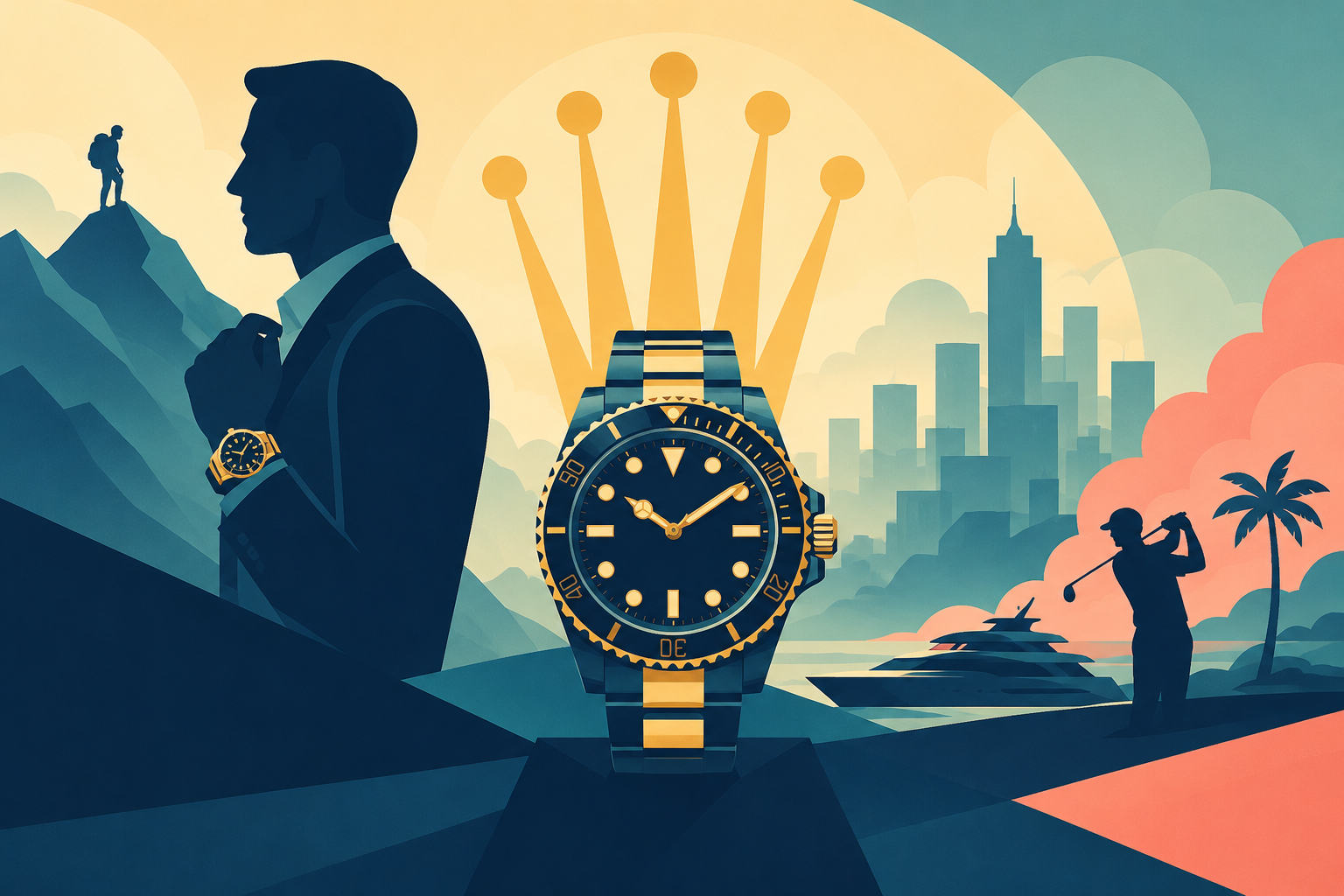
Discover how Rolex Branding turned luxury watches into status symbols through consistency, scarcity and timeless positioning.
Looking for a Shorter Overview?
AI Summary
Key Moments
From Specs to Identity
Rolex shifted from technical innovation to selling a narrative of success and personal achievement.Perception Trumps Pricing
Prestige is built on consumer perception, not on high price or features alone.Consistent, Restrained Branding
Uniform visual identity, selective partnerships, and incremental launches create lasting trust and desirability.Scarcity via Controlled Supply
Limited availability and a curated buying experience turn ownership into a sense of personal triumph.Most luxury brands aspire to become status symbols. Very few actually succeed. That is what makes Rolex Branding one of the most fascinating case studies in modern marketing. Rolex does not simply manufacture premium watches. It has spent more than a century creating a brand that people associate with success, achievement and lasting value.
Interestingly, Rolex did not always market itself this way. Its early advertising focused heavily on technical innovation, highlighting achievements such as the waterproof Oyster case and chronometer-certified accuracy. Over time, however, the company realised that consumers were buying more than engineering. They were buying identity. That shift transformed Rolex from a respected watchmaker into perhaps the world’s most recognisable luxury brand.
Rolex Branding Shows That Meaning Creates More Value Than Features
The biggest lesson from Rolex is that premium pricing alone does not create prestige. Perception does.
In its early years, founder Hans Wilsdorf built credibility by proving the reliability of Rolex watches. Public demonstrations, including Mercedes Gleitze wearing a Rolex Oyster during her English Channel swim in 1927, reinforced the idea that Rolex produced watches capable of extraordinary performance. Similar associations with mountaineers, aviators and explorers strengthened the brand’s reputation for durability and precision.
As the decades passed, Rolex evolved its communication strategy. Rather than continuing to promote technical specifications, it increasingly focused on the people who wore the watches. Business leaders, elite athletes, artists and explorers became the face of the brand. The watch itself became a symbol of accomplishment rather than simply an object of craftsmanship.
That transition fundamentally changed how consumers viewed Rolex. Instead of asking whether it was a good watch, people began asking what owning one said about them.
Status Is Earned Through Consistency, Not Exclusivity Alone
Scarcity often receives the most attention in discussions about Rolex. Waiting lists, limited availability, and strong resale values have all contributed to the brand’s desirability. While scarcity certainly plays a role, it is only effective because it rests on decades of consistent brand building.
Rolex has never relied on short-term marketing trends or aggressive promotional campaigns. Its advertising has remained remarkably disciplined. The visual identity changes very little, messaging stays understated, and partnerships are carefully selected. Whether sponsoring Wimbledon, Formula 1, professional golf or scientific exploration, Rolex consistently associates itself with excellence rather than popularity.
Also read: How Sensory Branding Creates Memorable Consumer Experiences
This consistency creates familiarity without making the brand feel commonplace. Consumers know what Rolex stands for because the company has repeated the same values for decades instead of reinventing itself every few years.
Another important aspect of Rolex Branding is restraint. The company rarely chases viral moments or cultural trends. New product launches are incremental rather than revolutionary, preserving recognisable designs across generations. A Submariner from decades ago is still instantly recognisable today. That continuity reinforces trust while strengthening the emotional value attached to ownership.
Rolex also benefits from carefully controlled distribution. Watches are primarily sold through authorised retailers, and demand regularly exceeds supply for many popular models. Whether this imbalance is entirely intentional or simply reflects overwhelming global demand, the result is the same: acquiring a Rolex often feels like an achievement rather than a routine purchase. The buying experience itself becomes part of the product’s perceived value.
Perhaps the most powerful aspect of Rolex’s strategy is that it never appears desperate for attention. The brand does not flood the market with discounts, constant collaborations or excessive advertising. Instead, it allows its reputation, heritage and long-standing associations to reinforce its desirability. In luxury marketing, confidence often communicates more effectively than constant visibility.
For marketers, the lesson extends well beyond watches. Consumers rarely pay premium prices because of specifications alone. They pay for trust, identity, recognition, and the emotions attached to ownership. Features may justify a purchase, but meaning often justifies the price.
Rolex understood this decades before many other brands. By shifting the conversation from product performance to personal achievement, it transformed a mechanical watch into a global status symbol. That is why Rolex Branding remains one of the clearest examples of how brands create value not merely through what they make, but through what they come to represent.