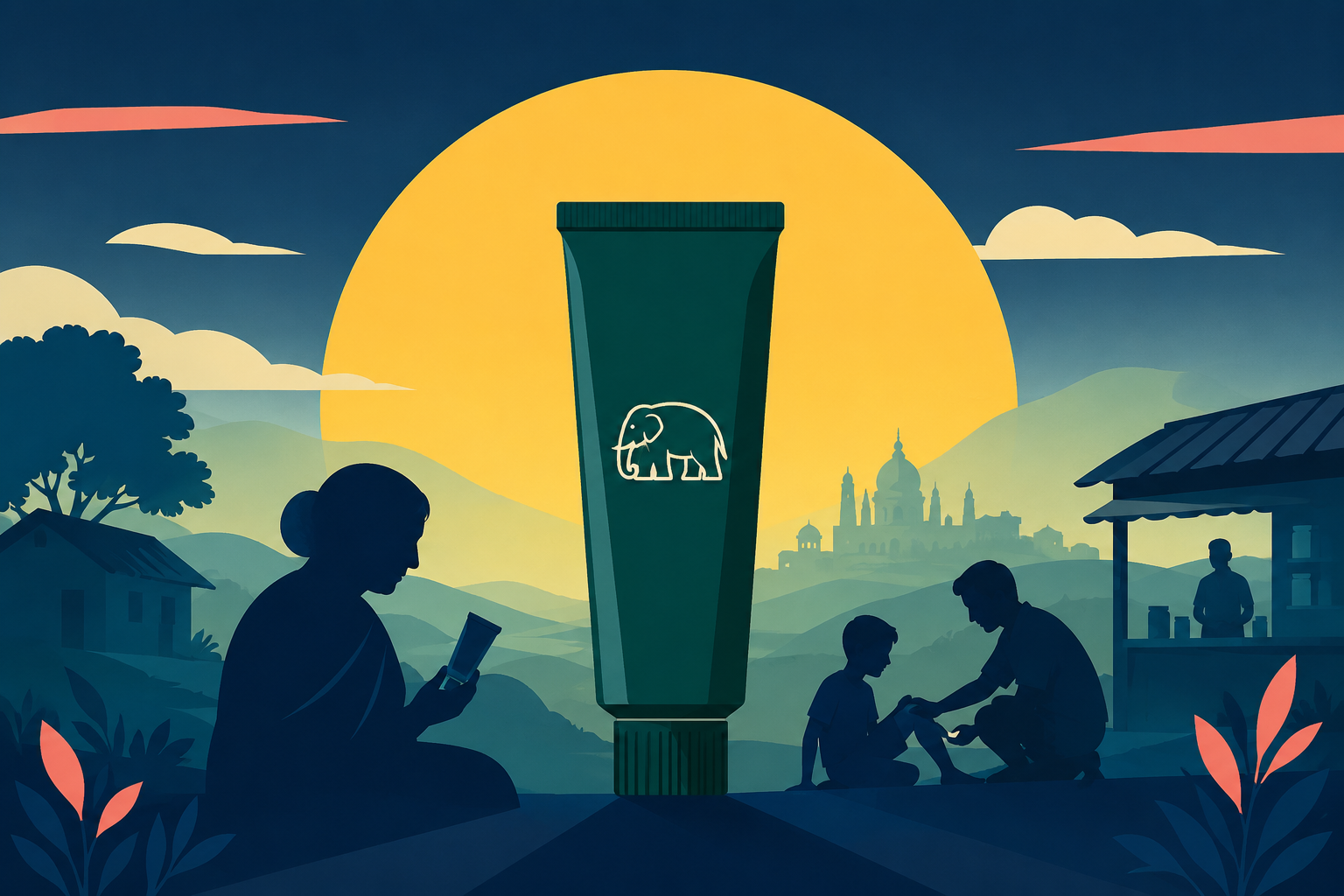
Boroline branding shows how trust, consistency and a product that works can outlast trends, redesigns and bigger marketing budgets.
Looking for a Shorter Overview?
AI Summary
Key Moments
Enduring Trust Through Simplicity
Boroline built nearly a century of customer loyalty with its simple formula and unchanged green tube design.Historical Brand Connection
The 1947 free distribution cemented Boroline as part of India's independence era and collective memory.Symbolism Over Trends
The elephant logo represents strength and cultural significance while the green tube remains unchanged.Performance-Driven Branding
Families pass down the habit because the cream actually delivers results for everyday skin issues.Nowadays, skincare brands launch a new vitamin C serum or night cream almost every week. D2C startups burn millions of rupees on packaging redesigns, constantly changing fonts and colours to appeal to an aesthetic-loving, social media-driven Gen Z.
But near the billing counter, there is a dark green tube that proves the enduring power of Boroline branding. It is a masterclass in completely ignoring the modern marketing playbook.
The Boroline story begins in 1929 in Kolkata. Gour Mohan Dutta was a Bengali merchant dealing in imported foreign goods. At the time, the Swadeshi movement was gaining momentum, and Indian consumers were actively demanding local products instead of British imports.
Recognising this shift, Dutta and his wife created a simple antiseptic cream using boric acid and oil. The naming strategy was brilliantly straightforward. They took “Boro” from boric acid, added “oline” from the Latin word for oil, and launched the product under G.D. Pharmaceuticals.
The Generational Power of Boroline Branding
When a modern startup faces a dip in sales, the boardroom often panics. Executives hire expensive agencies to reinvent the company’s image.
The conventional wisdom is that businesses must constantly evolve to stay relevant. But the true genius of Boroline branding lies in its stubborn refusal to change.
The elephant logo itself is a masterclass in positioning. The founders didn’t choose a complicated scientific symbol. Instead, they selected an elephant to represent strength while also carrying a subtle, auspicious association with Lord Ganesha.
A farmer in a remote village or a factory worker in a metro city could instantly recognise and trust the symbol. Even today, many rural consumers simply walk into a shop and ask for “hatiwala cream.”
The founders understood something that many marketers still overlook. People don’t buy a medicinal cream because of sleek, minimalist packaging. Families buy Boroline because it heals cracked heels, soothes dry winter lips, and helps minor cuts recover.
The formula simply works. Because the product consistently delivers on its promise, the green tube never needed to look trendy.
Consider the reality of a typical Indian household. When a child scrapes a knee while playing cricket or a shopkeeper in Bihar struggles with painfully dry skin during winter, nobody searches Google for the latest dermatological solution.
A grandmother simply reaches into a wooden cabinet and pulls out the familiar green tube with the elephant logo. No targeted advertisement or influencer campaign can manufacture that level of deep, generational trust.
When modern marketers study Boroline branding, they often overlook its powerful historical foundation. On 15 August 1947, when India gained independence, G.D. Pharmaceuticals distributed more than one lakh tubes of Boroline free of cost.
That single gesture didn’t just create brand awareness. It cemented Boroline as an emotional and patriotic part of India’s collective memory.
Today, luxury cosmetic companies spend fortunes trying to develop a signature fragrance. Meanwhile, Boroline’s strong medicinal smell instantly evokes childhood memories for millions of Indians.
Consumers don’t just recognise the scent of a product. They associate it with safety, home, and comforting winter mornings.
Rival pharmaceutical companies have virtually unlimited marketing budgets. They continue launching advanced antiseptic creams in modern, hygienic pump bottles.
Also read: How Consumer Behaviour Continues to Evolve in the AI Era
Yet these corporations have never managed to dethrone a product that has existed for nearly a century. They lose because no marketing department can buy a hundred years of earned trust.
The ultimate lesson of Boroline branding is remarkably simple. Founders don’t need to reinvent their businesses every five years just to remain relevant.
If a company builds a product so effective that families pass the purchasing habit down through three generations, marketing becomes far easier because trust has already been established.
Brands need to stop obsessing over fresh logos and trendy social media personalities. Build a product that genuinely works, price it honestly, and never break the original promise.
– Written by Rajnish Singh, a copywriter and strategist with a background in fast-paced journalism, who explores the gap between what brands promise and how consumers actually behave.