Why word of mouth still outperforms paid advertising by building trust, reducing buyer risk, and turning customers into advocates.
Looking for a Shorter Overview?
AI Summary
Key Moments
Brains Ignore Paid Ads
Scroll‑stopping ads are filtered out as corporate manipulation.Social Risk Builds Trust
Friends risk their reputation by recommending products.Influencers Feel Inauthentic
Sponsored content is seen as transactional, eroding trust.Excellence Fuels Word of Mouth
Exceptional experiences compel customers to share spontaneously.When a five-second unskippable ad plays before a video, the human brain ignores the message. Instead, the eyes drift to the bottom-right corner of the screen, waiting for the skip button or countdown timer to hit zero.
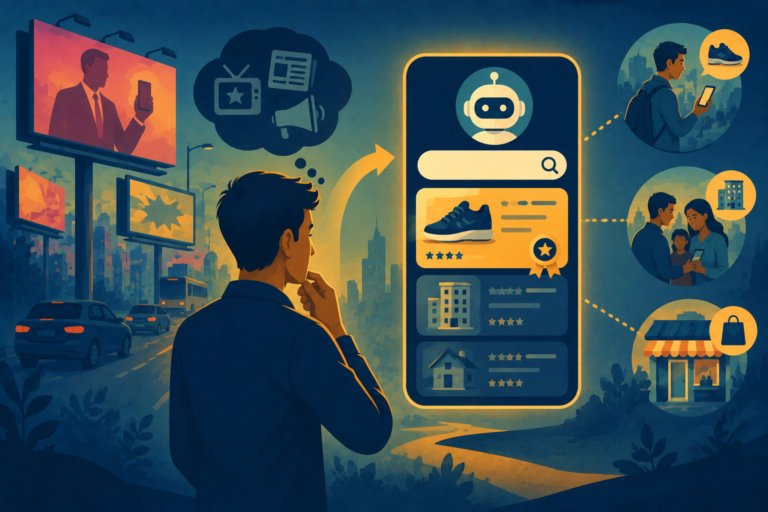
Consumers hate being sold to. The modern internet is full of sponsored posts, pop-up banners, and paid endorsements. Because buyers know a brand paid for that exact placement, the brain instantly flags the content as a corporate trap. Trust disappears.
Marketing departments invest huge budgets trying to build connections through targeted algorithms. But the most powerful conversion engine in retail requires zero ad spend, uses no tracking pixels, and turns doubtful strangers into loyal buyers overnight.
This invisible engine is word of mouth, and it remains the undisputed king of commerce.
Word of Mouth Bypasses the Brain’s Spam Filter
Every time a consumer opens their wallet, they experience a spike in anxiety. Buyers fear wasting their hard-earned money on the wrong product and regretting the decision afterwards.
Paid advertising tries to calm this anxiety with polished campaigns and corporate promises. However, a billboard cannot look a buyer in the eye and guarantee a flawless experience.
A friend, a neighbour, or a coworker can.
When a colleague leans across a desk and recommends a specific software tool, or when a friend swears by a local mechanic, a fundamental shift happens. The recommendation becomes an emotional shield.
The person making the suggestion is putting their own reputation on the line. If the software crashes or the mechanic fails to deliver, the friend is the one who looks bad.
The buyer instinctively understands this social contract. Because the friend is taking the risk of being wrong, the buyer unconsciously lowers their defences. The brain’s spam filter switches off.
Look at how people make high-stakes decisions in everyday life. If a family urgently needs a doctor, they don’t search the internet and click the first sponsored result. They call relatives and ask for a recommendation.
A traveller visiting a new city rarely trusts a restaurant’s flashy website. Instead, they ask a local shopkeeper or a cab driver where to eat.
In recent years, brands have tried to imitate this organic trust by paying influencers to promote products. Executives assumed that an influencer speaking directly to a camera would feel like a friend giving genuine advice.
But today’s consumers are smarter than that. They know the influencer received a paycheck to recite the brand’s best features with a rehearsed smile. More often than not, these tactics make the company appear even less authentic, and whatever trust remained disappears instantly.
True word of mouth cannot be bought. It has to be earned through execution.
Many businesses mistakenly treat organic conversation as a lucky accident. They assume it simply happens if a product exists long enough. In reality, earning recommendations requires relentless operational excellence.
A brand must deliver an experience so undeniably good that customers feel compelled to tell others about it.
People love sharing great discoveries. Recommending a brilliant restaurant, an outstanding app, or a hidden gem elevates the sharer’s own social status. Everyone wants to be seen as the person who knows the best places, the smartest solutions, or the products everyone else hasn’t discovered yet.
Consider the retail market in any major city. A large corporate grocery chain can buy front-page newspaper ads every Sunday. It can launch loyalty programs and spend heavily on promotions.
Also read: Why Brand Ownership Goes Beyond Legal Protection
Yet the small independent sweet or samosa shop in your neighbourhood still has a crowd outside its door without spending a single rupee on marketing.
The shop survives almost entirely on word of mouth, with neighbourhood families telling new residents exactly where to find the tastiest sweets and samosas. The corporate chain has the budget, but the local shop owns the conversation.
If a business offers an average product, nobody talks about it. Genuine conversations begin only when a brand exceeds expectations in a memorable way.
Founders need to stop obsessing over lowering the cost per click on digital advertising. A cheap click means very little if the product itself is forgettable.
The ultimate marketing strategy is remarkably simple: build something so genuinely good that your existing customers cannot stop talking about it. Once a business earns that level of passionate, unpaid advocacy, the advertising budget becomes far less important.
— Written by Rajnish Singh, a copywriter and strategist with a background in fast-paced journalism, who explores the gap between what brands promise and how consumers actually behave.