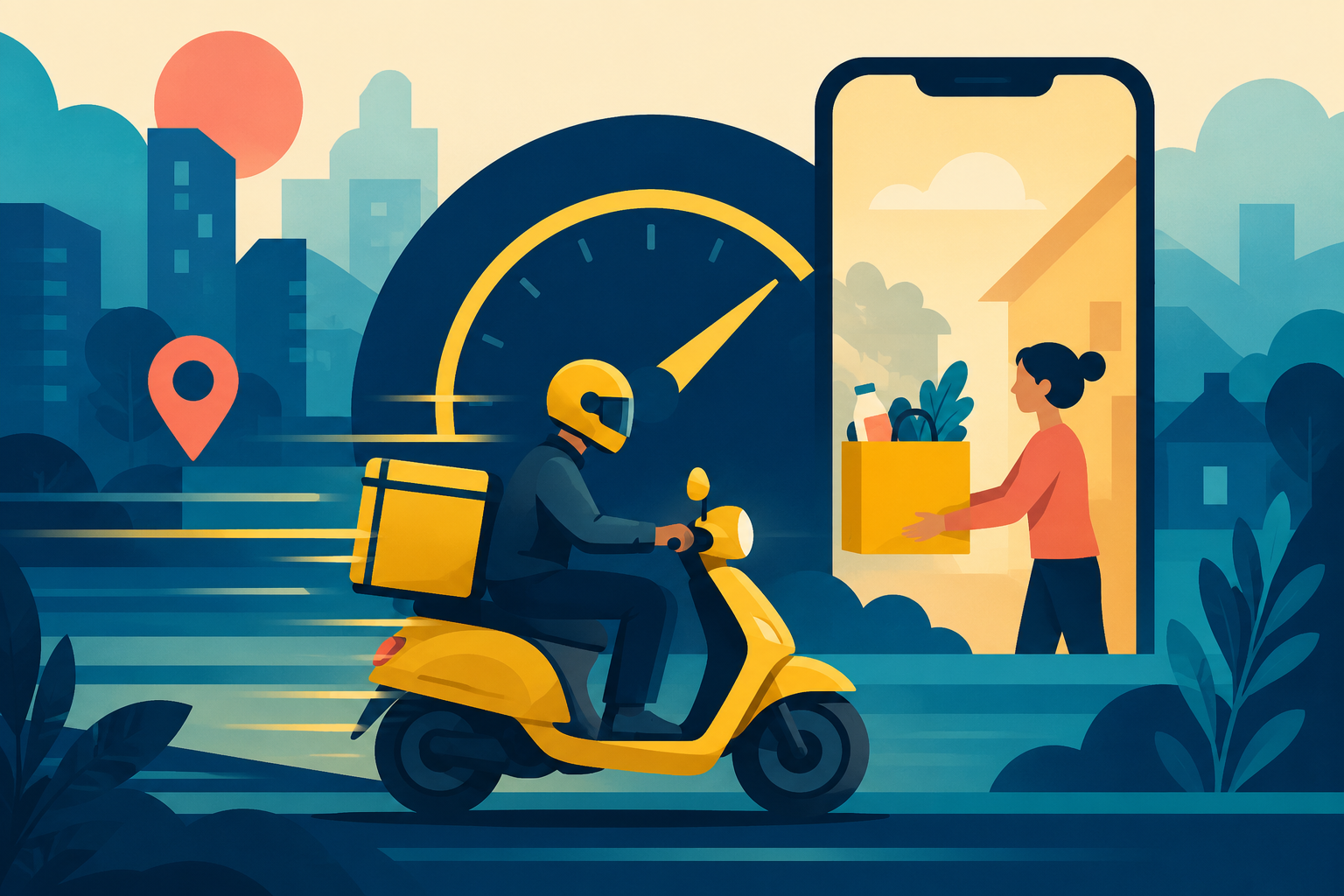
Blinkit Branding shows how speed became a trusted brand promise, turning everyday urgency into lasting customer habits and trust.
Looking for a Shorter Overview?
AI Summary
Key Moments
First Thought, Not First Choice
Blinkit aims to be people's immediate mental trigger, not just their preferred option when comparing choices.Speed as Core Brand Promise
The brand's strength isn't price or variety, but a single clear commitment to rapid delivery.Emotional Reassurance Over Products
Blinkit sells the feeling of security during urgent moments, not individual grocery items.Building Habits Through Consistency
Daily reliable service creates automatic customer behavior that's hard for competitors to replicate.It usually starts with a small panic.
You’re halfway through making tea and realise there’s no milk. Guests are about to arrive, someone forgot to buy soft drinks, or you’re cooking dinner when you suddenly notice the coriander is missing. These are tiny problems, but at that moment, they feel surprisingly urgent.
A few years ago, the only solution was to grab your keys and rush to the nearest grocery store. Today, most people instinctively reach for their phones and say, “I’ll order it on Blinkit.” What’s interesting is that this thought comes almost automatically. That’s what makes Blinkit Branding so fascinating. It didn’t just build a delivery service. It built a habit.
Why Blinkit Branding Is Really About Becoming the First Thought
Most brands spend years trying to become people’s first choice. Blinkit aimed for something even bigger. It wanted to become people’s first thought.
There’s an important difference between the two because when people are in a hurry, they don’t usually compare ten different options. They simply open the app they trust the most.
When someone says they’re hungry, names like Domino’s or Swiggy naturally come to mind. In the same way, when someone suddenly needs groceries in the middle of the day, Blinkit has managed to create a place for itself in people’s minds. That’s not because it always has the cheapest products. It’s because it has one very clear idea: speed.
The smartest part is that Blinkit rarely sells groceries in its advertisements. Instead, it sells situations that almost everyone has experienced. A forgotten birthday candle, ice cream for an unexpected craving, medicine for someone feeling unwell, or last-minute ingredients before guests arrive. The products change every time, but the emotion remains exactly the same.
That emotion is reassurance.
Blinkit quietly tells customers, “Don’t worry. We’ll get it to you.”
That’s exactly what Blinkit Branding has been reinforcing over the years. The advertisements aren’t really about milk, bread, or vegetables. They’re about solving small problems before they become bigger ones.
Think about how people actually use the app. Very few open Blinkit because they’re bored and want to browse groceries. Most people use it because something unexpected has happened and they’re already running out of time. The app simply removes one small headache from an already busy day, and customers often remember that feeling more than the order itself.
A similar example is Domino’s. Years ago, Domino’s became famous for promising fast delivery. People didn’t remember every pizza they ordered, but they remembered that if they were hungry, Domino’s would get there quickly. Blinkit has achieved something similar by making speed a part of its identity rather than just another feature.
Also read: Why Every Brand Eventually Needs Brand Simplification
Of course, building a brand around speed also creates pressure. The moment speed becomes your biggest promise, customers naturally become less forgiving.
If a clothing brand delivers a day late, most people move on without thinking much about it. But if Blinkit takes an hour, people immediately feel something has gone wrong.
The interesting part is that an hour isn’t necessarily a long delivery time. It only feels long because Blinkit itself has changed people’s expectations.
That’s the risk every brand takes when it chooses one clear promise. The stronger the promise, the greater the responsibility to deliver it consistently.
Perhaps that’s the biggest reason Blinkit Branding works so well. It doesn’t keep reminding people that it’s fast through clever slogans alone. It simply proves that promise every single day.
Every successful delivery becomes another reason for customers to trust the brand the next time they’re in a hurry.
That’s how strong brands are built. Not through one viral campaign or one memorable advertisement, but through hundreds of small experiences that consistently match what the brand promises. Over time, those experiences become habits, and habits are incredibly difficult for competitors to break.
In the end, Blinkit isn’t just delivering groceries. It’s delivering peace of mind during those moments when time suddenly feels precious and people need a quick solution. That’s why customers remember the brand long after the delivery is complete.
Maybe that’s the biggest lesson for marketers. People rarely become loyal to a brand because of what it says in an advertisement. They become loyal because, at exactly the moment they needed help, the brand showed up and delivered on its promise.
That’s what Blinkit Branding has truly built, and that’s far more difficult to copy than a logo, an app, or even a delivery network.
– Written by Bhavya Singhal, an Emerging Journalist and a Digital Media and Communication student exploring branding, marketing strategy, and consumer psychology through practical observations and real-world examples.