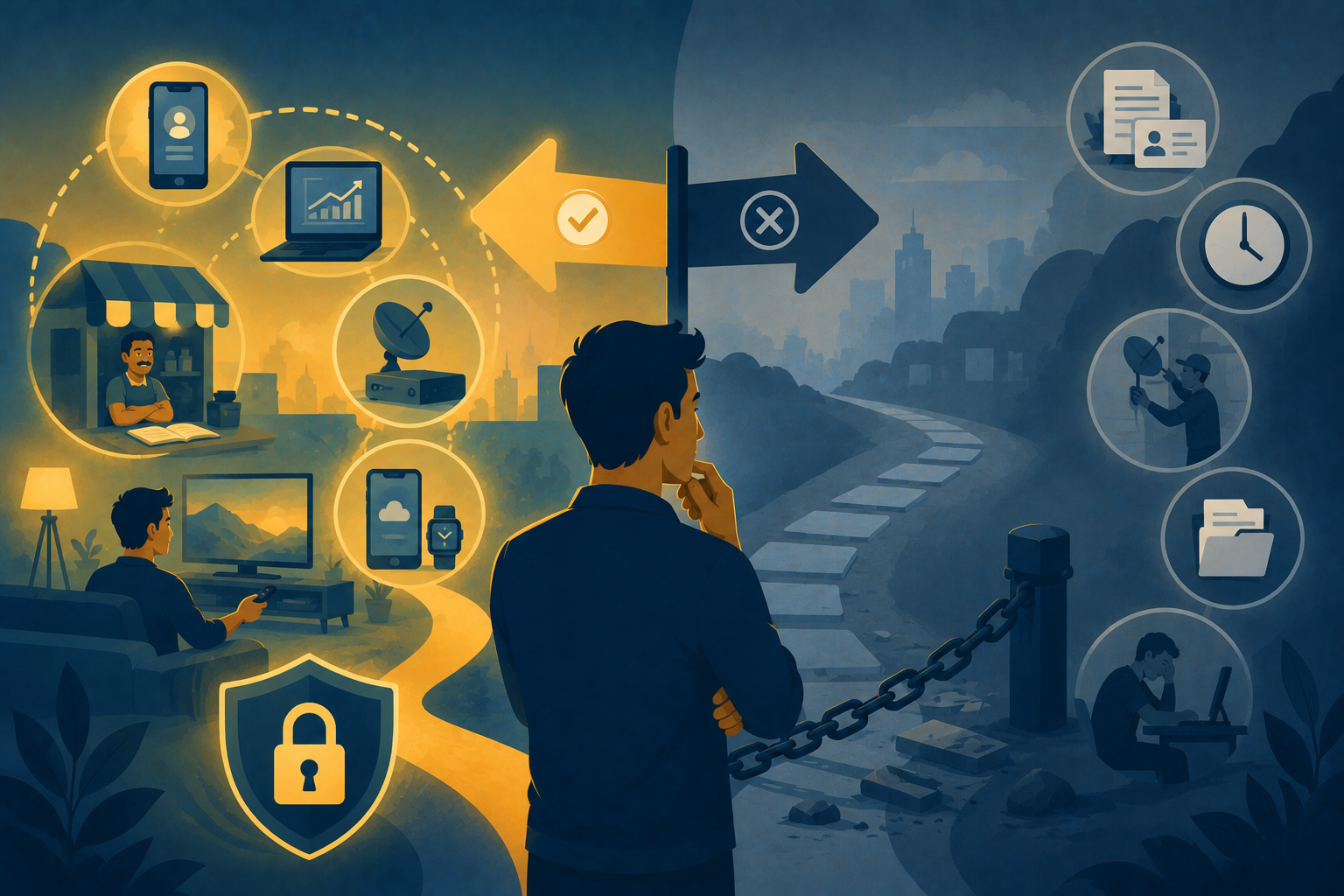
Stop fighting rival discounts. Learn how building high switching costs keeps your customers loyal to your brand.
Looking for a Shorter Overview?
AI Summary
Key Moments
High switching costs protect business income
Non-monetary barriers like time and effort keep customers loyal regardless of price competition.Personal relationships build switching barriers
Local shops create loyalty through trust, credit, and personalized service that big retailers can't match.Technology integration creates switching friction
Device ecosystems like iCloud and smartwatches lock users into brands through compatibility and data loss.Convenience beats discounts
Physical hassle and training time make customers prefer higher-priced familiar solutions over cheaper alternatives.Changing a mobile network should be easy. A new SIM card only costs a few rupees at the local market. Rival telecom companies constantly run television advertisements offering cheaper internet data and free calling plans to attract new users.
Yet most people keep the same phone number for years. Changing a ten-digit number means visiting the bank to update passbook records. It also means linking Aadhaar all over again and missing important OTP messages for days.
All this extra work is exactly what we call switching costs. Because switching costs are high, buyers choose to stay with their current network even when a cheaper option is available.
Why fear of Switching Costs Keeps Buyers Loyal
Look at daily office work to understand this better. A small clothing shop owner uses Tally software to manage daily bills and track stock. A new software company might launch a much faster billing program at half the price. The shop owner still refuses to change.
Moving to the new programme means training five staff members all over again from zero. It also means manually typing years-old GST records and customer phone numbers into a blank computer screen.
The fear of this wasted time creates very high switching costs. The business owner happily pays the older software company just to avoid the confusion of a fresh start. This daily hassle stops the old software from losing customers.
This rule works the same way in local markets. Almost every neighbourhood in India has a trusted kirana store. A big supermarket might open two kilometres away. It may offer huge discounts on soap, dal, and cooking oil, but the local shopkeeper gives monthly credit in a small notebook without asking any questions. He knows exactly which brand of tea leaves his regular buyers like to drink.
To switch to the big supermarket, a shopper has to pay cash upfront. They also have to search through huge shelves every time just to find a soap bar. Losing that easy local relationship adds huge switching costs. Buyers simply ignore the supermarket discounts because the local shop feels completely effortless.
We see a similar habit right in the living room. A family uses a specific DTH dish connection to watch television. A rival dish company might offer two months of free viewing. But changing the connection means calling a mechanic to the house. It requires drilling new holes in the roof and replacing the wires behind the television stand.
The family ignores the free offer because dealing with the mechanic is too much work. This physical hassle is another perfect example of switching costs. People would rather pay their current monthly bill than deal with the dust and noise of a new installation.
Mobile phone companies build their entire business around this exact rule. When someone buys an iPhone, they start using iCloud to save family photos. They may also buy a smartwatch that only connects to that specific phone model. If the user decides to switch to a cheaper Android device two years later, they lose easy access to those old photos.
The expensive watch also stops working entirely. Breaking these daily habits creates switching costs. The customer keeps using Apple products simply because leaving feels too frustrating and takes too much effort.
Smart companies know that cutting prices is a bad idea. A rival shop can always offer a bigger discount tomorrow morning. Instead, good businesses look for ways to increase switching costs from day one. These companies save user details, offer reward points, or build comfortable daily habits. When a company creates high switching costs, regular buyers stop paying attention to the price tag altogether.
Also read: Why Double Jeopardy Shapes Competitive Markets
Customers do not stay loyal just because they love a brand. Most of the time, they stay because leaving means too much paperwork, extra time, or unnecessary hassle. High switching costs help a business protect its steady income, no matter what rivals do to lower prices.
Loved this article? Read more insightful articles on Brand Custodian.
–Written by Rajnish Singh, a copywriter and strategist with a background in fast-paced journalism, who explores the gap between what brands promise and how consumers actually behave.