Flat pricing is dangerous. See how mastering loss aversion turns ordinary offers into an unstoppable success.
Looking for a Shorter Overview?
AI Summary
Key Moments
Loss Aversion Defined
Losing ₹100 feels roughly twice as painful as gaining ₹100, driving urgency in buying decisions.Urgency Timers
Countdown timers and limited‑time offers create fear of missing lower prices, boosting immediate sales.Loss‑Framed Copy
Phrasing offers as “lose ₹50’ drives higher conversion than “save ₹50’ wording.Quality First
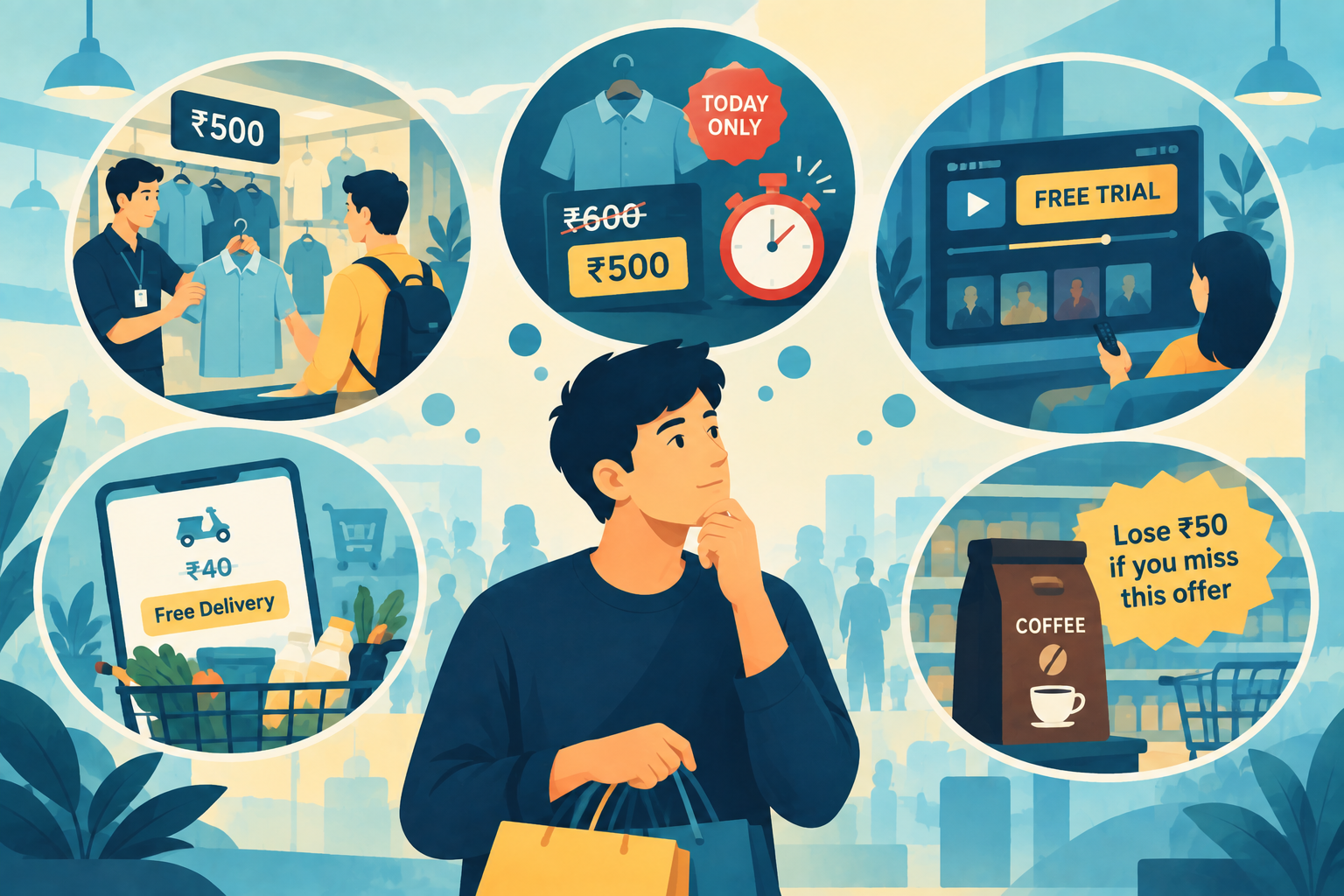
Discounts only work on valuable products; a broken phone won't sell just because it's marked down.Two local shops sell identical cotton shirts, but they use different pricing strategies. One shop keeps its price fixed at ₹500, while the other lists the shirt at ₹600 and offers a ₹100 discount for today only. Despite the higher original price, shoppers often line up at the second shop because they do not want to miss the discount.
This behavior reflects Loss Aversion, the tendency to fear losing something more strongly than we value gaining something of equal worth. Psychologists Amos Tversky and Daniel Kahneman explored this idea in their 1979 ‘Prospect Theory’ research. Their findings suggest that losing ₹100 can feel roughly twice as painful as gaining ₹100 feels satisfying. Loss Aversion encourages customers to act quickly because they want to avoid missing a temporary price reduction.
How Brands Use Loss Aversion to Create Urgency
Online shopping websites often use countdown timers during holiday sales. A television may be shown with a 20% discount while a red clock counts down from 60 minutes. This creates strong Loss Aversion because shoppers feel they are about to lose the lower price.
Some customers may not even need a new television, but the fear of missing the discount can still push them to buy. Behavioral researchers have consistently found that time-limited offers drive significantly more immediate sales than permanent price reductions, because permanent low prices create no urgency. Loss Aversion encourages shoppers to act quickly before the timer reaches zero.
Grocery delivery apps often use Loss Aversion to influence spending. They may charge ₹40 for standard delivery but offer free delivery on orders above ₹500. A shopper might add ₹300 worth of vegetables to their cart, then feel frustrated when the delivery fee appears at checkout.
To avoid paying the ₹40 charge, they may add another ₹200 worth of snacks or other items they did not originally need. Retailers understand this behavior: customers may spend much more than necessary simply to avoid a small delivery fee. In this case, Loss Aversion encourages a shopper to spend ₹200 to save ₹40.
Software companies often use Loss Aversion to encourage subscriptions. Video streaming services may offer a free month of premium access, allowing users to enjoy high-quality movies without paying. When the trial ends, customers must either start paying monthly or give up the service.
As discussed in our previous article about the Default Effect, automatic billing can make it easier for users to remain subscribed. Loss Aversion adds another layer by making people reluctant to lose the entertainment experience they have become used to. Giving up premium video quality can feel like a personal loss, so many trial users continue paying to maintain their viewing habits.
Supermarkets often change the wording on promotional signs to influence sales. To promote a new coffee brand, managers might write, “Save ₹50,” or use stronger language such as, “Lose ₹50 if you miss this offer.”
Marketing researchers tested both messages in real grocery stores and found that signs emphasizing the potential loss generated much higher sales. This demonstrates how Loss Aversion affects the way shoppers respond to ordinary words. By highlighting what customers might lose, the message encourages them to act quickly and buy the coffee rather than miss the discount.
Business owners should remember an important limitation of Loss Aversion: the fear of missing a discount cannot make a useless product valuable. Customers will not buy a broken mobile phone simply because it is 50% off.
The product must offer genuine value first. Smart sellers provide high-quality items and then use limited-time discounts to encourage quick purchases. Customers feel satisfied because they receive a reliable product while also avoiding the fear of missing a good deal. By combining strong product quality with a temporary offer, businesses can increase sales without relying on discounts alone.
Loved this article? Read more insightful articles on Brand Custodian.
–Written by Rajnish Kumar, a copywriter and strategist with a background in fast-paced journalism, who explores the gap between what brands promise and how consumers actually behave.



