Some names become so familiar that we stop thinking of them as brand names.
We say “Google it” instead of “search for it.” We ask someone to “WhatsApp me” instead of “send me a message.” And for years, people didn’t say they were posting on Twitter. They said they were tweeting. That’s a level of recognition most brands spend decades trying to achieve.
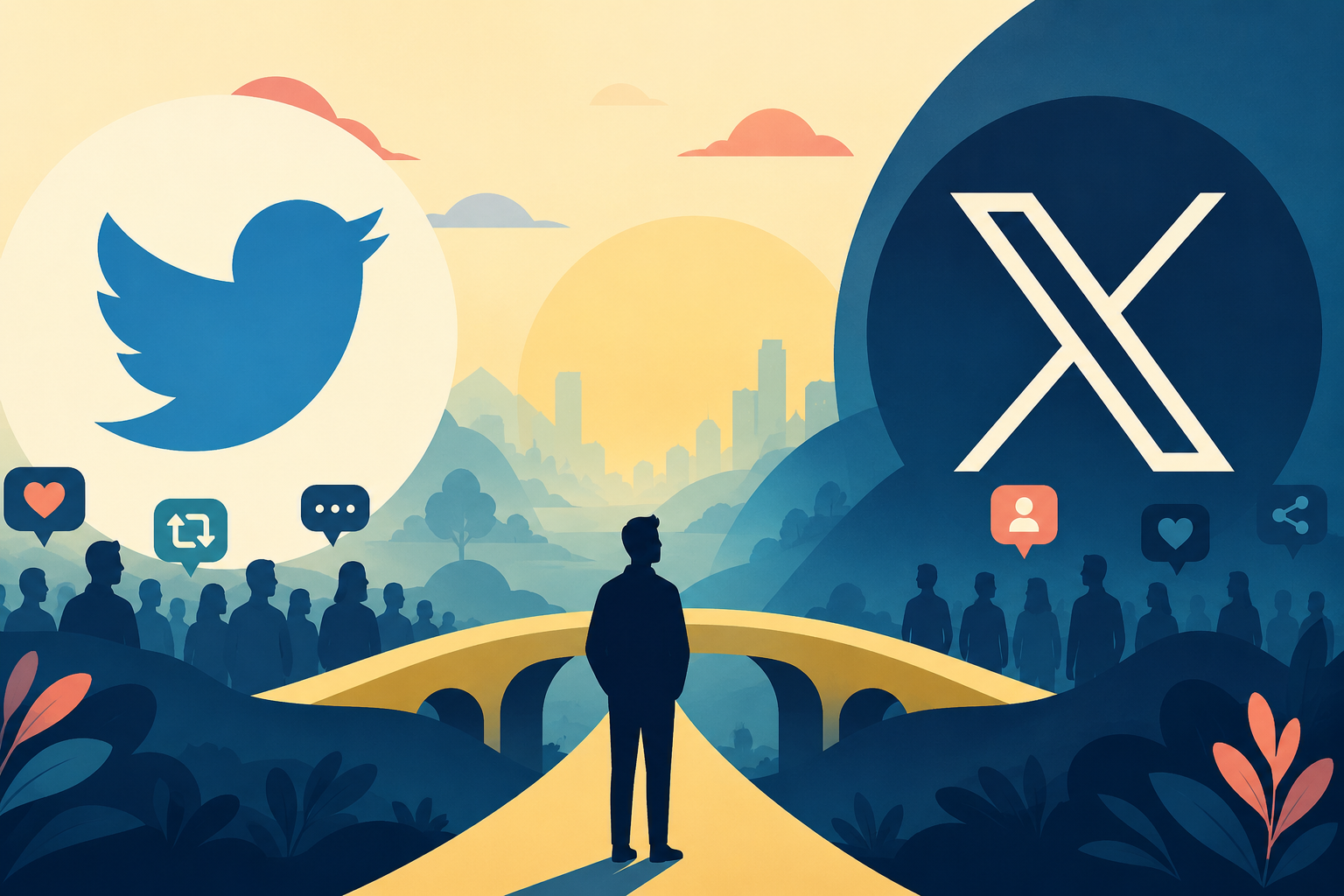
So when Twitter suddenly became X, the internet wasn’t just reacting to a new logo. It was reacting to the disappearance of a name people had unknowingly made a part of their everyday language. That’s what made the Twitter rebrand much bigger than a design update.
Why the Twitter Rebrand Started a Conversation Beyond Logos
Imagine your favourite café changing its name after twenty years.
The coffee is still made by the same people. The menu hasn’t changed much. Even your favourite corner table is still there. But somehow, walking in feels different. You don’t immediately feel at home because the familiarity you’ve built over the years has been interrupted.
That’s exactly what many people experienced with the Twitter rebrand. The platform still allowed people to share posts, follow creators, and join conversations. But the blue bird disappeared, the word “Tweet” slowly started fading away, and suddenly one of the internet’s most recognisable brands looked completely different. It made people realise something they had never really thought about before. A brand isn’t just what you see. It’s what you’ve grown used to.
One of the biggest reasons the Twitter rebrand created so much discussion was because Twitter had achieved something incredibly rare. Its identity had become part of everyday conversation.
News anchors would say, “The Prime Minister tweeted…” Celebrities would ask followers to “retweet” something important. Even people who never created an account knew what a tweet was. That’s powerful brand equity.
It isn’t built through one clever campaign or one successful advertisement. It’s built slowly, through years of consistent experiences until the brand starts feeling familiar.
A similar example can be seen in India with Maggi. Ask someone if they’d like instant noodles, and many people will simply say, “Let’s make Maggi,” even if they’re talking about another brand altogether. That’s what happens when a brand becomes bigger than the product category itself.
Now imagine Maggi suddenly changing its name, replacing the yellow packet, and introducing a completely different identity. The noodles might taste exactly the same. But people would still pause. Not because they dislike change, but because they have an emotional connection with what already exists.
That’s what the Twitter rebrand quietly reminded marketers. Brand equity isn’t sitting inside a logo file. It’s sitting inside people’s memories. That doesn’t mean rebranding is a mistake. Sometimes it’s necessary.
Jaguar is rebranding because it’s moving towards an electric future. Airbnb changed its identity when its business evolved. Brands grow, industries change, and sometimes the old identity no longer reflects where the company wants to go.
Twitter had a similar ambition. Elon Musk wanted X to become much more than a social media platform. From a business perspective, creating a broader identity made sense.
The challenge was that customers weren’t thinking about the company’s long-term vision. They were thinking about the platform they had used for years. And those are two very different perspectives.
Also read: Why Marketing Metrics Often Create More Confusion Than Clarity
Perhaps that’s the biggest lesson from the Twitter rebrand. Companies can redesign a brand in a few months. Customers often need years to rebuild the same emotional connection. That’s why rebranding is never just a design exercise. It’s an exercise in trust, familiarity, and memory.
In the end, the Twitter rebrand wasn’t really a debate about a bird versus the letter “X.” It was a reminder that the most valuable part of a brand is often the part you can’t measure.
You can redesign a logo overnight. You can launch a new identity in a week.
But earning a place in people’s everyday language, habits, and memories takes years. And once you’ve built that, changing it becomes one of the biggest decisions a brand can ever make.
– Written by Bhavya Singhal, an Emerging Journalist and a Digital Media and Communication student exploring branding, marketing strategy, and consumer psychology through practical observations and real-world examples.