Dark Mode Light Mode

What McDonald’s Localisation Strategy Gets Right About Global Branding

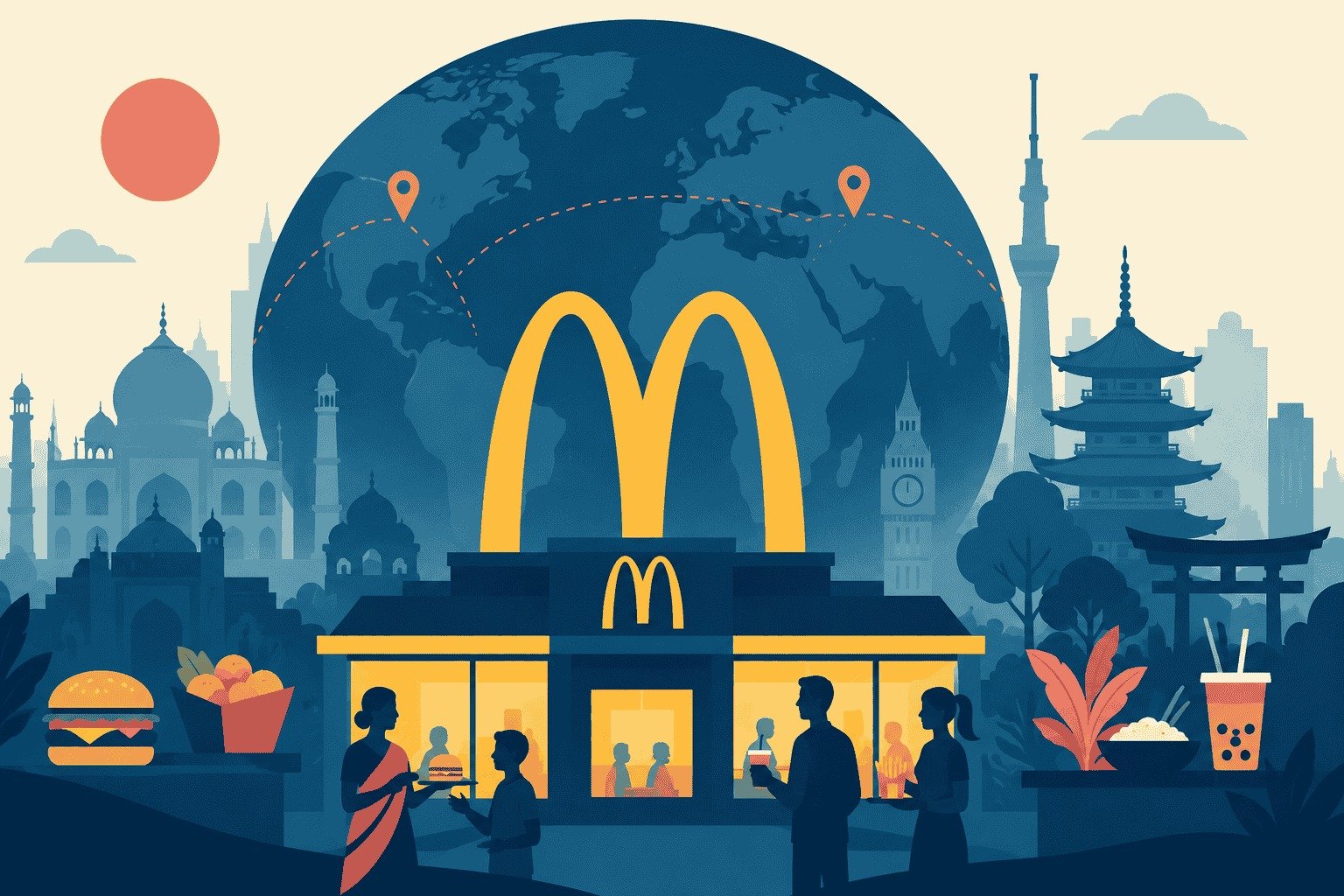
McDonald’s keeps the golden arches while letting local flavors like India’s McAloo Tikki and Japan’s seasonal burgers shape its brand, proving global success comes from adapting to each market’s culture and tastes.
mcdonald's localisation strategy mcdonald's localisation strategy

Looking for a Shorter Overview?

Key Moments

Consistent Visual Identity

McDonald’s protects its golden arches and service model to maintain brand trust globally.

Local Menu Adaptation

The brand tailors its menu to cultural and religious preferences, exemplified by the McAloo Tikki in India and vegetarian options.

Cultural Localization Beyond Food

Advertising, festivals, local suppliers, and pricing are customized to reflect each market’s customs.

Business Impact

Adapting locally makes McDonald’s feel relevant rather than distant, driving consumer connection and brand loyalty.

Walk into a McDonald’s anywhere in the world, and one thing is almost guaranteed: you’ll recognise it before you even step inside. The Golden Arches, the familiar colours, and the promise of a quick meal have become universal. What isn’t universal, however, is what’s on the menu.

In India, there’s the McAloo Tikki. In Japan, seasonal burgers make regular appearances. In Germany, some restaurants even serve beer. That isn’t an inconsistency. It’s good branding. McDonald’s Localisation Strategy has shown that becoming a global brand doesn’t mean offering the same experience everywhere. It means creating a brand people recognise while giving them products that feel relevant to where they live.

McDonald’s Localisation Strategy proves that the strongest global brands don’t try to be the same everywhere

One of the biggest misconceptions about global branding is that consistency means standardisation. It doesn’t. Consistency is about making sure people recognise your brand, not making sure every customer has an identical experience.

Advertisement

McDonald’s has understood that distinction for decades.

Its visual identity rarely changes. The Golden Arches are the same whether you’re in Mumbai, Tokyo, London or São Paulo. The restaurants feel familiar, the service model is largely consistent, and customers know what to expect from the brand. Those are the assets McDonald’s protects because they’re the reason people trust it in the first place.

Everything else is open to adaptation.

India is the clearest example. A menu built around beef would never have worked in a country where religious and cultural preferences play such an important role in food choices. Instead of asking consumers to accept a foreign menu, McDonald’s built one around local tastes. The McAloo Tikki became an icon in its own right, while products like the Paneer Wrap and Chicken Maharaja Mac reflected what Indian consumers actually wanted to eat. Even separate kitchens for vegetarian and non-vegetarian food weren’t simply operational decisions. They signalled respect for local customs.

That’s what makes McDonald’s Localisation Strategy so effective. The company doesn’t view localisation as a compromise. It sees it as part of the brand experience.

The same thinking appears across the world. Japanese restaurants regularly introduce limited-edition burgers inspired by seasonal ingredients. In several Asian markets, drinks such as matcha and milk tea sit comfortably alongside Coca-Cola. In parts of Europe, beer has found a place on the menu because that’s how many people naturally enjoy a casual meal. These aren’t marketing gimmicks. They’re practical decisions based on how people live, eat and socialise in each market.

Also read: What Notion Branding Teaches About Community-Led Brand Growth

Importantly, McDonald’s doesn’t stop at the menu.

Its advertising reflects local festivals, family traditions and cultural moments rather than simply translating campaigns created somewhere else. The company also works with local suppliers, builds regional supply chains and adjusts pricing to match local purchasing power. These decisions are less visible than a new burger, but they’re just as important because they make the brand feel like it belongs in the community rather than operating outside it.

There’s an important lesson here for marketers.

Many businesses expanding internationally worry that adapting to local markets will dilute their brand. In reality, the opposite is often true. Consumers rarely expect global brands to ignore local culture. They expect them to understand it. A company that refuses to adapt can quickly feel distant or out of touch, no matter how strong its global reputation may be.

McDonald’s Localisation Strategy works because the company knows what should never change and what absolutely should. The logo stays. The brand promise stays. The customer experience stays. But the products, the communication and even the operations evolve to reflect the people the brand is serving.

That’s why McDonald’s feels familiar almost everywhere in the world without ever feeling exactly the same. And in an age where brands are expanding across borders faster than ever, that’s perhaps the most valuable branding lesson of all.

Questions Answered

How does McDonald’s balance global brand consistency with local preferences?

Maintains brand identity while customizing offerings.

What specific menu adaptations has McDonald’s made in different countries?

Introduces region‑specific items like McAloo Tikki and seasonal burgers worldwide.

Why is localisation important for global branding success?

Localisation shows brands understand cultural nuances instead of feeling distant.

How does McDonald’s adapt its marketing and supply chain to local cultures?

Tailors advertising, suppliers, and pricing locally to each market according to local purchasing power.

Keep Up to Date with the Most Important News

By pressing the Subscribe button, you confirm that you have read and are agreeing to our Privacy Policy and Terms of Use
Add a comment Add a comment

Leave a Reply

Your email address will not be published. Required fields are marked *

Previous Post
Notion Branding

What Notion Branding Teaches About Community-Led Brand Growth

Next Post
Brand Differentiation

Why Positioning Fails Without Brand Differentiation

Advertisement