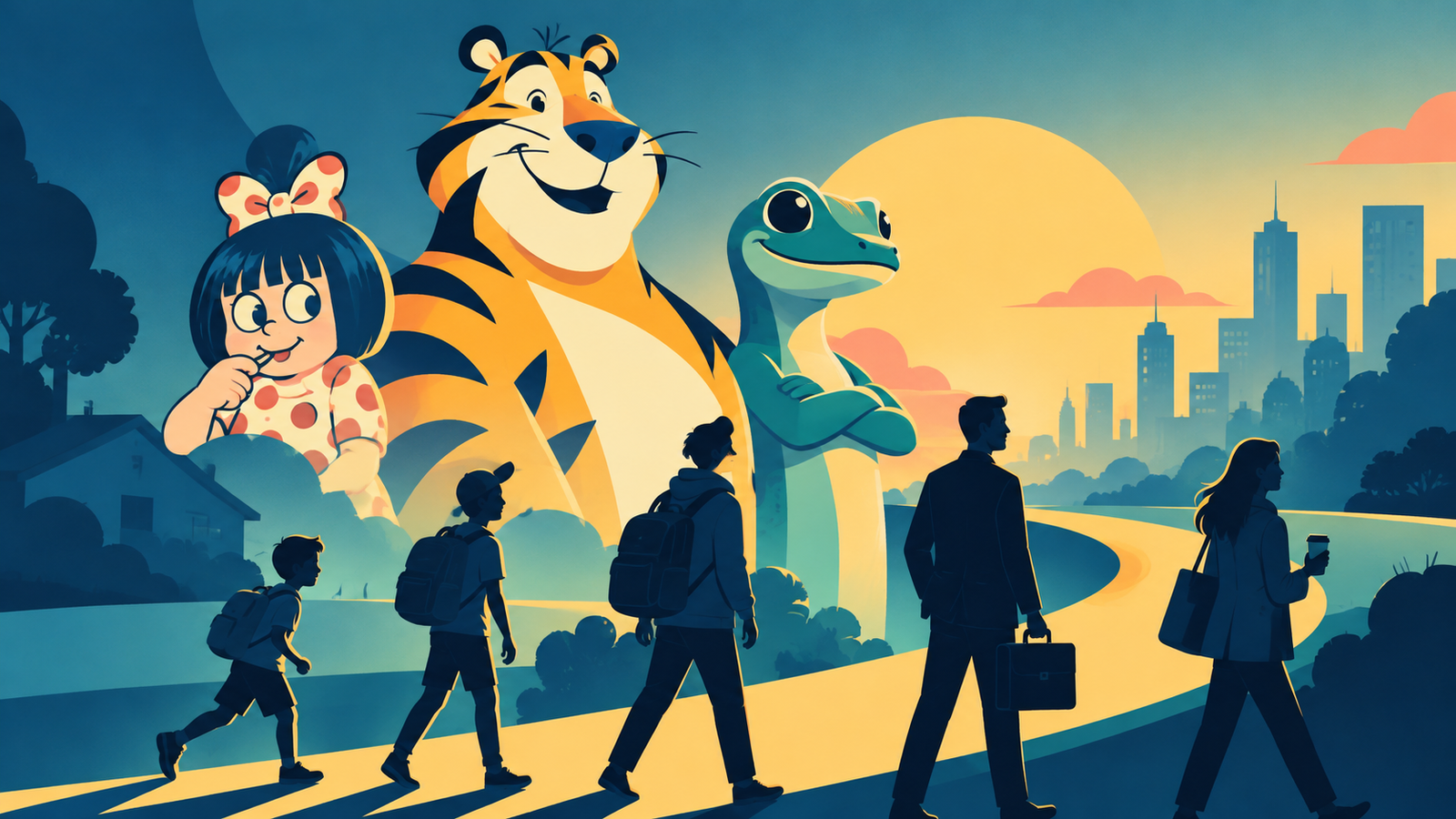
Discover how Brand Mascots build lasting brand recognition through nostalgia, consistency and cultural relevance across generations.
Looking for a Shorter Overview?
AI Summary
Key Moments
Foundational Design Matters
A mascot’s creation, usage, and evolution determine its ability to give a brand a distinctive identity and emotional connection.Cultural Relevance Extends Lifespan
The Amul Girl’s topical commentary on current events shows how mascots stay fresh by reflecting the world around them.Psychological Impact Drives Recognition
People respond to personalities and emotions; a mascot’s consistent look and voice make a brand instantly recognizable.Consistency Over Change
Keeping the mascot’s core personality stable while varying creative executions ensures long‑term brand association.Think of the characters that have stayed with you long after childhood. For many people, these might include Tony the Tiger, the M&M’s characters or the Amul Girl. These figures are more than familiar faces in advertisements. They have become recognisable parts of the brands they represent, remaining relevant across generations. This raises an interesting question for marketers: can Brand Mascots build lasting recognition beyond childhood, or does their appeal depend largely on nostalgia and younger audiences?
The answer lies in how a mascot is created, used, and allowed to evolve. A well-designed character can give a brand a distinctive identity, make its communication more memorable, and create an emotional connection with consumers. However, simply putting an animated character on a product does not guarantee long-term recognition. The real value comes from building a character that people associate with the brand’s personality and promise.
How Brand Mascots Build Recognition Across Generations
Childhood can be an important starting point for mascot recognition, particularly for brands in categories such as breakfast cereals, confectionery and toys. Characters such as Tony the Tiger have been associated with their respective brands for decades, giving successive generations opportunities to encounter the same familiar identity. Adults who recognise these characters may also carry positive memories of the products they encountered when they were younger.
However, nostalgia alone cannot sustain a mascot indefinitely. A character needs to remain relevant to people discovering the brand for the first time while continuing to resonate with existing audiences. This requires a balance between preserving familiar characteristics and adapting the way the mascot appears in contemporary marketing. The character should retain the qualities that make it recognisable without becoming disconnected from changing consumer expectations.
Consider the GEICO Gecko. The character has helped the insurance brand communicate in a category often associated with complex information and serious financial decisions. Its distinctive appearance and conversational personality give advertising a recognisable face without requiring the brand to rely on a different celebrity for every campaign. Its continued association with GEICO illustrates how a mascot can extend well beyond products traditionally marketed to children.
There is also a psychological reason why mascots can be effective. People respond to personalities, stories and emotions, not just product features or advertising claims. A mascot brings these elements together in a single character. Its appearance, expressions, voice and behaviour can communicate something about the brand before a consumer has even processed the message in an advertisement. When these characteristics are used consistently, they can make the brand easier to recognise and recall.
This advantage becomes particularly valuable in crowded categories where competing products may offer similar benefits. A distinctive character can act as a visual cue, helping consumers identify a brand across packaging, television commercials, digital campaigns and retail displays. Over time, repeated exposure can strengthen the association between the character and the company. The mascot becomes part of the brand’s identity rather than simply another element of its advertising.
Amul’s mascot offers an interesting example of how a character can remain relevant by responding to the world around it. The Amul Girl has become closely associated with the brand’s topical advertising, commenting on current events, public figures and cultural moments through its distinctive visual style and wordplay. Rather than relying solely on childhood familiarity, the character connects with audiences through ongoing cultural relevance. Its longevity demonstrates how a mascot can evolve with the times while retaining the recognisable features that make it distinctive.
Also read: Why Does Conversion Friction Matter Even When Consumers Want the Product?
Of course, not every mascot achieves this kind of staying power. A character may initially attract attention but struggle to build a lasting association if it lacks a clear connection to the product or brand. Mascots can also become dated when their humour, appearance or personality no longer resonates with audiences. Marketers therefore need to consider more than whether a character looks appealing. They must understand what it represents, which audience it serves and how it can support the brand’s long-term positioning.
Consistency is equally important. If a mascot changes personality, appearance or communication style with every campaign, consumers may struggle to form a clear association. Creative executions can vary, but the character should continue to reflect the same underlying brand identity. Its role should also extend beyond individual advertisements wherever appropriate, whether through packaging, digital content, retail experiences or other brand touchpoints.
Ultimately, Brand Mascots can build recognition well beyond childhood, but their longevity depends on more than familiarity. Nostalgia may encourage consumers to revisit a character, yet distinctive design, consistent communication and cultural relevance give them reasons to keep engaging with it. For marketers, the goal should not be to create a character that people simply remember from their younger years. It should be to build one that continues to mean something to them as their lives, preferences, and expectations change.
– Written by Saad Rashid, an experienced journalist with extensive experience across both print and digital media. He has worked with various publications in India and internationally and has reached millions of readers through his thought-provoking articles.
Enjoyed this article? Read more here.