Repetition builds trust. Learn how mere exposure turns simple visual reminders into confident consumer purchases.
Looking for a Shorter Overview?
AI Summary
Key Moments
Roadside Cement Billboard
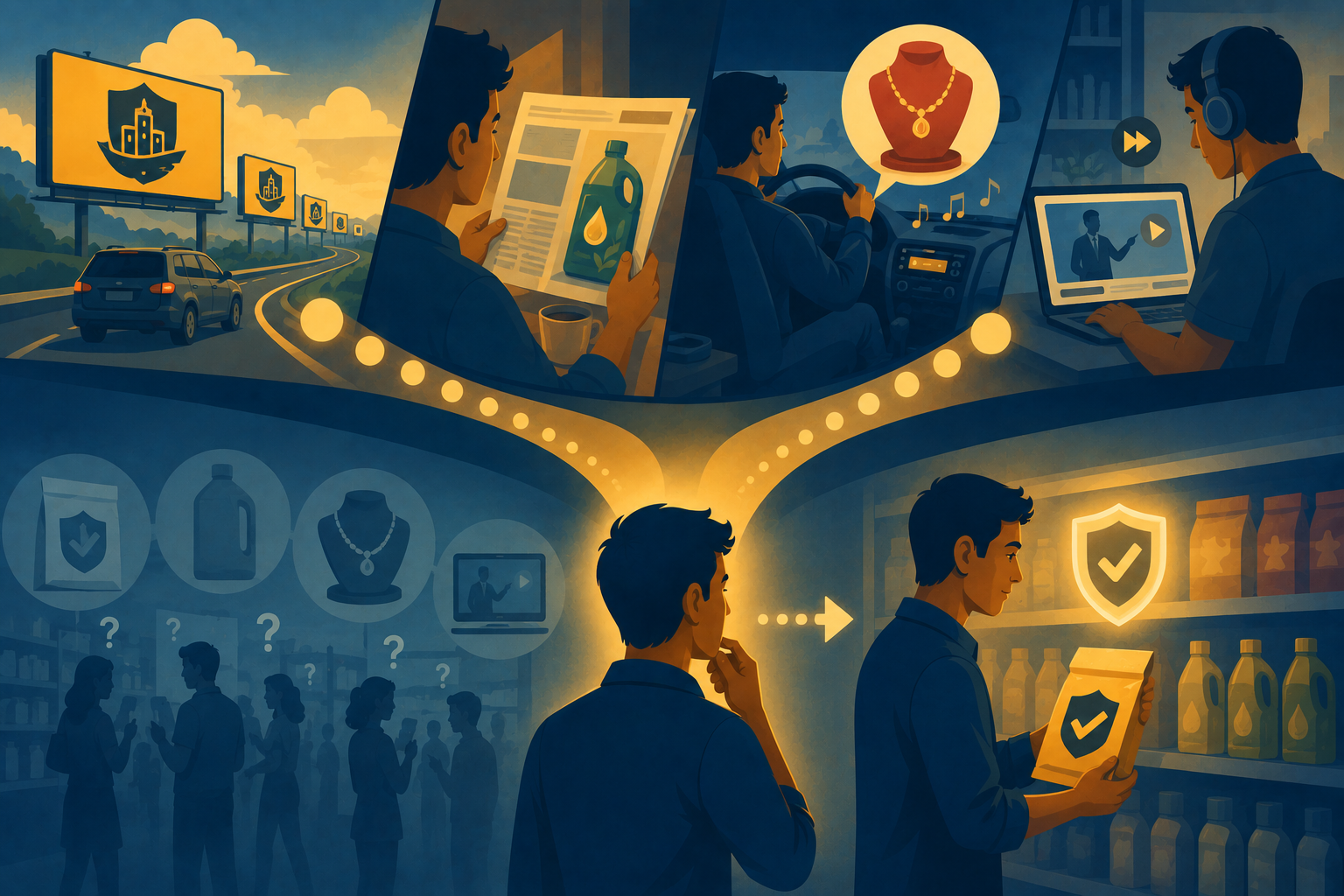
Repeated exposure to a yellow cement ad on a highway made a homeowner trust and buy that brand years later.Cooking Oil Green Bottle
Six months of tiny newspaper images turned an unknown oil into the shopper’s default choice.Radio Jewelry Shop
Daily radio mentions stuck in memory, prompting an uncle to select that jewelry shop for a wedding without research.Online Course Ads
A student’s daily view of a learning website overrode cheaper options, cementing the brand as the top exam‑prep choice.Every ten kilometres, a family passes a large painted yellow wall advertising a specific brand of building cement while travelling from Patna to New Delhi. No one stops the vehicle to read the painted phone numbers.
Nobody plans to build a house while driving to work. But five years later, when a local man finally starts building his own home, he tells his contractor to buy that exact yellow cement. He trusts the name completely just because he has seen it a hundred times on the road. This common reaction happens because of Mere Exposure.
The Mere Exposure effect means people naturally start liking something simply because they see it every day. Seeing a logo again and again can make people feel completely safe.
Why Mere Exposure Builds Blind Trust
The third page of the local Hindi newspaper always features a small picture of a new cooking oil brand. Readers never bother with the long text about vitamins or heart benefits. They just glance at the green bottle image and quickly turn the page. Six months pass like this.
One evening, a regular customer visits the nearby grocery store to pick up his monthly ration. He sees his usual brand and the green bottle from the newspaper sitting together on the shelf. He picks up the green bottle without asking the shopkeeper any questions.
Because of mere exposure, the new oil feels very familiar. The company did not convince him with scientific facts. Repeated mere exposure simply made the green bottle feel much safer than any unknown local brand.
Local FM radio stations play the same short advertisements for jewellery shops every morning. People riding scooters to work ignore the audio completely. Nobody has the money to buy a heavy gold chain on a random day. Two full years later, a marriage date is fixed in the family. Everyone sits in the living room to decide where to buy the wedding jewellery.
An uncle immediately remembers the name of that radio shop. He has never visited the showroom and knows nothing about their gold purity or making charges. But repeated exposure kept the name stuck in his head. Hearing the exact same name every morning made him firmly believe it was the most trusted shop in town.
Internet video sites show five-second ads before every educational video. Students click skip right away. This happens every day for months, and nobody buys the study material on the spot.
As the final exams finally get closer, a nervous student decides to pay for an online course. He types the exact name of the advertised learning website into his phone. Daily Mere Exposure made him ignore ten other, cheaper websites completely. Repeated Mere Exposure convinced him that this company is the safest choice for passing his exams.
Customer trust takes a long time to build in a local market. Buyers rarely purchase an expensive item the first time they see it. A brand has to show up again and again without pushing for an immediate sale. Simple repetition is the best way to compete with bigger brands.
Also read: Why Perceived Value Matters More Than Price on Its Own
Through constant Mere Exposure, a strange new product slowly becomes a familiar daily name. A shopper stops asking questions and simply pays the shopkeeper. Good Mere Exposure makes sure that when a buyer finally needs a product, he remembers only one name.
Loved this article? Read more insightful articles on Brand Custodian.
–Written by Rajnish Singh, a copywriter and strategist with a background in fast-paced journalism, who explores the gap between what brands promise and how consumers actually behave.