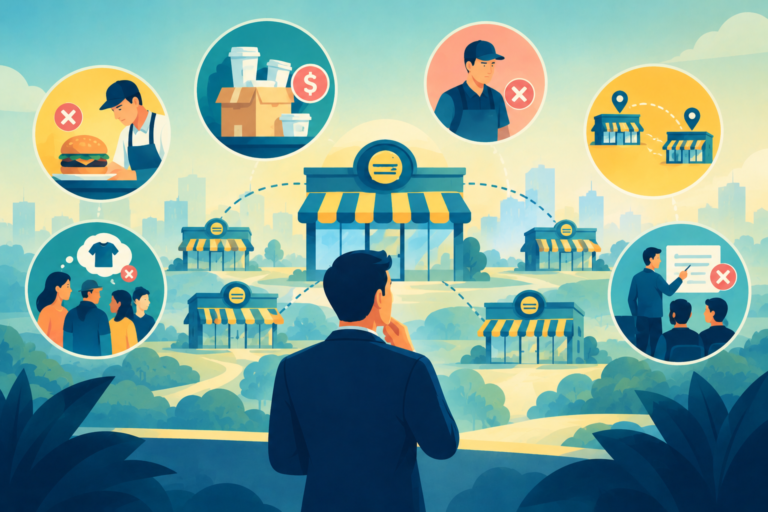
Discover how Algorithmic Pricing challenges marketers to balance profitability, customer fairness, brand trust and competitive advantage in a changing market.
Looking for a Shorter Overview?
AI Summary
Key Moments
Real‑time price swings confuse shoppers
Rapid algorithmic price changes make customers feel the pricing is unfair, eroding trust.Balancing automation with brand consistency
Marketers must trade short‑term revenue gains for long‑term brand trust and consistent value messaging.Risks of personalized pricing
Tailoring prices to individuals raises privacy, fairness, and discrimination concerns that can damage credibility.Ensuring human oversight and transparency
Clear communication, defined pricing policies, and human review keep algorithmic pricing aligned with brand values.A customer checks the price of a product online in the morning and finds it has increased by the evening. Another customer discovers that someone else paid less for the same service. For businesses, these changes may reflect an attempt to respond to demand, competition or inventory levels. However, for customers, they can raise an uncomfortable question: why am I paying this much?
Algorithmic Pricing is changing how businesses make pricing decisions. By using software to analyse market conditions and automate price adjustments, companies can respond to changes much faster than traditional manual methods allow. But pricing has never been just a mathematical decision. It influences how customers perceive value, whether they trust a brand and how they judge its intentions. For marketers, the challenge is to make automated pricing work without undermining the relationships they are trying to build.
How Algorithmic Pricing Creates New Challenges for Marketers
One of the biggest advantages of Algorithmic Pricing is its ability to process large amounts of data and respond to changing conditions. Depending on how a system is designed, it can consider factors such as demand, competitor prices, stock availability and purchasing patterns. Airlines, hospitality businesses and online retailers can use these insights to adjust prices more efficiently and improve revenue opportunities. Yet a pricing strategy that makes commercial sense does not automatically make sense to the customer.
Consider a shopper who buys a product at full price, only to see it discounted a day later. Even if the original price was reasonable, the customer might feel they made the wrong decision. Similarly, someone booking a cab during peak demand may understand that prices rise when more people need rides, but still resent paying significantly more. Research discussed by the University of Texas at Austin’s McCombs School of Business highlights how perceived unfairness can trigger negative reactions to algorithm-driven pricing. The issue is not simply what customers pay, but whether they believe the price is justified.
This creates a difficult balancing act for marketers. Pricing decisions influence demand, positioning and profitability, but they also shape a brand’s perceived character. A premium brand, for instance, may rely on consistency to reinforce its value proposition. Frequent price fluctuations could complicate that positioning, particularly when customers struggle to understand why the price has changed. Meanwhile, a brand competing on affordability risks damaging its credibility if shoppers repeatedly encounter unexpected increases. Algorithmic Pricing must therefore be considered alongside the wider marketing strategy, rather than treated as an isolated technical function.
Personalised pricing introduces another layer of complexity. Businesses can use customer-related data to inform pricing decisions, potentially tailoring offers according to purchasing behaviour or other relevant signals. While personalised discounts can help make products more accessible to certain customers, differences in prices can also create concerns about fairness, privacy and discrimination. If customers suspect that their data is being used to charge them more than others, the resulting distrust may outweigh any short-term commercial gain. Marketers need to consider not only what their systems can calculate, but also how customers might interpret the outcome.
Also read: How Did Netflix Make Password Sharing a Pricing Strategy?
There are also broader questions about competition and accountability. When businesses use automated systems to monitor competitors and adjust their own prices, the result may be more responsive competition, including price reductions. However, researchers and regulators have raised concerns that pricing algorithms could also facilitate coordination between competitors under certain conditions. This does not mean that algorithms inevitably lead to higher prices or collusion. It does mean businesses must understand the legal and competitive implications of their pricing systems instead of assuming that automated decisions are automatically safe or appropriate.
The solution is not necessarily to avoid Algorithmic Pricing, but to establish clear boundaries around its use. Marketers should work closely with pricing, technology and legal teams to define acceptable price movements, review unusual changes and retain human oversight for consequential decisions. They should also communicate pricing policies clearly wherever possible, particularly when demand-based changes might surprise customers. Transparency cannot eliminate every objection, but it can help customers understand the reasoning behind a price and reduce the impression that decisions are arbitrary.
Ultimately, the success of Algorithmic Pricing should not be measured by revenue gains alone. Businesses also need to consider customer retention, satisfaction, complaints and the long-term effect on brand perception. An algorithm may identify the price a customer is willing to pay, but that does not necessarily mean it identifies the price the customer considers fair. For marketers, the real challenge is finding the balance between commercial efficiency and customer trust. Technology can make pricing faster and more responsive, but the responsibility for ensuring that it supports the brand must remain firmly with people.
– Written by Saad Rashid, an experienced journalist with extensive experience across both print and digital media. He has worked with various publications in India and internationally and has reached millions of readers through his thought-provoking articles.
Enjoyed this article? Read more here.