Stop relying on high product markups. Learn how Costco uses membership economics to build loyalty and drive massive profits.
Looking for a Shorter Overview?
AI Summary
Key Moments
Membership fee drives profit
Costco earns most of its annual profit from $60 membership cards, not from product markups.Low‑price product strategy
Items are sold at rock‑bottom prices, allowing the store to cover costs after membership revenue.Loss‑leader food items
Iconic deals like a $1.50 hot dog and $4.99 rotisserie chicken draw shoppers deep into the warehouse.Behavioral loyalty effect
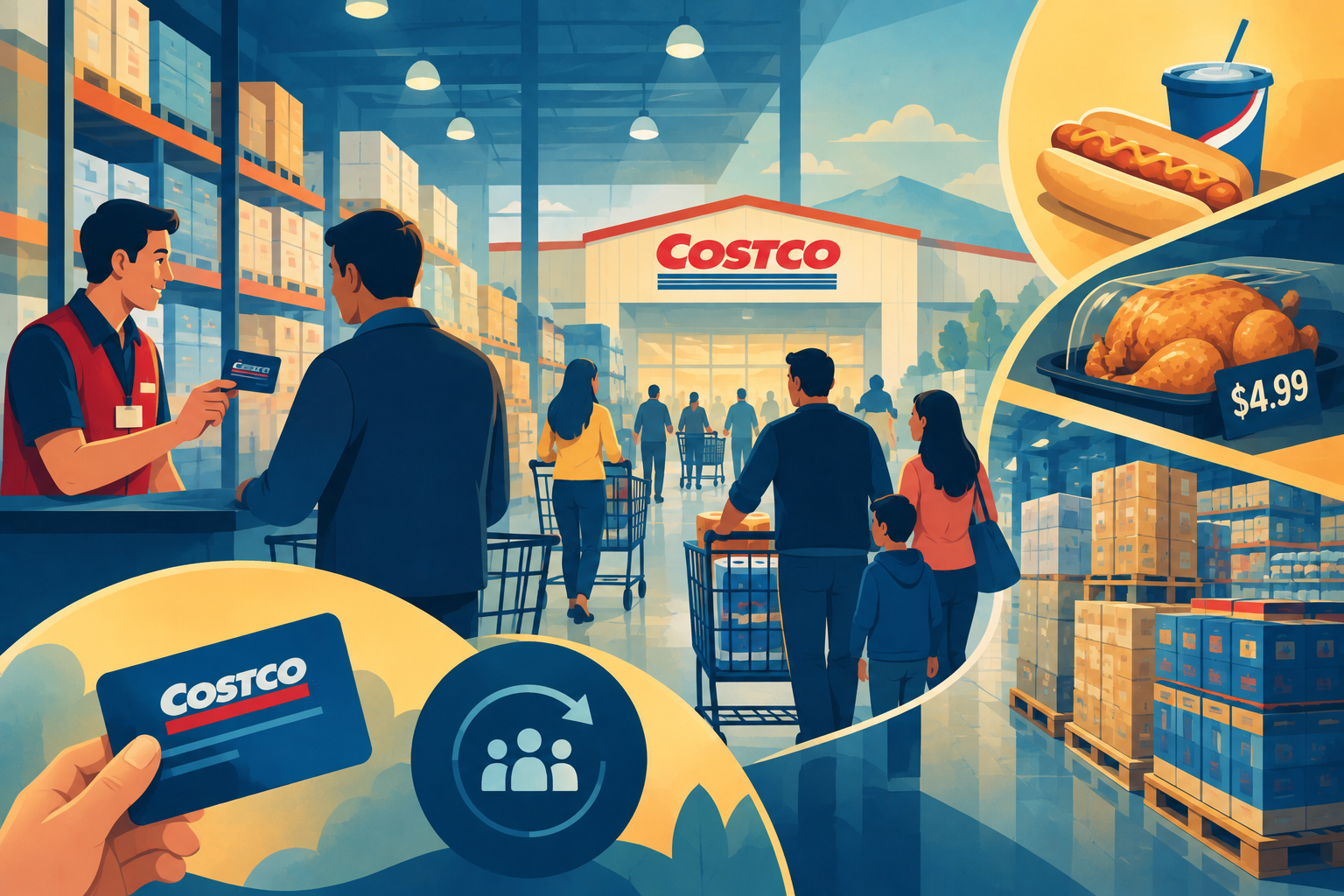
Members shop more to recoup the membership cost, boosting repeat purchases and renewals.Strict membership economics is when a store charges people just to walk through the front door. A regular grocery store lets anyone come inside for free and browse. But Costco, a huge American warehouse, stops shoppers at the entrance. A worker in a red vest asks to see a special ID card.
If a buyer does not have this card, he cannot buy anything in the shop. To get the card, the person must pay sixty dollars each year. This upfront cash payment shows exactly how Membership Economics begins.
How Membership Economics Changes Buying Habits
Inside the huge building of Costco, the shelves look very different. The tall racks reach all the way to the high ceiling. The workers do not unpack small boxes of items. Instead, they leave them on thick wooden pallets. A buyer has to buy almost all items inside their large original boxes. However, buyers can purchase individual items in certain electronics sections, such as laptops and mobiles.
The shop sells these huge items at very low cash prices. This low price is the main rule of Membership Economics. The shop owner has already collected the sixty-dollar entry fee. He does not need to add any extra charges to their products.
The store also sells cooked food for less than it costs to make, just to keep buyers happy. Since 1985, a buyer can buy a hot sausage in a bread roll with a cold paper cup of soda for exactly one dollar and fifty cents.
Costco also sells rotisserie chicken for $4.99. The shop loses millions of dollars in cash a year on these chickens by refusing to raise the price. They place these hot chickens at the very back of the huge building, which forces buyers to walk past hundreds of other items. Selling cooked food at a very low price is a smart part of Membership Economics. It makes the buyer feel good about paying for the membership card.
A regular supermarket makes its daily money by adding a few dollars to every product. But Costco makes almost no money from selling the physical items. Company data show that most of its annual profit comes directly from selling membership cards. Costco functions more like a subscription service than a traditional grocery store.
This simple physical rule shows exactly how Membership Economics works in real life. When the shop keeps prices very low, buyers gladly pay the sixty-dollar fee again the next year. Today, more than ninety percent of buyers renew their cards every twelve months.
Buying the membership card also changes how people think about shopping. A mother pays sixty dollars in January, and she wants to get her money back by finding cheap items. So she ignores other ordinary supermarkets and drives to this warehouse just to shop there. And instead of buying only the necessary items, she buys a few extra things just to recover that entry fee.
Many new shop owners try to follow this exact rule. They want to make a profit before the buyer even picks up a shopping cart. But buyers only pay the upfront fee if the physical item on the shelf is genuinely cheap.
Also read: Guinness: How Brand Experience Made Waiting Worth It
This daily habit shows exactly why membership economics brings in huge cash for the company. A business gets millions of regular buyers simply by charging them at the front door and selling the actual products at a very low price. The company makes huge money today because strict membership economics make the buyer feel good every time he shows his membership card to the worker at the door.
Loved this article? Read more insightful articles on Brand Custodian.
–Written by Rajnish Singh, a copywriter and strategist with a background in fast-paced journalism, who explores the gap between what brands promise and how consumers actually behave.