What does the creator economy mean for business? Learn how letting go of corporate control drives true consumer loyalty.
Looking for a Shorter Overview?
AI Summary
Key Moments
Shift from Traditional Advertising
Brands can no longer rely on expensive TV ads and billboards; creator-driven authenticity now dominates consumer trust.Creator Authenticity Over Scripted Content
Forced, rigid influencer scripts damage credibility; natural creator reviews that acknowledge flaws resonate more strongly.Brands as Sponsors, Creators as Sellers
Companies now provide tools and products, while creators generate genuine content that drives purchases and builds community.Product Quality Becomes Essential
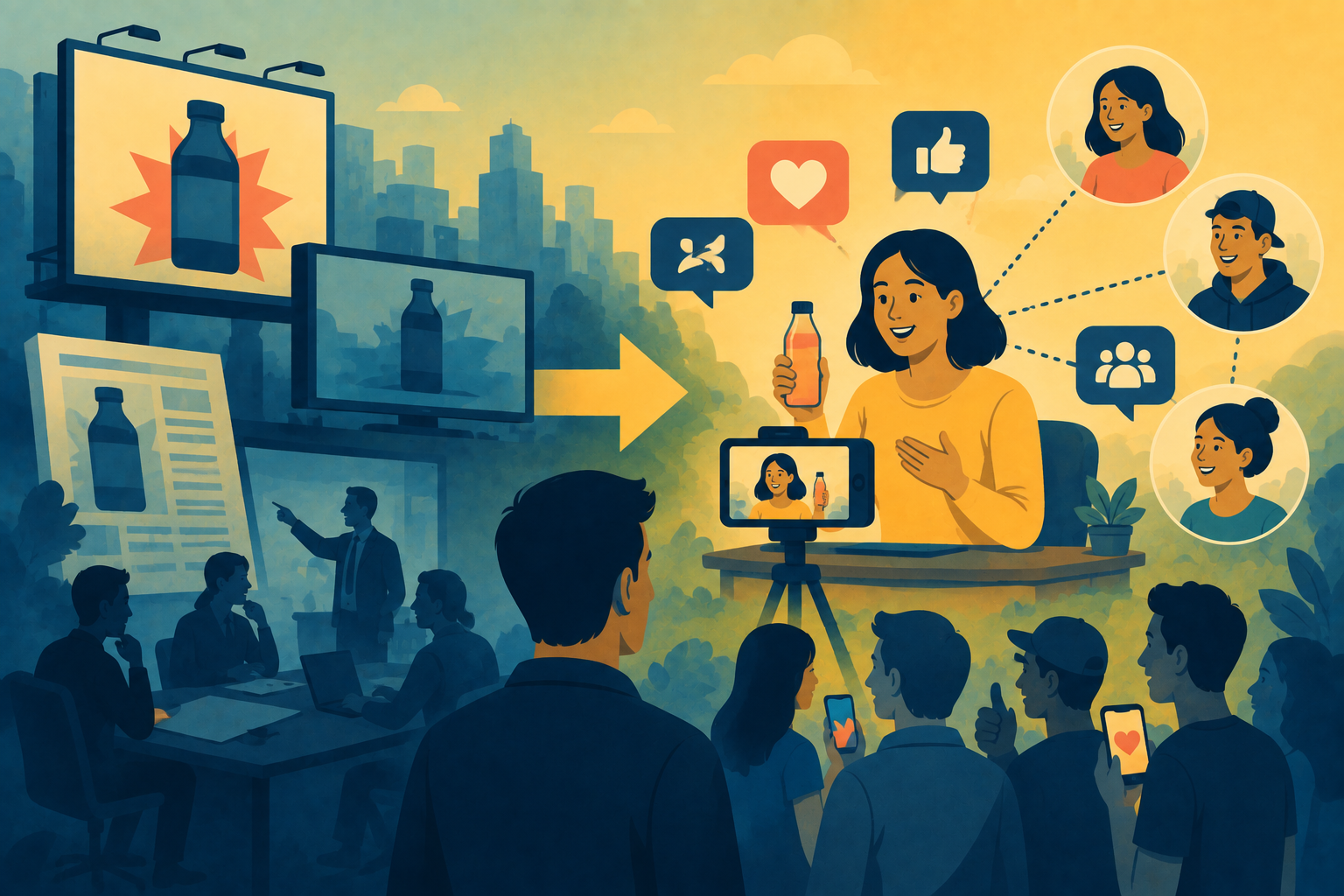
To attract creators, brands must deliver reliable products worthy of authentic promotion, turning product excellence into organic growth.Before the rise of the creator economy, building a national brand required a massive advertising budget. You had to buy prime television slots, rent out highway billboards, and hire expensive public relations agencies. The companies with the most money completely controlled what consumers bought simply because no one else could afford to pay for that kind of reach.
That reality has completely changed. Today, an independent creator recording videos in their messy 1BHK can easily outsell a legacy corporation. The creator economy has completely changed how physical products are sold, and it is forcing corporate boardrooms to panic over their ineffective advertising budgets.
Consumers have simply stopped trusting faceless companies. If a huge skincare brand buys a magazine ad claiming its face wash is a miracle product, you ignore it immediately. But if a creator you’ve watched for two years says that same product actually works, you buy it right away.
Corporate Control Fails in the Creator Economy
Many old-school business executives still misunderstand how things actually work now. They try to force these independent voices into their outdated advertising models. They find an influencer with a massive following and pay them a large fee to read a rigid, legally approved script word-for-word.
That approach fails instantly. Modern audiences are very cynical and highly protective of the creators they follow. They can spot a fake, forced script within seconds. If a naturally funny, chaotic creator suddenly starts speaking in a stiff, formal way, the audience feels immediately betrayed.
Viewers will show their anger in comment sections and actively avoid sponsored products entirely. Trust breaks instantly. Brands spend massive amounts of money on these fake sponsored ads, which eventually damages their reputation overall.
Businesses dominating this new system do exactly what feels backward. They give up total control. They find creators who already know everything about specific industries, send them physical products, and let them speak naturally.
If a product has a minor flaw, they allow creators to mention it openly without cutting marketing budgets.
Traditional marketing directors usually get nervous about highlighting product flaws. But that raw honesty is exactly what makes people actually buy.
When buyers hear a tech reviewer admit that a new digital camera has a slightly confusing menu system but an absolutely incredible lens, those reviews feel real.
Real authenticity stops buyers from hesitating. Buyers trust recommendations because that doesn’t sound like a paid advertisement. Brands do not convince buyers to spend money; creators do. Brands only rent that hard-earned loyalty for a fraction of the cost of what traditional television commercials cost.
This reality is a massive threat to traditional advertising agencies. You can no longer buy consumer loyalty with a trendy logo, a clever slogan, and a massive media budget. Modern buyers will only trust a brand if they actually relate to it. They want genuine human connection, not a loud corporate ad praising their own products.
Building a brand today means accepting that companies are no longer the main character. Creators do the actual work, and brands only act as financial sponsors, helping them create better content for their communities. You pay for access to an audience that those creators have worked hard to build.
Also read: Why Founder Branding Gives Startups an Unfair Advantage
If a business wants to survive this shift, management has to stop acting like they are key to every campaign. Smart brands are now building relationships with niche communities and letting independent creators do actual selling. Companies provide tools, and creators provide voices.
You can keep wasting money at massive media platforms to attract customers. You can keep hoping that a good television commercial will somehow help you reach your sales goals.
Or you can build a product so reliable that creators actually want to talk about it. If your product genuinely works, this new model will grow your business faster and cheaper than any billboard ever could.
–Written by Rajnish Singh, a copywriter and strategist with a background in fast-paced journalism, who explores gaps between what brands promise and how consumers actually behave.