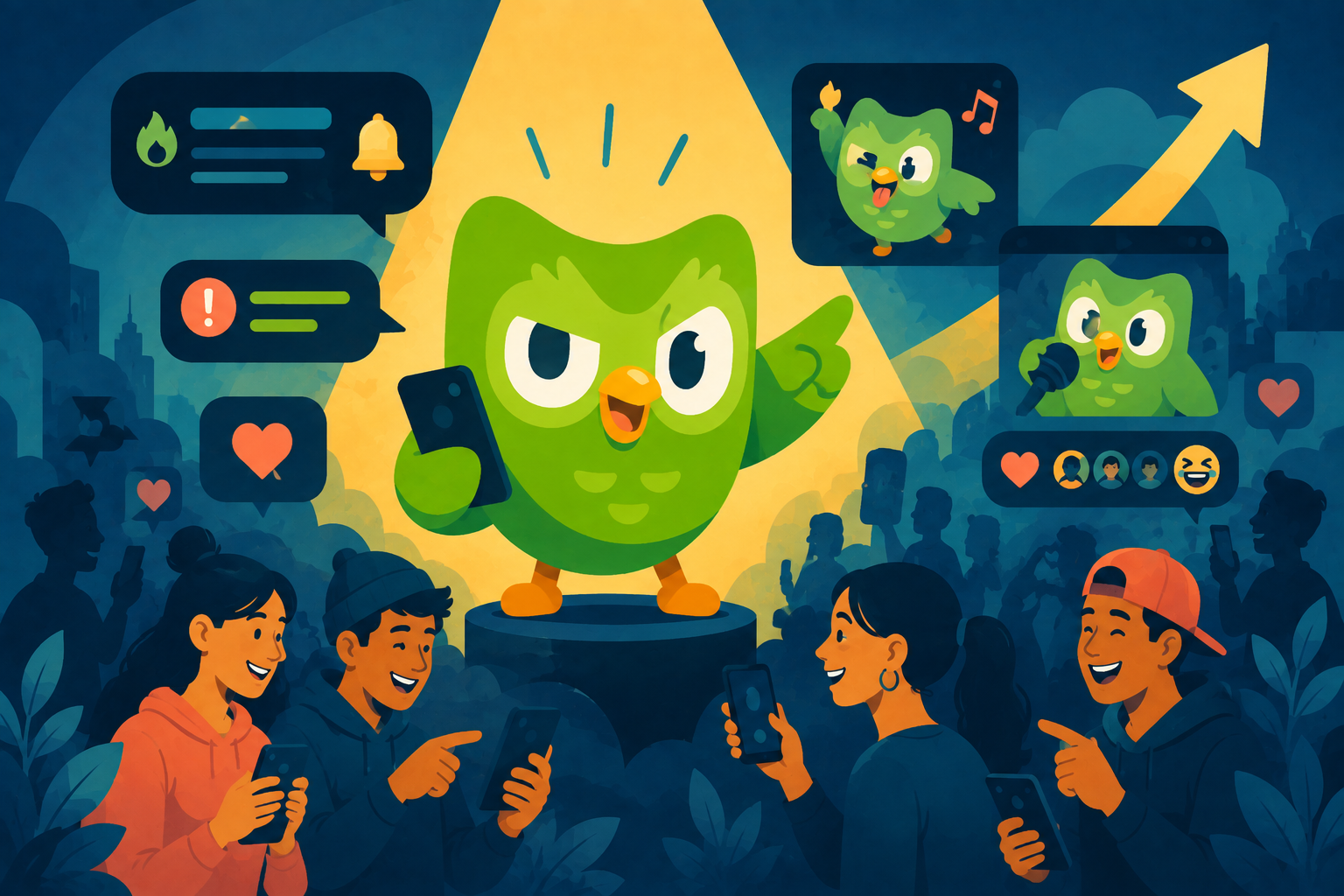
Explore the success of the Duolingo brand. See why trading boring corporate emails for chaotic humor wins modern consumers.
Looking for a Shorter Overview?
AI Summary
Key Moments
Guilt‑Tripping Owl Tone
Duolingo’s green owl uses passive‑aggressive reminders to motivate users, turning learning into a playful nagging experience.Dark Humor & Failure
By framing missed lessons as “ghosting” and using sarcastic push messages, Duolingo makes mistakes feel funny rather than stressful.Breaking Marketing Norms
The brand ignores polished corporate messaging, opting for chaotic, meme‑ready content that feels like a teenager’s social feed.Product‑First Creativity
The app’s gamified streaks, cartoons, and bright colors align perfectly with its wild marketing voice, making the brand inseparable from its core experience.Most educational apps treat learning like a strict school teacher. Software companies usually send polite, boring emails reminding users to log in and practise their lessons.
The Duolingo brand took a completely different route. Instead of acting professionally, its famous green owl guilt-trips people for missing a quick five-minute Spanish lesson.
And users absolutely love it. People take screenshots of these passive-aggressive phone notifications and share them all over social media for free. Millions of users laugh about feeling threatened by a cartoon bird who just wants them to practise vocabulary.
By acting completely weird and slightly unhinged, this company built a massive global following. It proves that building a successful educational tool does not require a serious, formal tone.
Why The Duolingo Brand Ignores Normal Marketing
Most companies are terrified of offending anyone online. A standard marketing team wants every post to look safe and perfectly clean. Duolingo just ignores all those old rules completely. If a person visits their TikTok page, absolutely no one is talking about grammar rules or language retention rates.
Instead, viewers see a giant green mascot crying on the floor, dancing to trending songs, or playfully threatening famous pop singers. It feels like a witty teenager runs the account while bosses are not looking. This specific, made-up chaos is what makes the Duolingo brand’s ads so hard to ignore on social feeds.
Modern consumers just ignore regular advertisements because nobody wants to read a corporate sales pitch.
But when a giant bird acts desperate for attention, viewers stop and watch. This weird behaviour completely separates the Duolingo brand from every other tech company on the market. Older language programmes felt very boring, but this app feels like a video game.
Education is usually a stressful topic. Regularly making mistakes while learning a new language frustrates people, and many just quit after a week.
By injecting dark humour into the daily process, Duolingo makes failing feel funny. When the app sends a push message saying, “These reminders don’t seem to be working; we will stop sending them.” It feels like getting ghosted by an actual friend. A safe, polite corporate email would just get deleted without a second thought.
But the Duolingo brand understands that getting someone’s attention in today’s world requires a real reaction, even if that emotion is slight guilt.
Many traditional businesses try to copy this exact style and fail miserably. When a local bank or a massive insurance company tries to act weird on social media, it just looks fake and desperate.
The Duolingo brand gets away with this wild behaviour because the actual core product is literally a game. The app itself is built around daily streaks, funny cartoons, and bright colours. The marketing voice simply matches the core of the product.
Corporate caution destroys creativity
Standing out in a crowded market means taking real risks. And a company can never stand out if every public statement goes through a legal review team before getting posted. In doing so, it also takes away the personality that makes a brand memorable to the public.
The people running the Duolingo brand trust their creators to make fast, not-perfect content that regular internet users actually want to see and share.
Consumers are completely tired of professional corporate speak. They want to be entertained while staring at their phones.
Also read: How Brand Language Shapes Consumer Perception
When a business stops trying to sound like a rigid institution and starts acting like a regular, mistake-making person, buyers respond with absolute loyalty. Duolingo wins because it completely refuses to be boring.
Loved this article? Read more insightful articles like this on Brand Custodian.
–Written by Rajnish Singh, a copywriter and strategist with a background in fast-paced journalism, who explores the gap between what brands promise and how consumers actually behave.