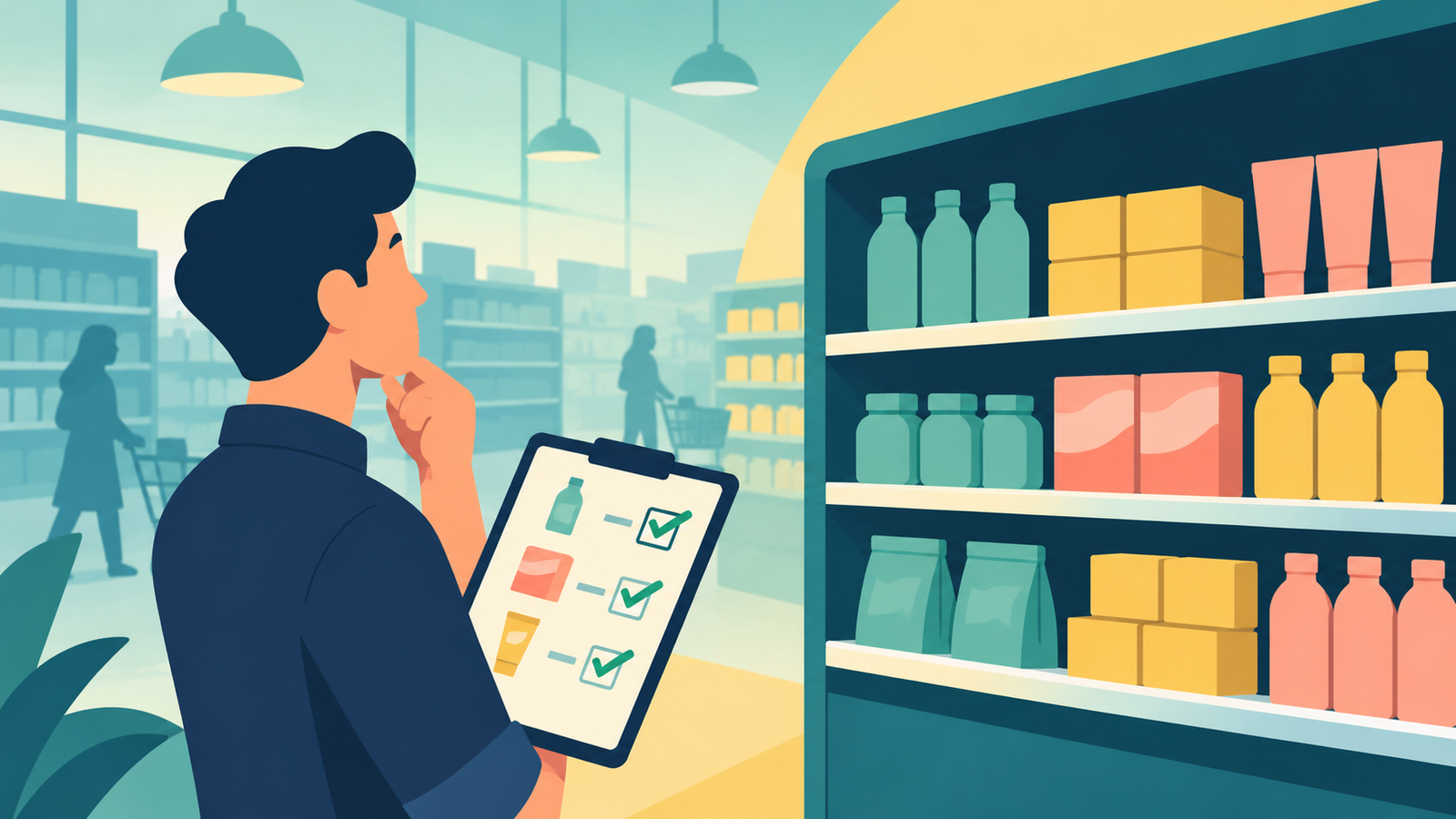
Discover how effective Assortment Planning helps retailers maximise limited shelf space, improve product availability and drive sales.
Walk into any supermarket, and you will find hundreds of products competing for attention. From different brands and pack sizes to variations in price, flavour and functionality, retailers have to decide what deserves a place on their shelves. However, the challenge is not simply offering more products. It is making sure the available space is used to stock products that customers actually want to buy. This is where Assortment Planning becomes important.
For retailers, shelf space is a limited resource, and every product occupying it comes with an opportunity cost. Stocking too many products can lead to overcrowded shelves, lower product availability and excess inventory. On the other hand, offering too little variety can leave customers with fewer choices and push them towards competitors. Finding the right balance requires retailers to understand consumer preferences, product performance and the commercial value of every item they stock.
Why Is Assortment Planning Important When Shelf Space Is Limited?
Assortment Planning is the process of deciding which products a retailer should stock, in what quantities and across which store locations. It involves analysing customer demand, sales performance, market trends and available shelf space to create a product mix that meets shopper expectations while supporting business objectives.
One of the biggest misconceptions in retail is that a larger product assortment automatically translates into better sales. In reality, adding more stock-keeping units (SKUs) does not always create additional demand. When shelf space remains unchanged, introducing more products can reduce the number of facings available for existing items. This means popular products may have less shelf capacity, increasing the chances of stockouts even when the overall product range appears extensive.
As highlighted by retail professional Rehan Niazi in his discussion on the relationship between assortment and shelf space, the objective should not be to fit as many SKUs as possible onto a shelf. Instead, retailers need to identify which products genuinely add value and which ones simply divide existing demand. A product that offers little incremental value may occupy space that could be used more effectively by a faster-moving alternative.
Also read: Why Do Brand Mergers Create Marketing Problems Even When the Business Case Is Strong?
Understanding product performance is therefore an important starting point. Retailers can use historical sales data, point-of-sale information and inventory reports to identify bestsellers, slow-moving products and seasonal performers. Products that consistently generate sales or fulfil an important customer need may deserve more shelf space, while underperforming items can be reviewed for possible reduction or removal. However, these decisions should also account for profitability, customer preferences and the role each product plays within its category.
Customer behaviour is equally important. Different stores may serve different audiences, even when they belong to the same retail chain. A supermarket in a residential neighbourhood may have different product requirements from one located in a commercial district. Similarly, consumer preferences can vary across regions, income groups and shopping occasions. Retailers that apply the same assortment across every outlet risk stocking products that do not reflect local demand. Analysing store-level sales and customer preferences helps create assortments that are more relevant to individual locations.
Another important consideration is product visibility. Having the right products in stock is only part of the equation. They also need to be positioned where customers can easily find them. This is where planograms become useful. A planogram is a visual representation of how products should be arranged on retail shelves. It helps retailers allocate shelf space, determine product facings and maintain a logical product arrangement. By connecting assortment decisions with shelf layouts, retailers can improve visibility, reduce overcrowding and make shopping more convenient.
However, assortment decisions should not be treated as permanent. Consumer preferences, competitors, market trends and seasonal demand continue to change. A product that performs well during one period may experience declining demand later. Retailers must regularly review sales data, stock availability and inventory movement to identify when an assortment needs adjustment. Monitoring metrics such as sales per SKU, stockout rates, days of supply and sales per shelf facing can help determine whether the current product mix is delivering the desired results.
Technology can make this process more efficient. Retail analytics and assortment optimisation tools help businesses analyse large volumes of sales and inventory data, identify demand patterns and make more informed decisions. Some solutions also use AI to support product selection and shelf-space allocation. However, technology works best when supported by accurate data and an understanding of actual customer behaviour.
Ultimately, effective Assortment Planning is about making every product earn its place on the shelf. Retailers do not need to offer the largest possible selection to remain competitive. They need to offer a relevant selection that balances customer choice, product availability, profitability and space utilisation. When these factors work together, limited shelf space becomes an opportunity to improve the shopping experience and strengthen retail performance rather than simply an operational constraint.
– Written by Saad Rashid, an experienced journalist with extensive experience across both print and digital media. He has worked with various publications in India and internationally and has reached millions of readers through his thought-provoking articles.
Enjoyed this article? Read more here.