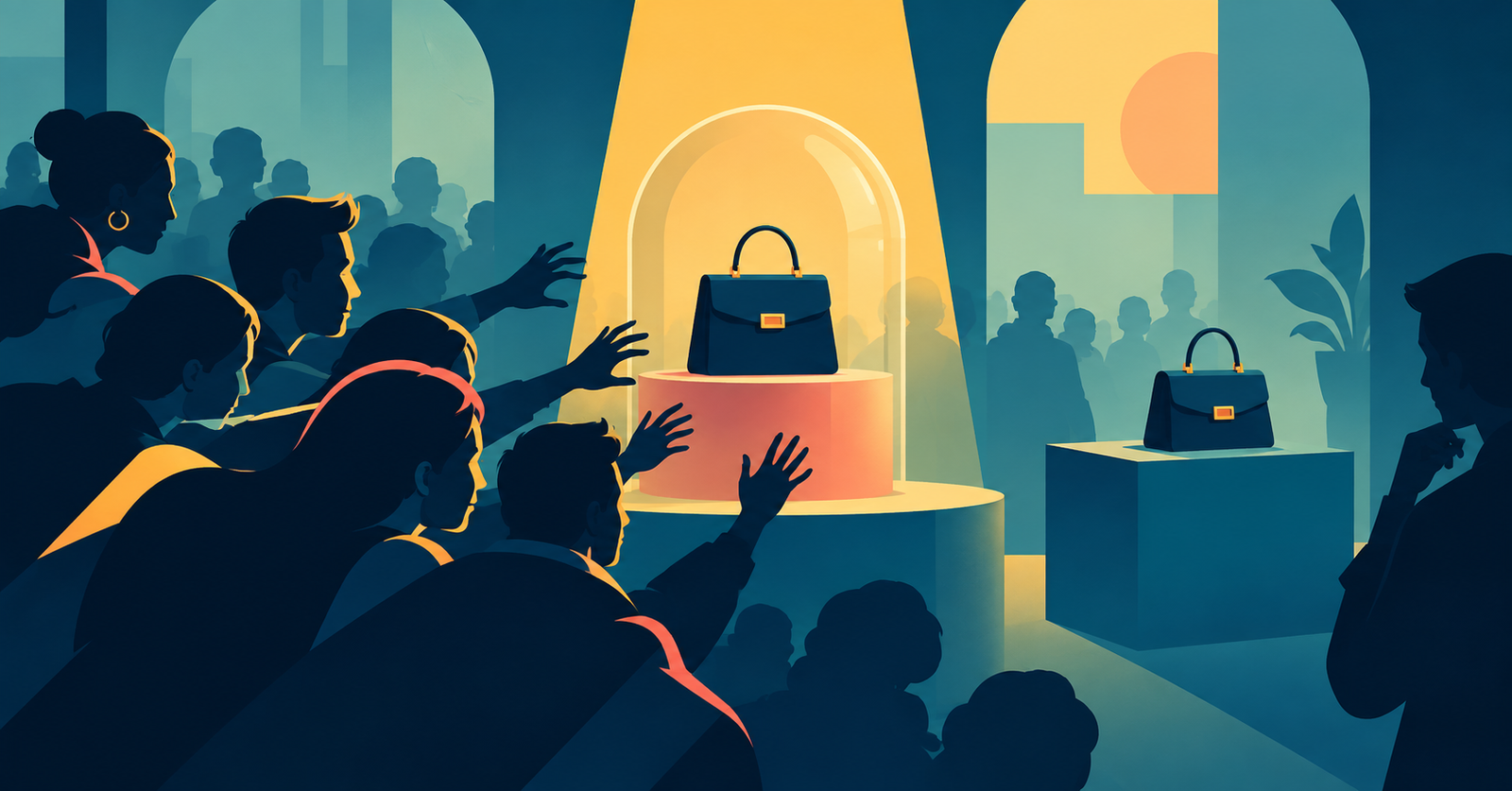
The Scarcity Effect can make products feel more desirable by creating urgency, exclusivity and perceived value without changing quality.
Looking for a Shorter Overview?
AI Summary
Key Moments
Perception Shift
Scarcity makes identical products feel more valuable simply by signaling limited availability.Urgency Creation
Consumers shift from wanting to fearing loss, prompting immediate action when supply seems scarce.Trust Pitfall
Repeated fake scarcity erodes brand credibility as customers detect manipulative tactics.Product Quality Limits
Scarcity alone cannot rescue a subpar offering; it only amplifies existing appeal.Imagine two identical products sitting next to each other. Same features, same quality, same price. Now imagine one of them is labelled “Only 3 left”. Suddenly, the decision feels different. The product has not become better, but it may feel more valuable. This is where the Scarcity Effect comes into play. When something appears difficult to obtain, people can perceive it as more desirable, valuable or worth acting on, even when its actual qualities have not changed.
The idea has been demonstrated in behavioural research. In a well-known 1975 experiment, researchers presented people with identical cookies in two jars. One jar contained ten cookies, while the other contained only two. Participants valued the cookies in the nearly empty jar more highly, despite there being no meaningful difference between them. The limited supply changed their perception of value.
How the Scarcity Effect Turns Availability Into Desire
At its simplest, scarcity changes the question in a consumer’s mind. Instead of asking, “Do I really want this?”, they may start asking, “What happens if I don’t get this now?” That shift matters because the possibility of losing access can create urgency. A product that is always available can be postponed. A product that may disappear feels like a decision that needs to be made now.
This is why phrases such as “limited edition”, “only a few left” and “last chance” appear so frequently in marketing. Scarcity can act as both an availability signal and a psychological trigger. It can suggest that other people want the product, that demand is high or that the opportunity may not come again.
Importantly, scarcity does not necessarily have to involve a physical product. Time can be scarce too. A seasonal product, a limited booking window or a genuine deadline can create the same sense of urgency. A good example is Starbucks’ seasonal Pumpkin Spice range. The product becomes desirable partly because consumers know it will not remain available throughout the year. Similarly, LEGO uses “Retiring Soon” labels for sets that are actually approaching the end of their production cycle, giving customers a genuine reason to act rather than wait.
Luxury brands take the idea further by making restricted access part of the brand experience. Scarcity can be created through limited production, selective distribution, invitation-only access, or carefully controlled availability. In these cases, the difficulty of obtaining something can become part of what makes it attractive. However, research and industry analysis also point to an important distinction between genuine scarcity and manufactured scarcity. When rarity comes from real production constraints, craftsmanship or limited resources, it can strengthen a brand’s long-term credibility.
Also read: Why Does the Endowment Effect Change How Customers Value What They Own?
But this is also where scarcity can go wrong. If customers repeatedly see “only a few left” messages only to find the same product available weeks later, the tactic can begin to feel manipulative. False or exaggerated scarcity can damage trust because consumers eventually recognise that the constraint was created by the marketer rather than by genuine demand or supply limitations. CXL’s examples make the same point: scarcity works best when the reason behind it is believable and truthful.
There is another important limitation. Scarcity cannot permanently compensate for a weak product. Making something harder to obtain may increase curiosity or urgency, but it does not automatically create meaningful value. Customers still need a reason to want the product. Scarcity is most effective when it reinforces an existing benefit rather than trying to manufacture one from nothing.
That makes the Scarcity Effect less about making a product better and more about changing how people perceive its availability and value. The product may remain exactly the same, but the context around it has changed. And sometimes, that small change is enough to turn something ordinary into something people suddenly do not want to miss.
– Written by Saad Rashid, an experienced journalist with extensive experience across both print and digital media. He has worked with various publications in India and internationally and has reached millions of readers through his thought-provoking articles.
Enjoyed this article? Read more here.



