Fast returns are dangerous. See how mastering the endowment effect turns ordinary products into an unstoppable success.
Looking for a Shorter Overview?
AI Summary
Key Moments
Psychological Definition
The endowment effect is the tendency for owners to value an item more highly than non‑owners.Tactical Use in Sales
Car dealerships let customers take test drives to create a sense of ownership before purchase.Customization Leverage
Personalized product design, like custom shoes, triggers early attachment and higher willingness to pay.Performance Prerequisite
The endowment effect only works when the product functions as intended; poor performance overrides ownership bias.A college student buys a basic ceramic coffee cup for ₹200. Ten minutes later, a friend offers to buy the same cup for ₹200, but the student refuses and asks for ₹400 instead. This sudden increase in the asking price illustrates the Endowment Effect.
Once people own and use an item, they often value it more highly. Researchers Daniel Kahneman, Jack Knetsch, and Richard Thaler studied this behavior in 1990 and found that owners tend to demand much more to give up an item than buyers are willing to pay for it. The Endowment Effect shows how simply owning something can change a person’s perception of its value.
How the Endowment Effect Uses Physical Ownership
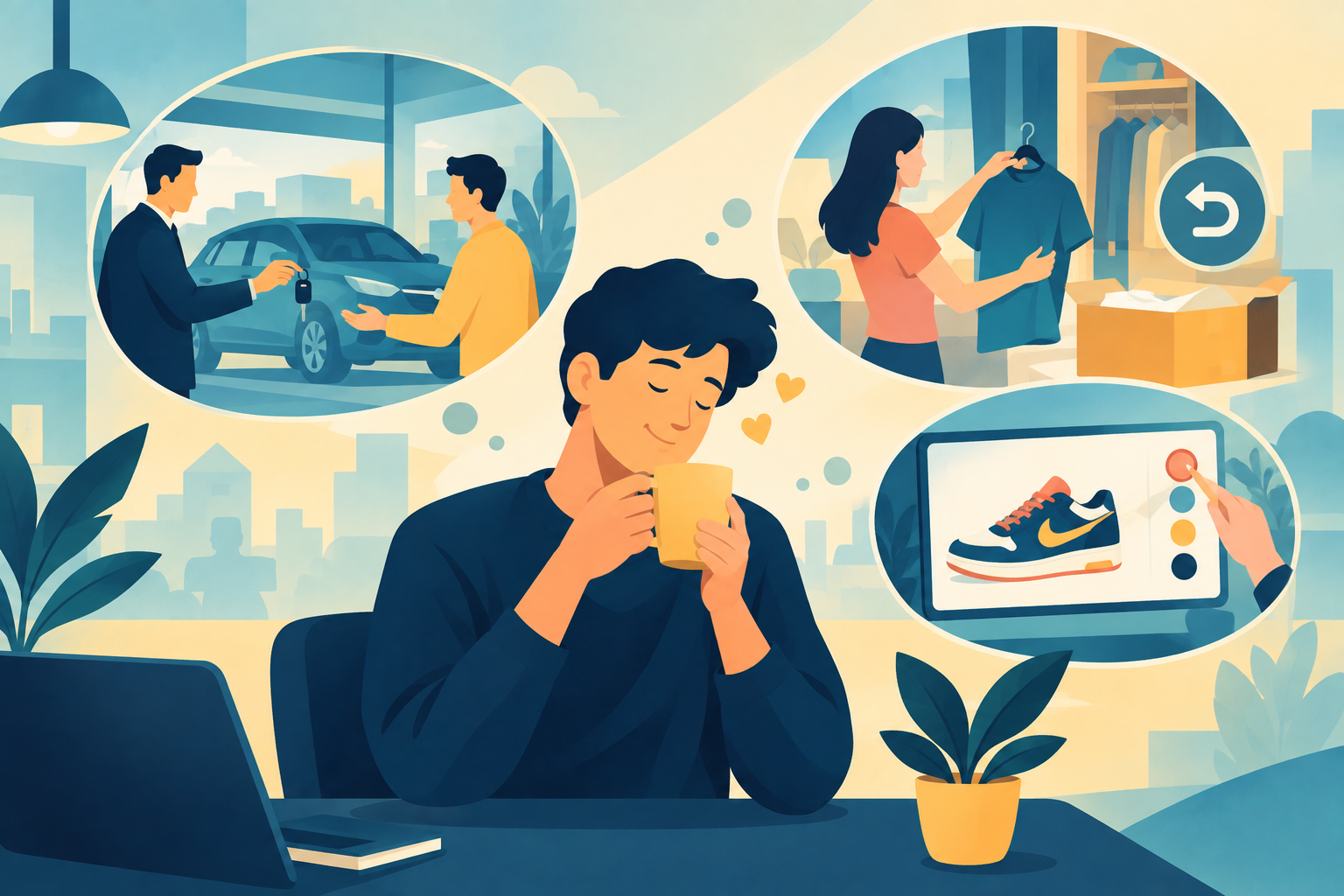
Car dealerships often use this psychological principle to encourage sales. Instead of asking customers to sign paperwork immediately, a salesperson may hand them the keys and invite them to take the car home for 24 hours.
Once the customer parks the vehicle in their garage and their family spends time inside it, the car can begin to feel like personal property. Returning it the next morning may feel like giving up something they already own.
Studies published in the Journal of Consumer Research suggest that physical contact can increase how much people are willing to pay for an item. The Endowment Effect may encourage customers to accept the financing plan because they do not want to give up the car or return the keys.
Many online clothing stores offer a 30-day return policy and promise a full refund if customers are unhappy with their purchase. Although this may seem costly for the company, return data often shows the opposite.
Once the package arrives, the customer may hang the new shirt in their closet and begin treating it as part of their wardrobe. This simple act of ownership can trigger the Endowment Effect. Returning the shirt may then feel like giving up something personal, making the customer more likely to keep it.
As we discussed in our previous article about the Anchoring Effect, the starting point can shape people’s expectations. In this case, that starting point is physical ownership, which can encourage customers to keep the product and allow the company to retain the sale.
This behavior can also occur on a screen, even without physical contact. Shoe brands such as Nike allow customers to customize their shoes online by selecting different colors and materials. A shopper might spend 20 minutes choosing red laces and a blue rubber sole, creating a design that feels personal and unique.
That creative effort can trigger the Endowment Effect before the shoes are even produced. Because the customer selected every detail, they may already feel attached to the design and view it as something they own.
Marketing experts at the Wharton School have found that customization can increase how much value people place on a product. As a result, customers may be willing to pay a premium rather than give up the personalized design they created.
Business owners should understand an important limitation of this pricing behavior: the Endowment Effect cannot make a faulty product acceptable. If a customer buys a television and the screen stops working after two days, they will likely return it immediately.
A sense of ownership matters only when the product performs its intended function. Smart sellers should first provide a reliable, high-quality item and then give customers the opportunity to use it at home. When the product works well and becomes part of their lives, customers may be less likely to return it.
Loved this article? Read more insightful articles on Brand Custodian.
–Written by Rajnish Kumar, a copywriter and strategist with a background in fast-paced journalism, who explores the gap between what brands promise and how consumers actually behave.



