Stop using boring words. Learn how brilliant product language changes perception and drives massive retail sales instantly.
Looking for a Shorter Overview?
AI Summary
Key Moments
Descriptive Names Boost Sales
Research shows vivid menu words can increase food sales by nearly 27%.Language Alters Perceived Taste
Diners rate the same food as tasting better when given appealing names.Premium Wording Commands Higher Prices
Cosmetic firms charge up to ten times more for identical cream by using clinical serum labels.Clarity Trumps Complexity
Overly technical product names confuse buyers, causing them to abandon purchases.Diners sit inside a quiet restaurant and happily pay double the price for a bowl of warm soup. He does this simply because the menu calls it a slow-roasted heirloom tomato bisque. They will flatly refuse to pay that exact same high price for regular tomato soup. This direct physical reaction happens entirely because of product language.
The actual liquid inside the bowl remains exactly the same. But the specific words change how much money a person is willing to spend. According to behavioural research by Cornell University, using descriptive words on a menu increases food sales by nearly 27%.
Smart product language makes an ordinary item sound highly valuable. The buyer reads the elegant text on the page and believes the item is premium. The customer hands over his cash without arguing about the final bill.
How Product Language Changes Buyers’ Perspective
Many food companies use very basic text to describe their items. A local bakery puts up a simple sign for a chocolate cake, and sales stay very low all morning. A smart owner changes the sign to read rich Belgian dark chocolate truffle cake. Suddenly, the bakery sells every single piece in exactly one hour.
This careful product language actually changes how the buyer experiences the food. The Cornell study confirms a very strange biological fact. Diners eating foods with descriptive names rate the exact same food as tasting much better.
This means good product language does not just persuade the buyer to pay. It improves his actual physical satisfaction. The person eats the sweet cake. He enjoys the taste and tells his friends to visit the shop. A business owner loses money every single day when he uses boring words. Upgrading the text on the box creates a fast increase in daily cash sales.
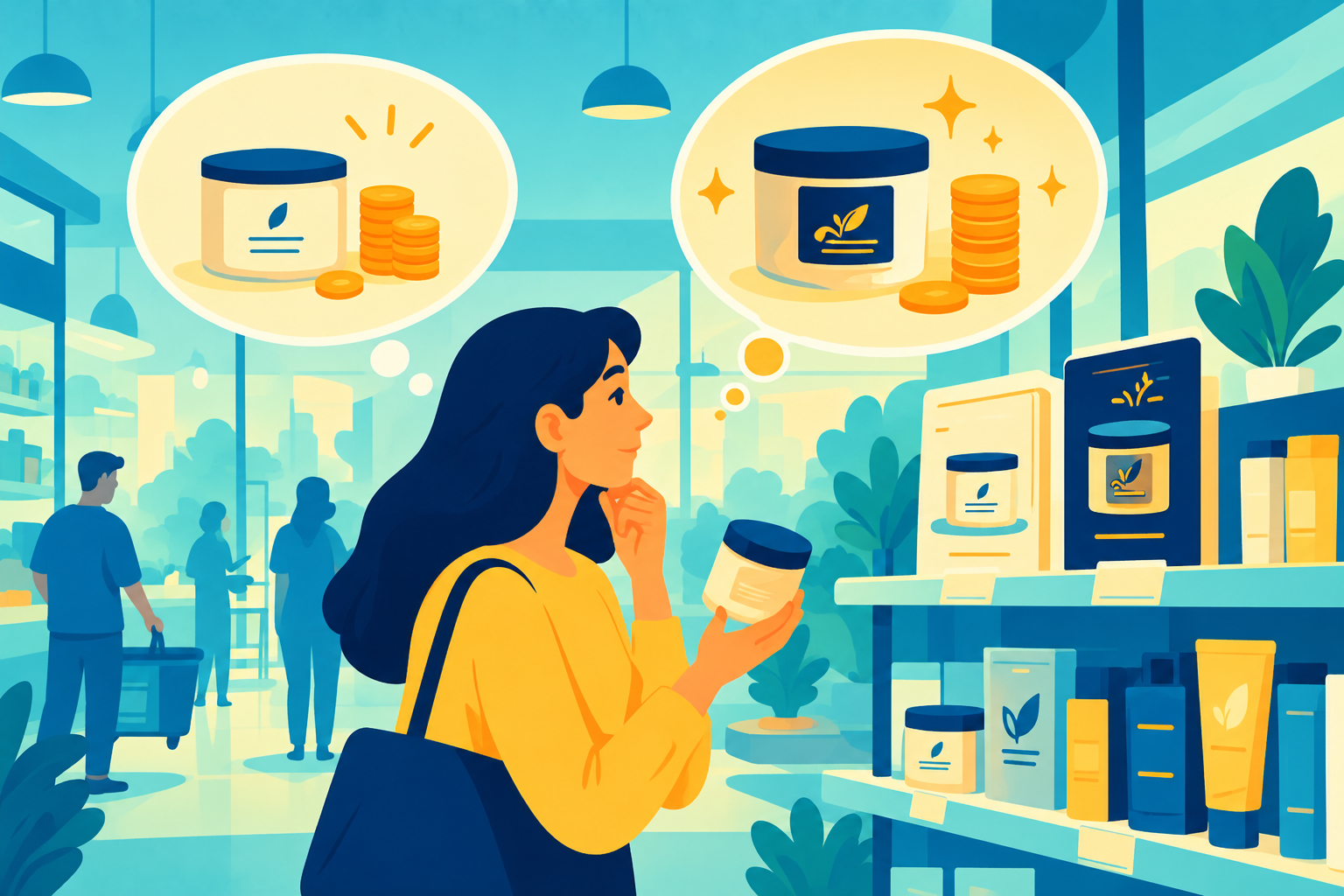
This naming strategy works very well in the cosmetics industry. A company sells a basic face cream for 100 rupees. The same company puts that same cream into a premium bottle and calls it an overnight cellular renewal serum. They charge a thousand rupees for it. Buyers pay the huge price difference purely because of the new product language.
The clinical name suggests years of advanced research. The scientific wording makes the shopper feel very safe. She believes the serum will solve her skin problems much faster than a basic cream.
As we discussed in our recent article about marketing context, a strong background environment helps a buyer trust the seller. But it is the specific product language that actually makes the buyer accept the high price.
If a luxury cosmetic brand uses common words, the buyer becomes suspicious. She will never pay a premium price for that item. The brand must use serious, clinical language to match the high cost.
Some companies make a huge mistake when trying to upgrade their text. They use highly complicated words that nobody understands. A technology brand calls a simple television a multi-dimensional visual matrix. The average buyer feels very confused. He walks away because he just wants to watch a normal movie.
Effective product language must stay simple enough for a normal person to read quickly. It should sound premium but never confusing. Shoppers refuse to buy things they cannot pronounce clearly.
Market experts at Nielsen report that unclear packaging causes a massive drop in impulse purchases. A smart seller upgrades the adjectives but keeps the main noun completely ordinary. He calls it an ultra-high-definition television. This balanced product language makes the item sound advanced without confusing the buyer.
To bring in cash quickly, a business must rewrite its dull descriptions today. The right product language convinces the buyer to pay the full amount long before he even tests the actual item.
Loved this article? Read more insightful articles on Brand Custodian.
–Written by Rajnish Kumar, a copywriter and strategist with a background in fast-paced journalism, who explores the gap between what brands promise and how consumers actually behave.



