Festive marketing is moving beyond posts and campaigns as Gen Z seeks meaningful experiences, participation and real-world connections.
Looking for a Shorter Overview?
AI Summary
Key Moments
Extended Festival Seasons
Gen Z now celebrates festivals throughout the year rather than just during peak periods like Diwali week.Contextual Festive Consumption
Young consumers shop based on specific occasions, destinations, and social contexts rather than general festival categories.IRL-First Experience Design
Physical experiences now drive digital content creation, with brands needing to create genuine moments worth sharing.Shift from Visibility to Participation
Marketing success is measured by authentic engagement and lasting memories, not just social media impressions.Every festive season, brands follow a ritual. The briefs go out in August, the themes get locked, the content bucket is made, and the posts go up. Between this Diwali reel and that Holi filter, the campaign wraps up like clockwork. And brands feel culturally relevant. But relevance has shifted. There is now a gap between what brands are producing and what young people are actually responding to, and it is worth paying attention to this gap.
Gen Z hasn’t left the Internet. But they’re increasingly selective about who they pay attention to, especially during the festive season, when their feeds are already competing with a much wider mix of conversations, experiences and communities. For brands, this raises a more interesting question: is festive relevance still about creating something to be seen, or is it about creating something people actually want to be part of?
Festivals are a season, not a moment
First and foremost, the way this generation experiences festivals has changed. The GWI and Snapchat Diwali Gen Z Study 2026, which surveyed 1,008 Gen Z internet users in India, found that for 70% of Gen Z, festivals are no longer a single, peak shopping period but an extended season. They’re not waiting for Diwali week. They care about celebrating the multiple, smaller festivals in between.
For brands, this means thinking beyond individual festival-day campaigns and understanding the larger calendar of occasions, communities, and experiences around them. Rakshabandhan, Onam, Teej, Dussehra, Navratri and Diwali can each create different opportunities for participation, depending on the audience and the context.
Some brands are already responding to this. For instance, a shopping platform’s newest AI stylist, launched ahead of the festive season, helps consumers search for outfits based on occasion, mood, or even destination. The larger shift is that festive consumption is becoming more contextual. Young consumers are not necessarily shopping for “Diwali” as a single category; they are thinking about where they are going, who they are meeting, and how they want to show up. They aren’t celebrating festivals as mere household rituals but as group experiences, campus events, and community gatherings with close friends.
That distinction matters. Young people are not waiting for brands to tell them how to celebrate. They are already creating their own celebrations — through campus events, community gatherings, nights out, and experiences with friends. The opportunity for brands, therefore, is not simply to insert themselves into those moments, but to add something meaningful to them.
IRL feeds the Internet, not the other way around
Most festive briefs still treat the digital post as the destination. But for Gen Z, the relationship between the physical and digital worlds is increasingly fluid. An experience does not have to compete with the feed; it can become the reason people create for it in the first place.
When a brand designs an activation that genuinely adds to a student’s celebration, the content that follows doesn’t come from the brand’s handle. It comes from hundreds of phones, outfits, group photos, and stories shared across WhatsApp and posted to feeds.
For instance, a student who attends a Garba night that gives them something genuinely worth experiencing has a reason to photograph it, share it, and talk about it. A student who simply encounters a brand’s standee at the entrance has far less reason to carry that interaction beyond the moment. The distinction is between passive visibility and active participation.
In fact, look closely at what actually gets posted during festivals – a surge of organic content from young people about moments that felt personal, curated, and genuinely special. An intimate Onam sadya that a brand hyper-curated. Or, the thoughtfully designed Rakshabandhan experience- a campus celebration or a gathering that brings the right people together can all become content because the experience itself has meaning.
Festive marketing is no longer only about what brands put into the feed. It is also about what they put into the celebration. The goal shifts from visibility to participation, and ultimately, memory.
Also read: Startup Mindset vs Startup Mentality
Where the real opportunity lies
Eventbrite’s Social Study 2026 points to a broader shift among younger audiences towards in-person experiences over digital ones, and what they’re seeking has moved away from the polished and the produced, toward moments that feel genuinely unrepeatable.
That starts with a different kind of question. Not what the campaign theme should be, but what experience a brand can create for the communities they want to engage. Design for participation rather than passive consumption. Make the activation something attendees can own, contribute to, and talk about. When that happens, the content follows naturally, created by the people who were there, in their own voices, shared with the people they trust.
That kind of presence builds something no festive campaign produces on its own. For a generation that trusts people far more than platforms, being where your consumers are in real life isn’t a “nice-to-have” in the marketing plan. It’s where the plan should start.
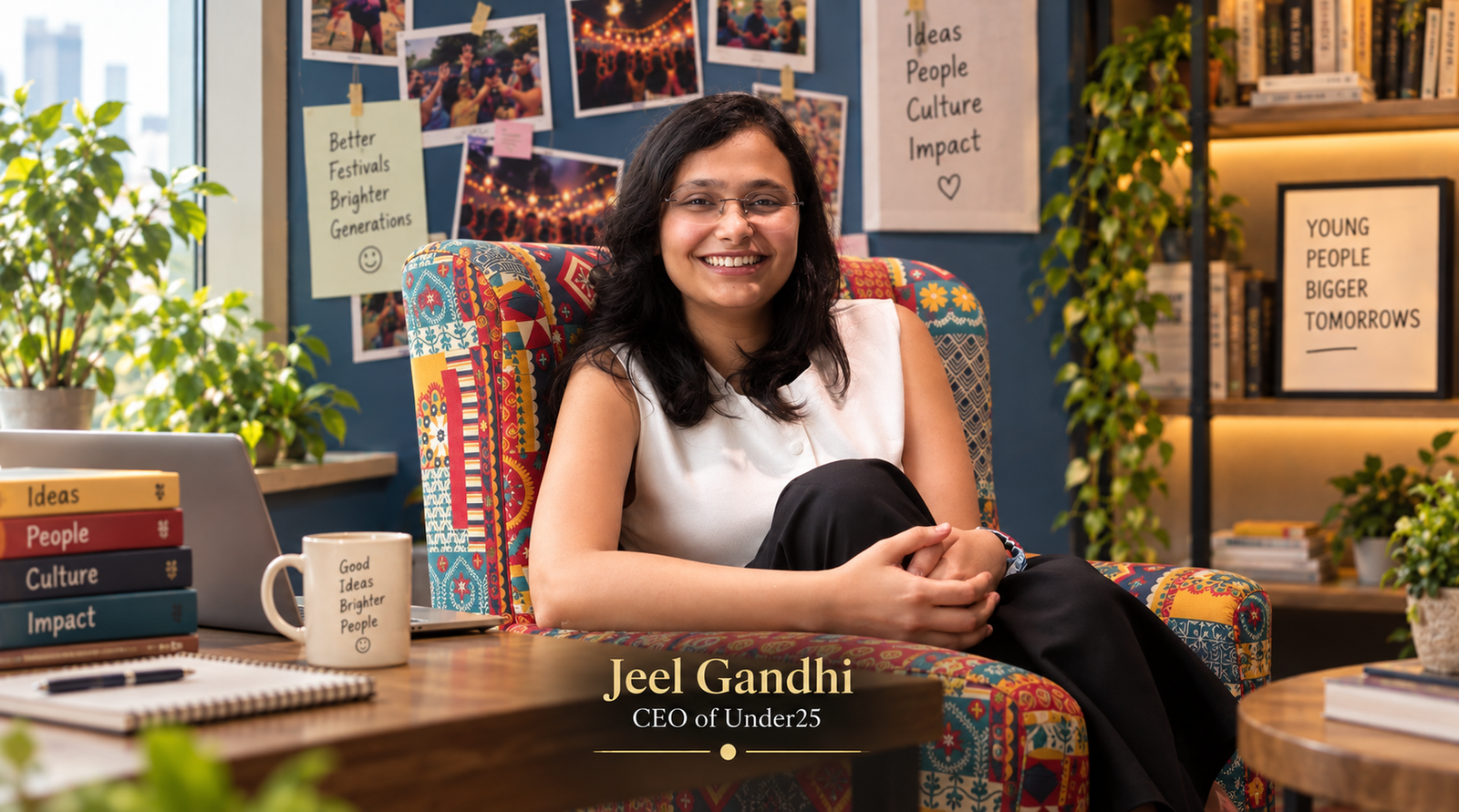
– Written by Jeel Gandhi, CEO of Under25, India’s largest youth media network, and a strategic voice on Gen Z and youth culture. Over the past decade, she has worked across business strategy and finance with leading companies, while also building various products and businesses from the ground up. Today, through Under25, she combines business thinking with on-the-ground insights to help brands connect with the next generation.