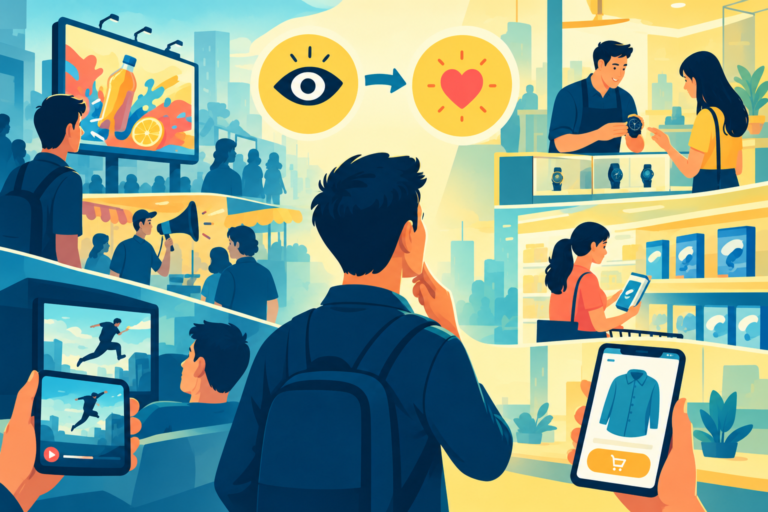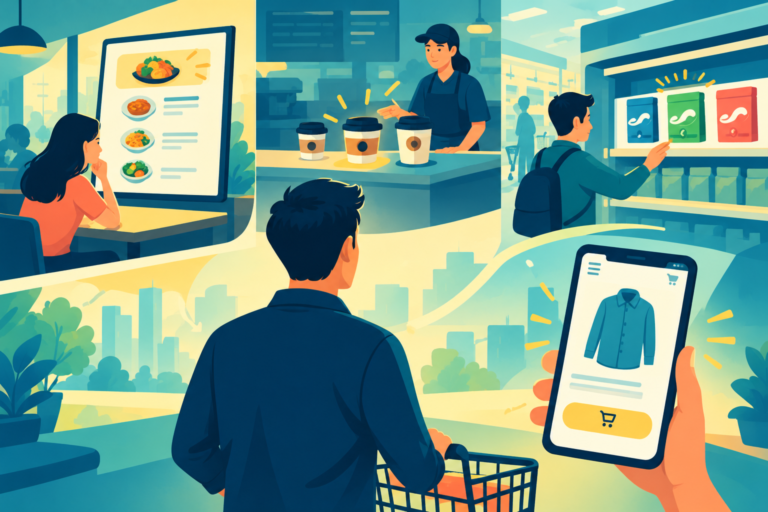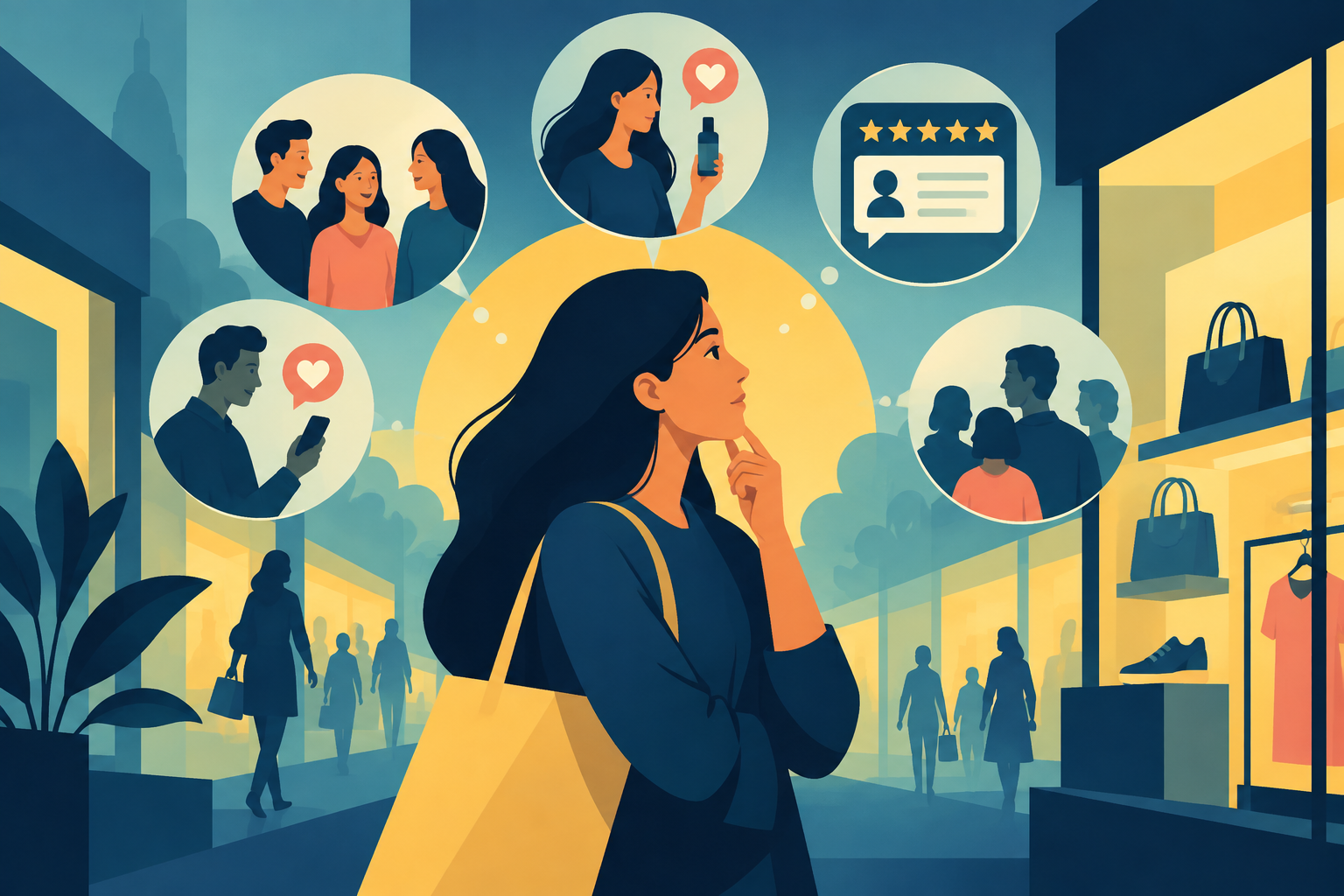
Social Safety can shape consumer choices by reducing uncertainty, building trust, and reinforcing purchase decisions through social influence.
Looking for a Shorter Overview?
AI Summary
Key Moments
Social Safety Defined
Social safety is the reassurance consumers get when choices feel socially accepted or validated by others.Informational Influence
Recommendations from friends, family, or strangers reduce uncertainty and make products appear safer choices.Digital Amplification
Social media platforms expand social influence by making purchasing discovery and validation seamless.Balance of Influence
Consumers can benefit from social information while maintaining their own preferences and avoiding inefficient choices.Buying decisions may look personal, but they rarely happen in isolation. A recommendation from a friend, a product review from a stranger, an influencer’s opinion, or simply seeing people around us choose the same brand can change what feels like the right purchase. In this context, Social Safety can be understood as the reassurance consumers get when their choices feel socially accepted, validated, or shared by others. It is not necessarily about avoiding risk altogether; rather, it can make a purchase feel more familiar and less uncertain.
Consumer behaviour research has long established that people are influenced by their social surroundings, reference groups and the opinions of others. Digital platforms have only expanded these influences, allowing consumers to seek validation and information before, during and after a purchase.
How Social Safety Can Shape Consumer Choices
One of the clearest ways social influence affects buying behaviour is through recommendations. Consumers often turn to friends, family members and colleagues when they are uncertain about a product. This is particularly relevant for unfamiliar purchases, where another person’s experience can provide information that the buyer does not have themselves. A recommendation can therefore reduce uncertainty and make a product seem like a safer choice. Research on social influence distinguishes this as informational influence: consumers rely on others because they believe those people may have useful knowledge or experience.
This dynamic has become even more visible on social media. Platforms allow consumers to see what other people are buying, reviewing and recommending without having to ask them directly. Forbes, for instance, describes social media recommendations as a form of virtual word-of-mouth, while also highlighting how platforms increasingly combine discovery, interaction and purchasing in the same environment. In practical terms, a consumer scrolling through Instagram, YouTube, or another platform can move from seeing a product to researching it and eventually buying it without leaving the social environment.
Reviews are another important part of this process. When several consumers describe similar experiences with a product, those opinions can act as social proof. A 2025 study published in the Journal of Marketing & Social Research, based on 150 respondents from Karnal and Hisar, examined peer recommendations, influencer marketing, online reviews, and herd behaviour as forms of social influence. The researchers found that online reviews had a strong relationship with purchase behaviour within their sample, while peer recommendations were particularly relevant to first-time purchases. Because the study was limited to 150 respondents in two Indian cities, its findings should not be treated as representative of all consumers.
Also read: Zudio: How Value Retail Disruption Redefined Fast Fashion
Social influence can also work through conformity. People sometimes choose products because those choices fit the behaviour or expectations of a group they identify with. Reference groups can include friends, family, colleagues and communities, while opinion leaders can influence others because of their perceived expertise or relevance in a particular area. This helps explain why products associated with a particular community, lifestyle, or trend can gain momentum beyond their functional benefits.
However, social influence does not always improve decision-making. Research published in Heliyon notes that people can follow the opinions of their social groups in ways that may produce inefficient consumption choices. At the same time, the study points to a more balanced possibility: consumers can consider information from others while still maintaining their own preferences.
For marketers, this creates an important distinction. Building Social Safety should not simply mean making a product look popular. It can mean creating credible opportunities for consumers to see how a product fits into real people’s lives. Reviews, recommendations, communities, and useful conversations can all provide reassurance, but their value depends on credibility.
Ultimately, consumers remain individuals, even when their decisions are socially influenced. The people around them can provide information, validation and cues about what is familiar or acceptable, but these signals interact with factors such as price, personal preferences, product quality and circumstances. Social influence is therefore one part of the purchase decision rather than the whole story.
– Written by Saad Rashid, an experienced journalist with extensive experience across both print and digital media. He has worked with various publications in India and internationally and has reached millions of readers through his thought-provoking articles.