A product is just an item, but a mission builds loyalty. See how Patagonia mastered brand values to dominate the outdoor market.
Looking for a Shorter Overview?
AI Summary
Key Moments
Iconic Anti‑Consumer Ad
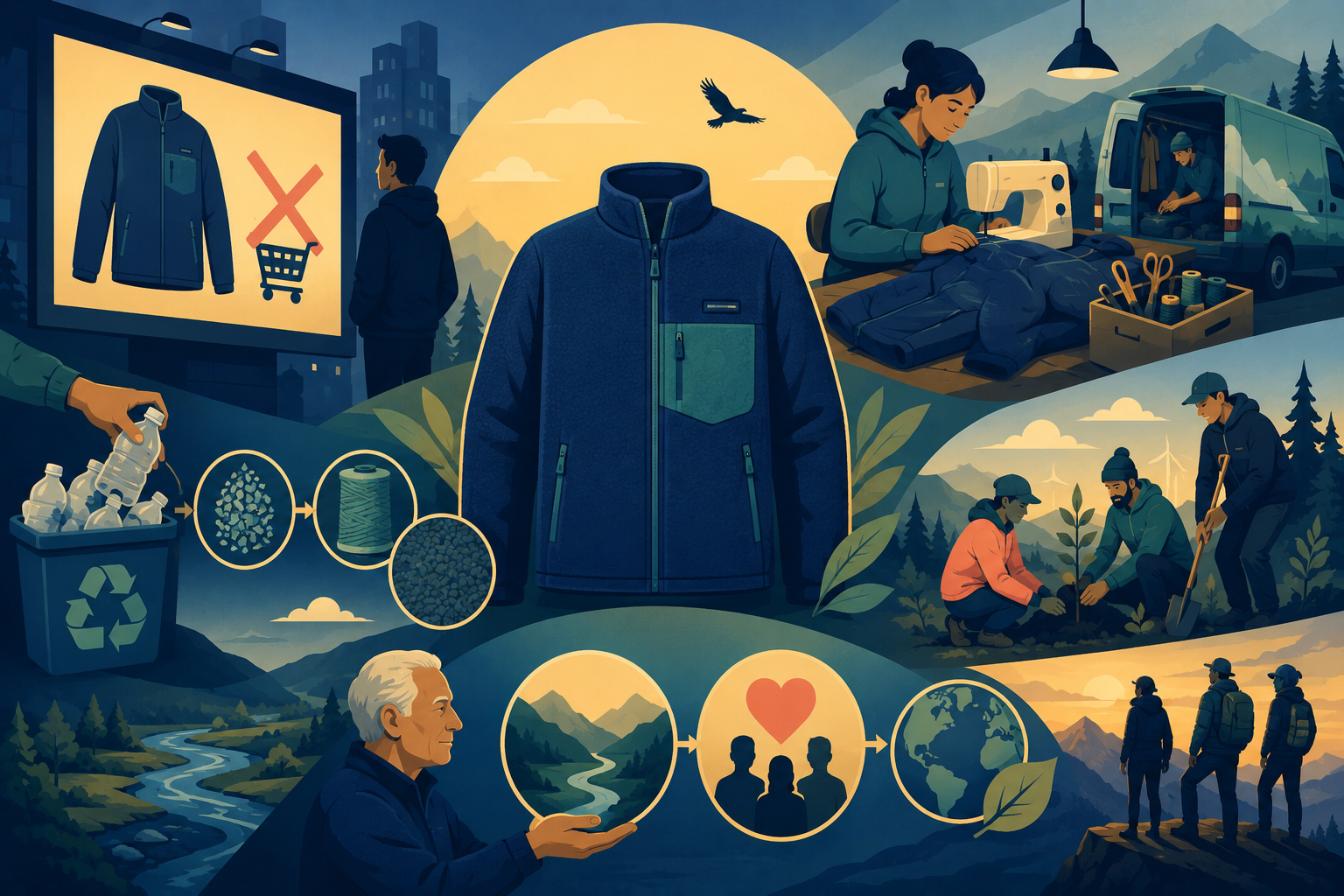
The Black Friday 'Don't Buy This Jacket' ad showcases Patagonia's uncompromising brand values.Company Donated to Environmental Trust
Yvon Chouinard gave away the $3‑billion company to fund environmental protection and reforestation.Free Repair & Mending Service
Patagonia runs a mobile repair truck that fixes torn jackets for customers at no cost.Recycled Materials & Eco‑Donations
Plastic bottles are melted into fleece jackets, and 1% of sales support river cleanup and tree planting.Most clothing shop owners want buyers to purchase a new winter coat every year. If a buyer rips his jacket, the shopkeeper tells him to throw it away and pay cash for a new one. But an American clothing company named Patagonia does the exact opposite. Clear Brand Values make them tell buyers to stop buying too many new clothes.
This strange business rule shows exactly how strong brand values make ordinary people wait in long lines just to buy a simple woollen jacket. The company proves that refusing to sell new items actually brings in more cash.
How Brand Values Can Bring In More Cash
In November 2011, the factory did something highly unusual on Black Friday. It bought a full-page ad in the New York Times. But instead of a discount tag, it ran a large photo of its own jacket with bold text that said, “Don’t Buy This Jacket.”
They used strong Brand Values to explain that making just one new coat wastes one hundred and thirty-five litres of clean drinking water. The managers told regular buyers to keep their cash in their pockets if they did not really need a new coat. Because they told the absolute truth, people trusted the company so much that daily sales actually went up by thirty percent that year.
A normal factory wants its old items to sell quickly. But this business hires workers just to fix torn cloth. If a buyer tears his old jacket on a sharp rock, he can send it back to the office. The workers use a needle and thick thread to sew up the hole, then send the old coat back to the buyer. The company even drives a small wooden truck across different cities. The workers sit inside the truck and fix old, torn jackets for free.
This physical repair work shows that true brand values mean a company actually does the hard work instead of just talking. A buyer sees the repaired cloth and knows the company is completely honest. This direct action makes the buyer refuse to wear any other factory brand for the rest of his life.
The business also changes how it makes the thread itself. Since 1993, factory workers have collected empty plastic water bottles from the garbage. They melt the dirty plastic and turn it into soft, warm fleece jackets.
A rich buyer gladly pays high cash prices for this recycled plastic cloth. He pays the heavy price because the company proves its Brand Values by keeping dirty plastic waste out of the local soil. The factory also gives away one percent of all its yearly cash sales to small groups that clean local rivers and plant trees.
In 2022, Yvon Chouinard, the old man who started the factory, did something no rich boss ever does. He gave away his entire three-billion-dollar company. He signed legal papers giving the whole factory and future cash profits to a special group.
This trust uses all the factory money to clean up dirty air and protect wild forests. This final act proved that his Brand Values were completely real. He did not sell the factory to rich stock buyers. He used strict Brand Values to ensure the factory always protects the soil, water, and trees first.
Today, outdoor travellers happily pay a lot of money for a plain Patagonia jacket. They do not buy the coat simply because it keeps them warm. A buyer pays the high price because he knows the factory uses the money to do good work.
Also read: What Patagonia Branding Proves About Authentic Purpose
This daily habit shows that strong brand values make buyers keep giving their money to the same store. When a company stops telling people to buy useless things, buyers happily keep paying for them for life.
Loved this article? Read more insightful articles on Brand Custodian.
–Written by Rajnish Singh, a copywriter and strategist with a background in fast-paced journalism, who explores the gap between what brands promise and how consumers actually behave.