Stop selling product features. Learn how Cadbury used emotional branding to replace traditional sweets during Indian festivals.
Looking for a Shorter Overview?
AI Summary
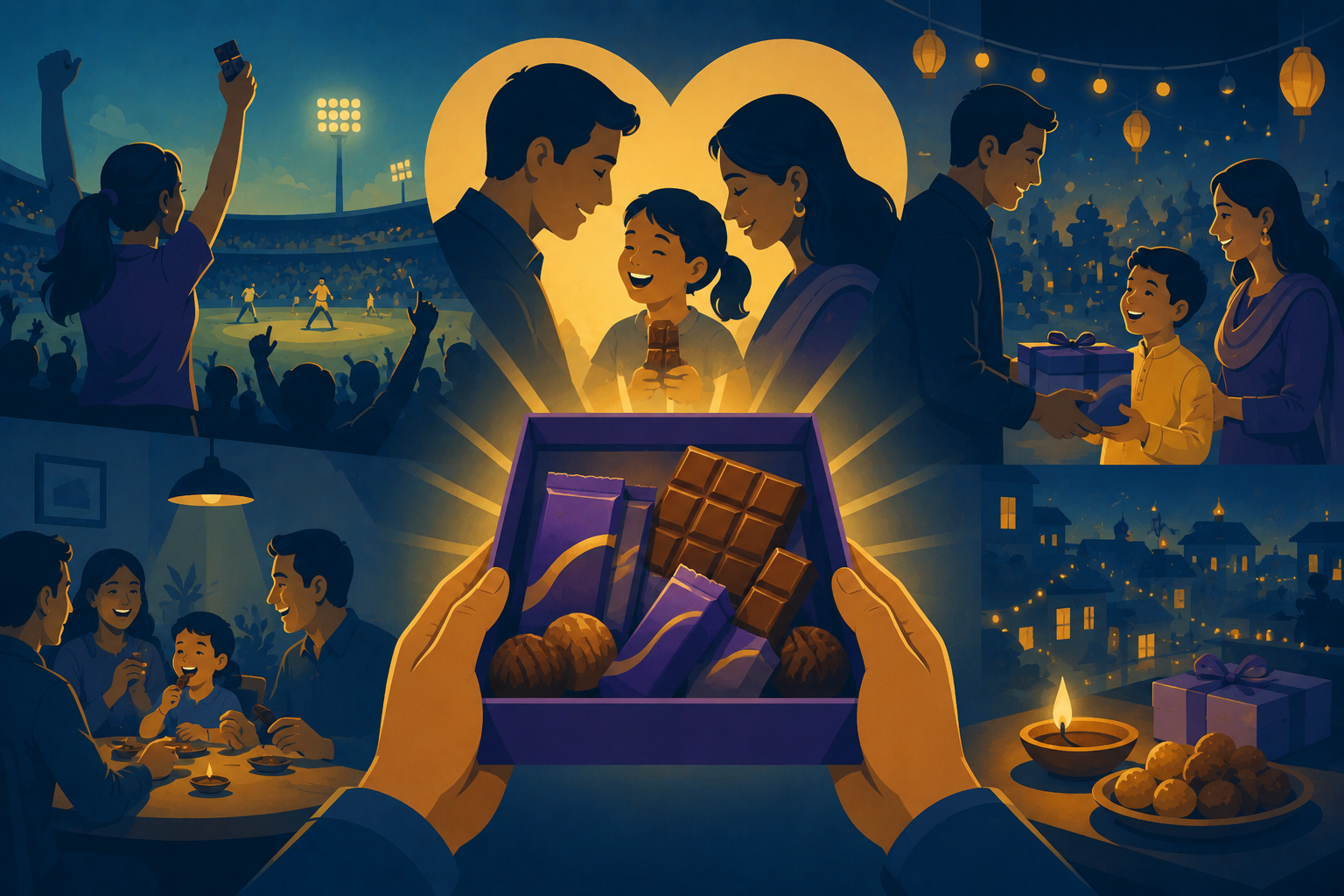
During the Diwali festival, a father walking home from the local market no longer carries a box of traditional wet laddoos. Instead, he carries a purple cardboard box filled with different Cadbury chocolate bars. This physical change inside Indian homes is purely the result of Emotional Branding.
Strong emotional branding happens when a factory makes a buyer feel deep love for his family while holding a mass-produced store item. The company did not change the core product inside the wrapper. They simply changed how the buyer feels when giving this chocolate to his sister.
How Emotional Branding Replaced The Local Sweet Shop
Before 1994, most shopkeepers believed only small schoolchildren bought chocolates with pocket money. But Cadbury wanted to sell these bars to adults too. They used clear emotional branding on television to change this old everyday habit.
In 1994, a well-known video showed a young woman sitting in a crowded cricket stadium. When her friend hit a six to win the match, she ran past the security guards. She danced on the grass while eating a Cadbury Dairy Milk.
This simple physical act proved that adults can eat chocolate in public without feeling shy. The emotional branding showed real people feeling happy and not just close-up shots of cocoa beans inside a factory machine.
A few years later, the company did something much bigger in the local market. In India, people always buy a box of yellow sweets during big festivals like Diwali and Rakhi, or when they pass a school exam. Cadbury used very smart Emotional Branding to change this physical habit by playing a new television video with the simple line, “Kuch Meetha Ho Jaaye” (Let’s have something sweet).
They hired the well-respected actor Amitabh Bachchan to tell people to eat the brown bar after dinner. In the television ad, he stood near a local shop counter and spoke like an ordinary man. He did not talk about milk quality or factory ingredients. Because of this direct emotional branding, Cadbury made buyers completely replace the old wet sweets with a purple cardboard box.
This physical change completely changed the Indian festival market. During the Rakhi festival, brothers used to buy open boxes of soft milk sweets (Mithai) that would turn sour within a few days. Today, they buy millions of these Cadbury Celebrations boxes, which can be eaten after weeks if stored in a cool place.
True emotional branding makes a buyer see a factory-made chocolate as a special family gift. The business stopped trying to explain how milk mixes with cocoa powder. Instead, it showed a brother teasing his younger sister before giving her the purple box. A shop owner knows that strong emotional branding can make a person gladly pay high prices just to see their family smile.
Today, Cadbury owns more than 60 percent of the Indian chocolate market. This huge daily cash success shows that emotional branding works far better than simply selling a sweet taste.
Also, read the management issue that caused Cadbury to rebuild: The Cadbury Crisis That Changed Indian Brand Management
A buyer does not pick up the purple paper box because he is hungry for food. He buys it because the company makes him remember happy family times when he sees the brown bar. The factory makes huge daily cash profits because its emotional branding sells a simple chocolate bar that makes the whole family sit together in the same room.
Loved this article? Read more insightful articles on Brand Custodian.
–Written by Rajnish Singh, a copywriter and strategist with a background in fast-paced journalism, who explores the gap between what brands promise and how consumers actually behave.