Stop paying for ignored billboards. Learn how strong AI visibility directly connects your brand to ready-to-buy customers.
Looking for a Shorter Overview?
AI Summary
Key Moments
Traditional ads no longer drive purchases
Billboards and TV ads have lost influence as AI now filters what shoppers see.AI visibility dictates brand discovery
When buyers search on mobile, AI ranks brands based on clear online text.New small brands can outsell giants
Strong AI visibility lets lesser‑known businesses appear at the top of search results.Companies must shift ad spend to online clarity
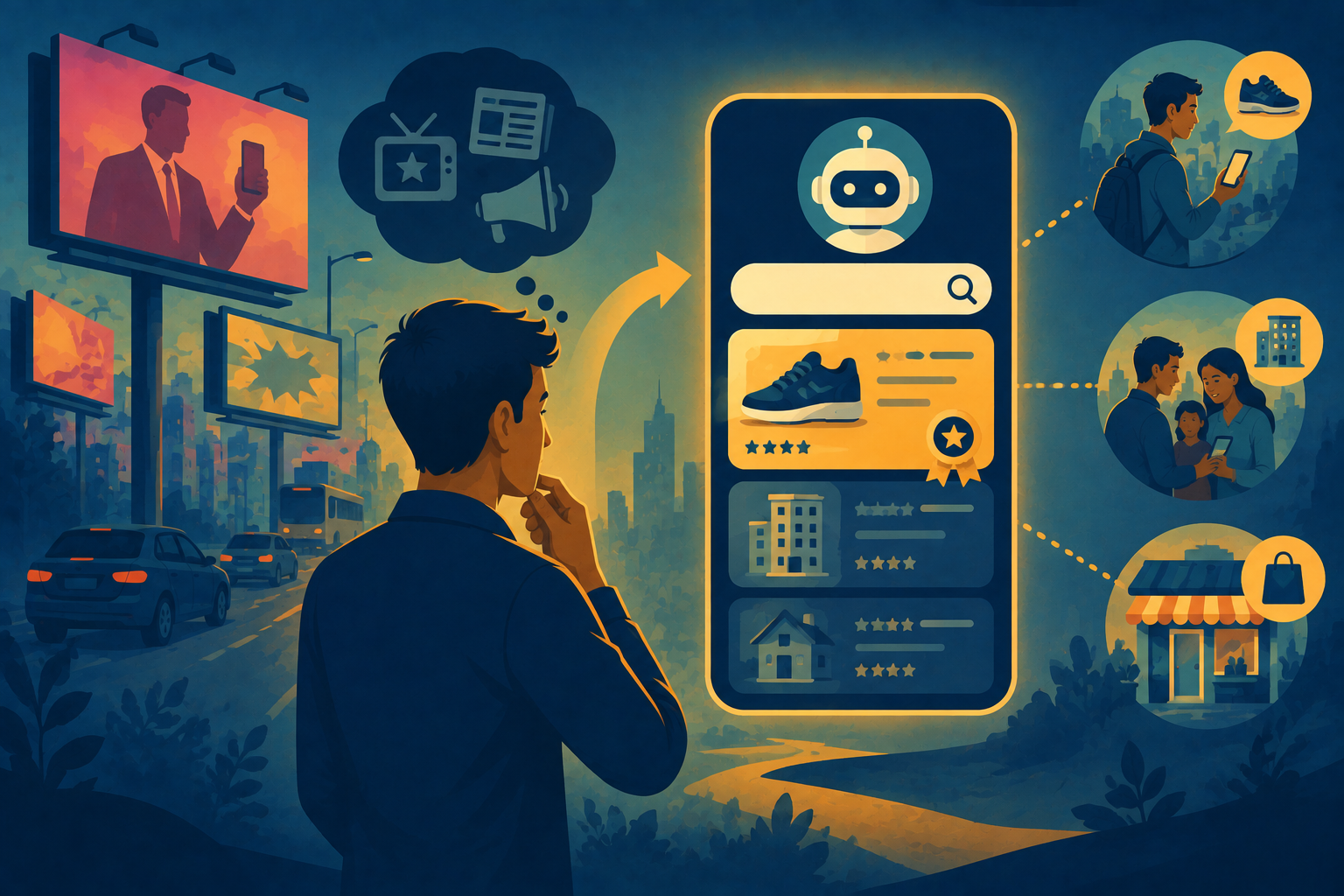
Investing in searchable online details is essential; celebrity ads are ignored by AI.Huge advertising boards no longer make a brand famous. People ignore these giant boards in their cars and keep their eyes on their mobile phone screens.
Today, AI Visibility decides exactly what a person buys at a local hardware or mobile shop. A buyer simply types a question about exactly what he needs into a phone screen and waits for a single name to appear. If a mobile phone company lacks strong AI Visibility, the machine leaves its name out of the short text. The buyer never sees the company name on his screen.
A large business might spend crores of rupees on television ads every month. But with poor AI visibility, today’s buyer walking down the street may never even know that this company makes phones.
Why AI Visibility Gets More Sales
A college student needs new running shoes for his daily morning walks. Ten years ago, he would simply walk into a Bata or Puma shop in the local market. He bought whatever the shopkeeper placed on the wooden bench because those names were well known in those days.
Today, he asks a smart app to suggest comfortable running shoes for under two thousand rupees. A new, lesser-known shoe brand might get the customer simply because of strong AI visibility. The app reads hundreds of local online reviews and places the small factory name right at the top of the screen. The student buys the unfamiliar shoes immediately on his phone. High AI visibility lets a brand-new business get more daily sales than a decade-old famous company in just a few seconds.
Families planning summer holidays show the same habit when booking train tickets and rooms. A father wants to book a clean hotel room in Darjeeling for his wife and two children. He ignores the full-page hotel advertisements in the newspaper. Instead, he asks an AI app to find a quiet family room near a particular area.
The app shows him two direct options with clear room rates and photos. He pays the booking deposit right away. The large, famous hotel on the main road loses a customer because it lacks proper AI visibility. The app chose a smaller guest house that had very clear room details online. Without AI visibility, a famous hotel just loses daily room bookings to smaller places hidden somewhere in the city.
Shop owners can no longer rely on a large signboard above their door to get daily buyers. Being famous once meant painting your company logo on every street wall and bus stop in the city. Now, being famous simply means the machine chooses your exact physical product when a buyer asks a direct question on a mobile phone.
If a business owner does not create clear AI visibility by putting plain, accurate details online, AI will never suggest their items to new buyers. Buyers trust the short text on their screens far more than a loud ad on television or in a newspaper.
Companies need to completely change how they spend their advertising money. Paying movie stars to read a script with a fake smile in TV ads does not help a buyer who just wants a fast, direct answer on his phone while doing some work. The AI does not watch television channels.
Also read: Why AI Search Is Changing the Way Consumers Discover Brands
It only reads plain text on web pages. Strong AI Visibility is the only thing that matters when a customer wants to buy a physical item. If the screen shows your exact name, you get the cash. If the screen ignores you, the buyer just pays the shop next door.
Loved this article? Read more insightful articles on Brand Custodian.
–Written by Rajnish Singh, a copywriter and strategist with a background in fast-paced journalism, who explores the gap between what brands promise and how consumers actually behave.