Why do buyers pay triple for similar products? Discover how packaging, service, experience, and perceived value influence what consumers are willing to pay.
Looking for a Shorter Overview?
AI Summary
Key Moments
Experience Over Price
Consumers pay for emotional and sensory enhancements, not just the product itself.Packaging Creates Value
Premium design and materials make identical items feel more valuable, supporting higher prices.Service and Environment Matter
Polite staff, clean spaces, and calming ambiance increase perceived worth, allowing premium pricing.Strategic Value Investment
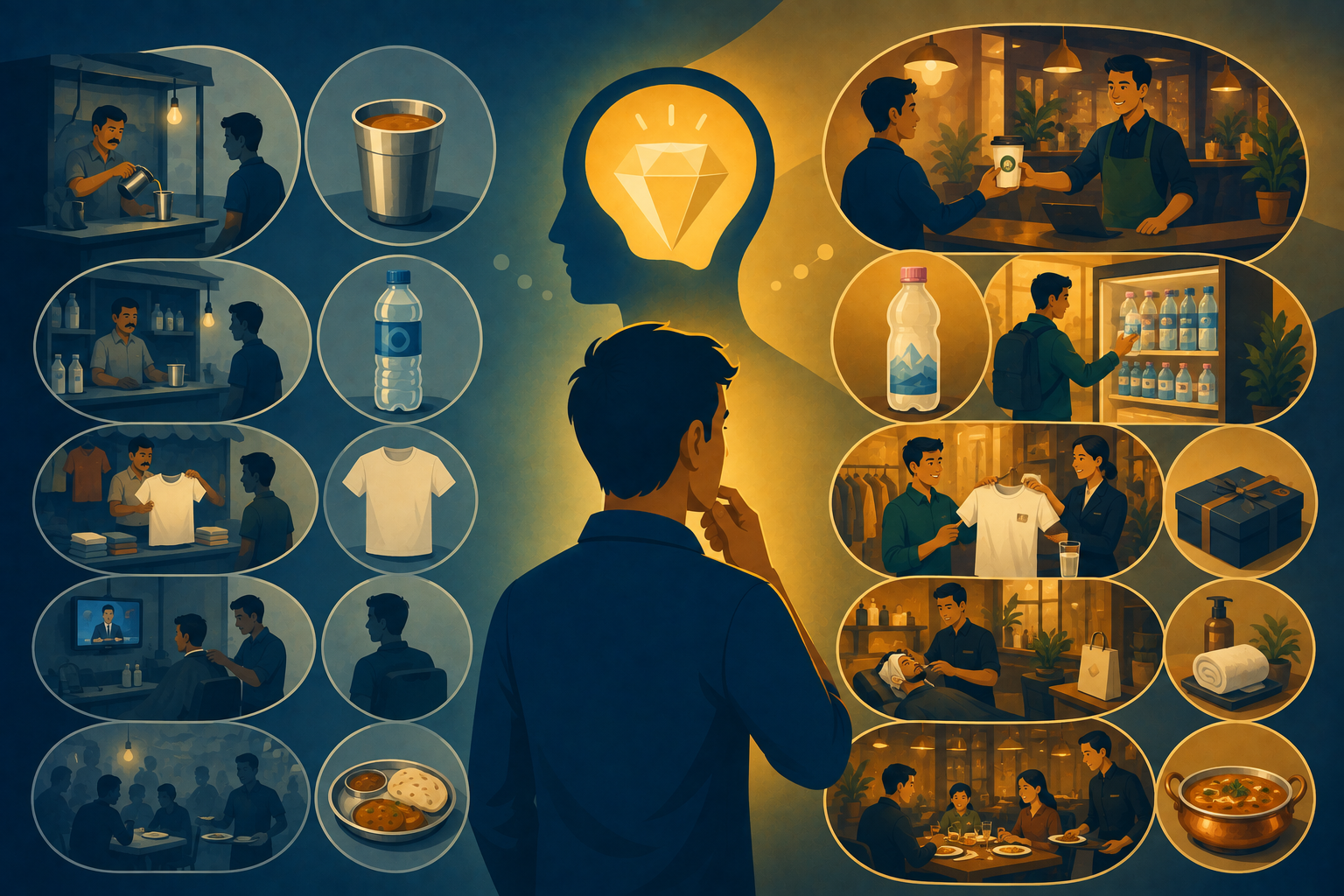
Brands should enhance perceived value through branding, service, and presentation instead of undercutting on price.A small roadside stall sells a cup of hot filter coffee for forty rupees in a simple steel glass. Right next door, a modern café sells the same amount of coffee in a thick paper cup for three hundred rupees. Office workers willingly stand in a long queue outside the expensive café every morning.
They gladly pay extra because the café plays soft music, smells of fresh vanilla, and writes names on the cups with a marker. This everyday habit shows the real meaning of Perceived Value.
Buyers do not just pay for the coffee; they pay for how the whole shop makes them feel. When a business builds high Perceived Value, the actual cost of the product matters much less to the buyer.
How Perceived Value Makes Buyers Ignore the Price Tag
Bottled water sales show the same habit. A passenger stops at a highway petrol pump during a summer road trip. He checks the shop fridge and sees a regular twenty-rupee Kinley bottle sitting beside a tall, stylish Himalayan water bottle priced at sixty rupees. Both bottles contain plain, safe drinking water.
But the tall bottle features a mountain picture and a premium pink cap. The passenger picks up the expensive bottle because it looks cleaner and feels heavier in his hand. The water inside tastes exactly the same. But the smart packaging creates additional perceived value. He happily pays three times the regular price because the stylish bottle gives him the impression that it is somehow healthier.
Clothing showrooms follow the same rule. A college student needs a plain white cotton T-shirt for his summer holidays. A local street vendor sells a basic white shirt for two hundred rupees. A large glass-fronted showroom in a nearby mall sells a very similar white shirt for two thousand rupees.
The showroom shirt comes neatly folded in a premium cardboard box tied with a thick black ribbon. A polite salesperson offers the student a glass of cold water while he checks the fit in a clean mirror. The student buys the expensive shirt without complaint. The air conditioning, polite service, and premium packaging all add to the high Perceived Value. He feels respected as he carries the shiny shopping bag out of the mall.
Local barbershops work in much the same way. A roadside barber cuts hair for fifty rupees while loud news plays on a small television. A modern salon down the road charges five hundred rupees for the same basic haircut. But the modern salon uses soft yellow lighting, offers a hot towel after the cut, and smells of sandalwood oil.
Staff members wear clean black uniforms and speak softly. Customers gladly pay the higher rate every month. The scissors and combs do exactly the same job in both places. But the peaceful environment creates a much higher Perceived Value. The customer leaves the salon feeling completely relaxed and properly pampered.
Also read: What Spotify Wrapped Reveals About Brand Engagement
Weekend family dinners work the same way. A family goes out for butter chicken on a Sunday night. A loud, crowded local eatery sells a full plate for three hundred rupees. Waiters rush to place steel plates on the table. A quiet restaurant one street away sells the exact same dish for eight hundred rupees.
This expensive restaurant serves food in heavy copper bowls. Soft instrumental music plays in the background, and a waiter fills water glasses without being asked. The chicken tastes almost the same in both places, but the copper bowls and attentive service create a higher Perceived Value. The family happily pays the larger bill because the peaceful dinner feels like a special event.
Smart business owners know that competing primarily on low prices can be a losing strategy. A rival shop can always cut its price by another ten rupees the next morning. Smart businesses focus on increasing perceived value instead of continually lowering the printed price.
A company can strengthen this feeling by using better packaging materials, treating customers politely, improving the shopping environment, or simply keeping the shop floor spotless. Building strong Perceived Value helps businesses justify a premium and makes customers less likely to focus solely on price.
When a product or experience feels distinctive, reliable, premium, and worth the money, customers are often willing to pay more for it.
—Written by Rajnish Singh, a copywriter and strategist with a background in fast-paced journalism, who explores the gap between what brands promise and how consumers actually behave.