Trust takes years to build and seconds to lose. Understand negativity bias and protect your brand's customer loyalty.
Looking for a Shorter Overview?
AI Summary
Key Moments
Negativity Bias Defined
Bad experiences dominate memory, causing a single failure to outweigh years of good service.Everyday Scenarios
Examples from restaurants, online shopping, hotels, and airlines show how one mistake can destroy customer loyalty.Prevent & Respond
Businesses must eliminate friction points and act quickly on errors to protect trust.Trust Recovery
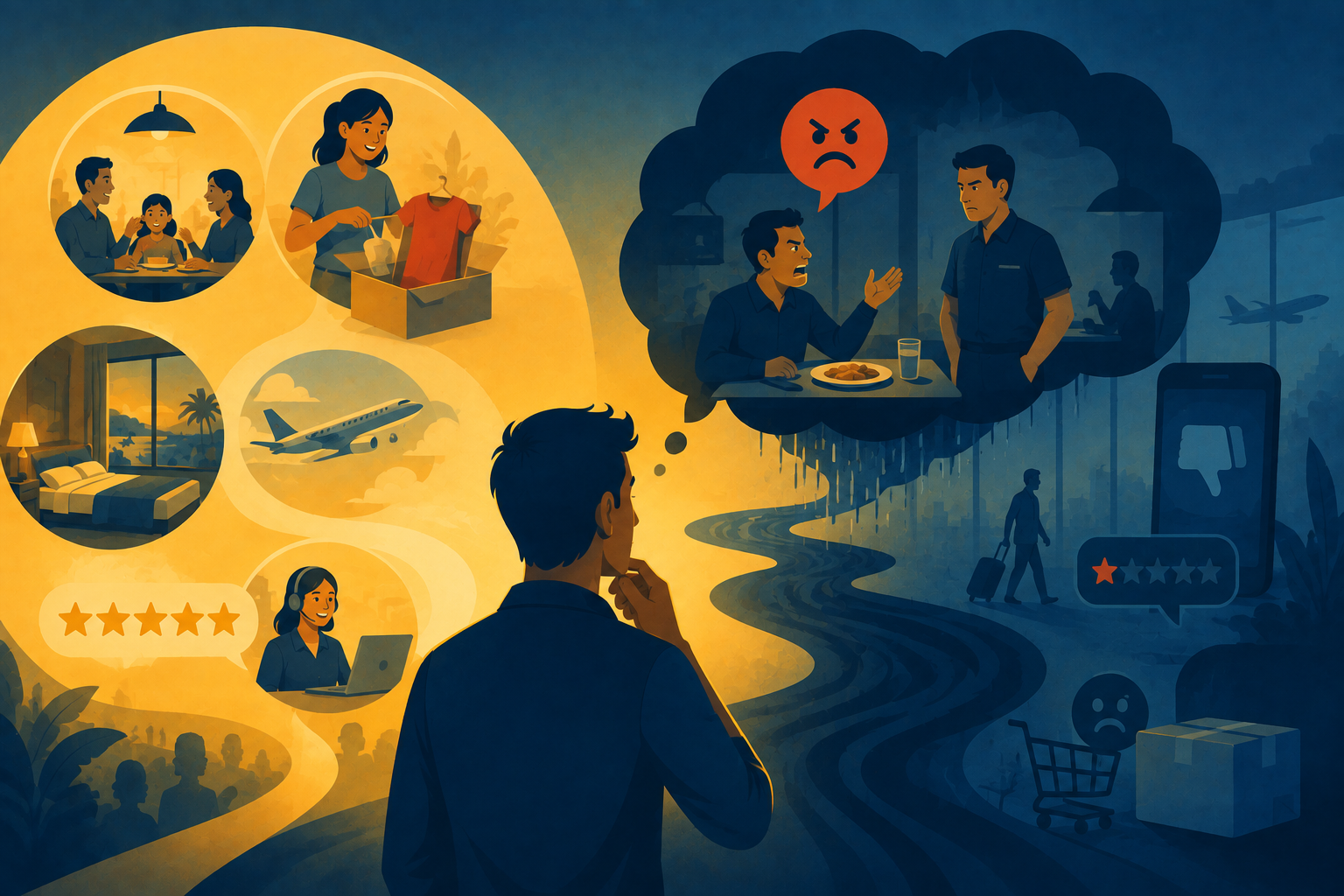
Trust lost in minutes can take years of consistent effort to rebuild.A family has been visiting a local restaurant for two years. The paneer butter masala has always arrived hot, the tables are kept clean, and the waiters behave well. The family trusts the place completely. But one evening, a new waiter speaks rudely. He serves cold food and argues when asked to replace it.
Everyone gets angry, pays the bill, and leaves. They decide to find a new place for weekend dinners and never return. Twenty good dinners are completely forgotten because of one bad dinner. This natural human tendency is called negativity bias.
Because of negativity bias, people tend to remember bad experiences much longer than good ones. A single mistake can ruin years of good service in just one hour.
How Negativity Bias Changes Buying Habits
Online shopping shows the same pattern. A young woman buys clothes from a famous fashion app every month. Delivery staff always arrive on time, and the clothing quality matches the online pictures perfectly. She is a very happy customer. Then she orders a special dress for her cousin’s wedding. Her package arrives three days late, and one sleeve is torn. When she calls customer care, the staff simply read from a script.
It takes two full weeks to get her money back. Because of negativity bias, she deletes the application. Years of perfect deliveries are completely forgotten. She also tells five college friends to avoid the website. Negativity bias makes her focus on the anger caused by that one torn dress. One packing mistake has made the company lose a regular buyer forever.
Hotel bookings work the same way. A man opens a travel website to book a room in Goa. He finds a nice resort with two hundred excellent reviews. Past guests praise the clean rooms and tasty breakfast. But at the bottom of the page, three negative reviews complain about noisy air conditioners and rude desk staff.
Also read: Why Brand Reach Still Matters in an Age of Precision Targeting
He ignores the two hundred positive comments completely. Instead, he focuses on those three angry reviews and books a different hotel. He does not want to risk having a bad family trip. This is another example of negativity bias. Bad news often feels much more important than good news. People naturally want to stay away from trouble.
Airlines face this problem every day. A businessman might fly on the same airline fifty times a year without any problems. His flights are usually on time. But one winter morning, his flight gets delayed by four hours. The ground staff does not make any clear announcements and ignores his questions. He gets so angry that he posts a long complaint on social media.
The airline can instantly lose a loyal flyer because of negativity bias. Overcoming this bias is difficult for big brands. A company can do a hundred things right, but a customer may remember only the one time it failed. That single bad memory can stay in the customer’s mind for years.
Good business owners know that getting a new customer is only the first step. The real job is making sure no one feels ignored. Just offering a low price or a big discount is never enough. A company has to work hard to prevent complaints before they happen and respond quickly when something goes wrong.
Businesses do not grow just by making people happy. They also grow by reducing the moments that create frustration and disappointment. Because of negativity bias, trust can be lost in a few minutes, while earning that trust back can take years of hard work.
Buyers want an easy life. When a brand creates unnecessary trouble, that negative experience can outweigh many positive ones. For businesses, the lesson is simple: every customer interaction matters, especially when something goes wrong.
—Written by Rajnish Singh, a copywriter and strategist with a background in fast-paced journalism, who explores the gap between what brands promise and how consumers actually behave.