How youth communication is shifting from polished messages to participatory, authentic content that invites engagement, remixing and visibility.
Looking for a Shorter Overview?
AI Summary
Key Moments
The Communication Shift
Gen Z views communication as participatory rather than one-way broadcasting.Raw vs Polished Content
Authentic, imperfect content generates more engagement than refined announcements.Personal Branding Evolution
Building a visible point of view is now considered literacy, not just career strategy.Constant Visibility Pressure
The demand for constant digital presence creates exhaustion despite perceived empowerment.A student walked up to me last week, phone already out, and said, “Ma’am, can you just repost this? Don’t write anything, just repost.” Not “please share our achievement.” Not “kindly promote.” Just — repost. No caption needed. Being seen by the right feed was the whole ask.
That one sentence tells you more about youth communication than any report I’ve read this year.
Most of us in communication were trained to reach people. Write the message, pick the channel, push it out, measure the reach. It’s a one-way street with good lighting. But the students I spend my day with don’t experience communication that way at all. To them, a message that doesn’t invite a reply, a point of view, a retort, a remix, a duet, a comment fight — isn’t really a message. It’s furniture. It sits there. It doesn’t do anything.
That’s the shift nobody puts plainly enough: communication is something you send. Engagement is something you lose control of, (possibly) on purpose. And youth today are far more comfortable with that loss of control than most institutions are.
I see it in small things. A poster campaign we were proud of got polite likes. A half-edited, slightly shaky reel a second-year shot on her phone — same event, same message — got comments, shares, and three other students stitching their own version onto it within a day. Ours was correct. Ours was refined. But hers was alive.
This isn’t a call to abandon polish. It’s a call to notice what polish is actually for. For a generation that has grown up being co-creators of everything they consume- playlists, memes, even their own class notes shared as reels- a message that arrives finished, sealed, and un-remixable reads as slightly deaf, if not completely. Not wrong. Just out of step.
And then there’s the branding piece, which I think we’re still getting wrong. We keep telling young people “build your personal brand” like it’s a career hack, a LinkedIn headline exercise. It isn’t. For this generation, having a visible, findable point of view isn’t a growth strategy; it’s closer to literacy. Not having one is the actual risk. If you can’t be found, quoted, tagged, or searched, you don’t exist in the rooms that matter to them, whether that’s a job, a collaboration, or just being taken seriously by their own peer group.
Also read: The Bridge Between Promise and Reality: What Differentiates a Great Brand
But this is the part the motivational posts and teachers skip: that constant visibility is exhausting for them too. I’ve watched students agonize over a single Instagram story the way we used to agonize over an entire press release. The pressure to always have a “voice” is real, and pretending it’s all empowerment and no cost would be dishonest.
So, what does this mean for how institutions like ours should show up? Fewer flawless announcements from a faceless handle. More real voices such as a professor’s actual opinion, a student’s actual footage, even the awkward, unedited bits. Not because raw is trendy, but because raw is what signals “a person made this, and you’re allowed to respond.”
The student who wanted a repost, not a caption, wasn’t being lazy. She understood something about visibility that most of our campaign decks still don’t: being part of the conversation beats being the source of it.
I still don’t have a tidy formula for this. Some days I’m not sure anyone does. But I know the shaky reel outperformed the poster, and I haven’t stopped thinking about why.
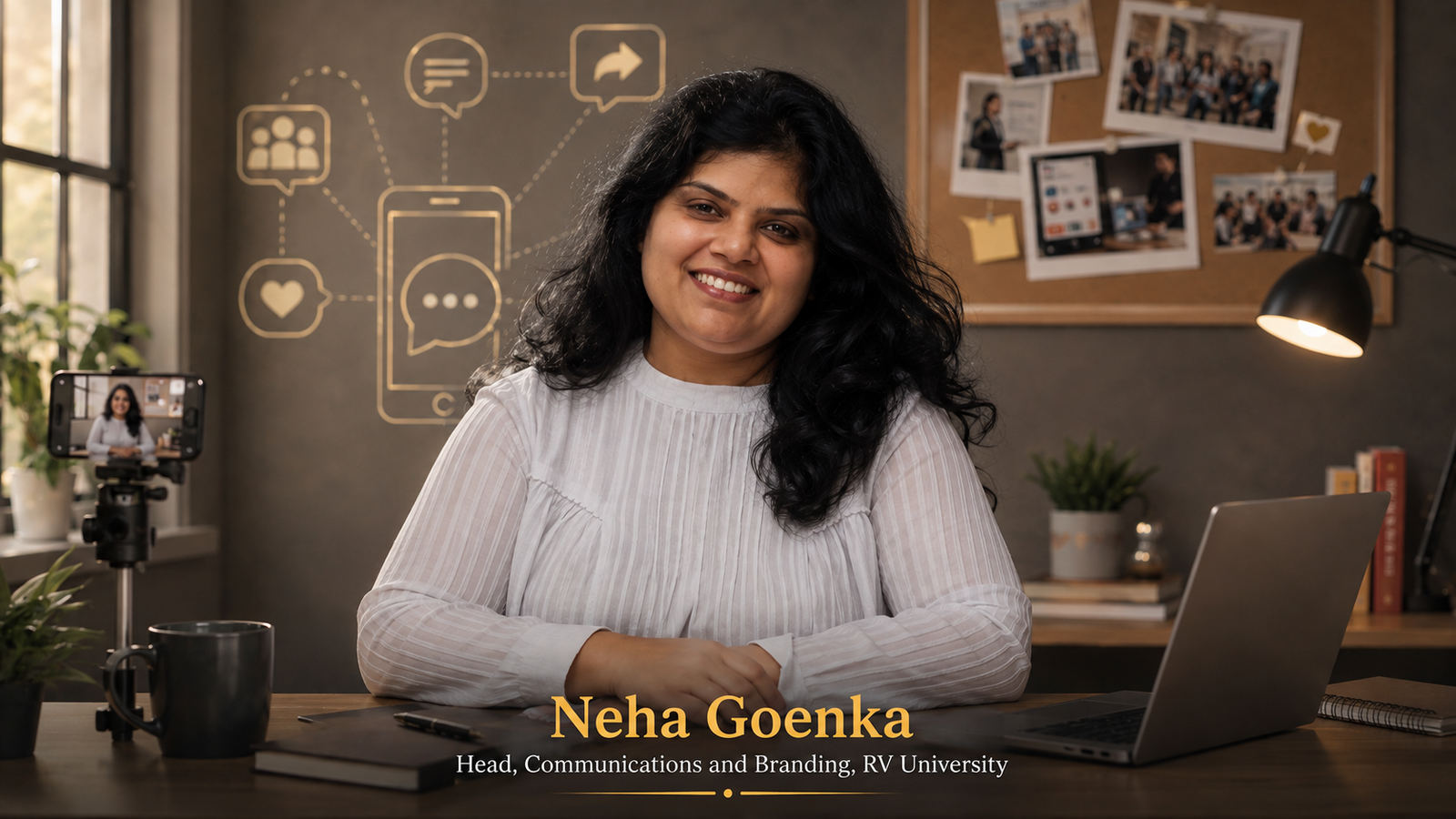
– Written by Neha Goenka, Head, Communications and Branding, RV University in Bangalore. She is a communications and PR professional with 23+ years of experience building brands, shaping narratives, and managing reputations across diverse sectors. Curious by nature and a constant learner, she believes good communication starts with observing, understanding, and finding the nuance—not simply following the trend.