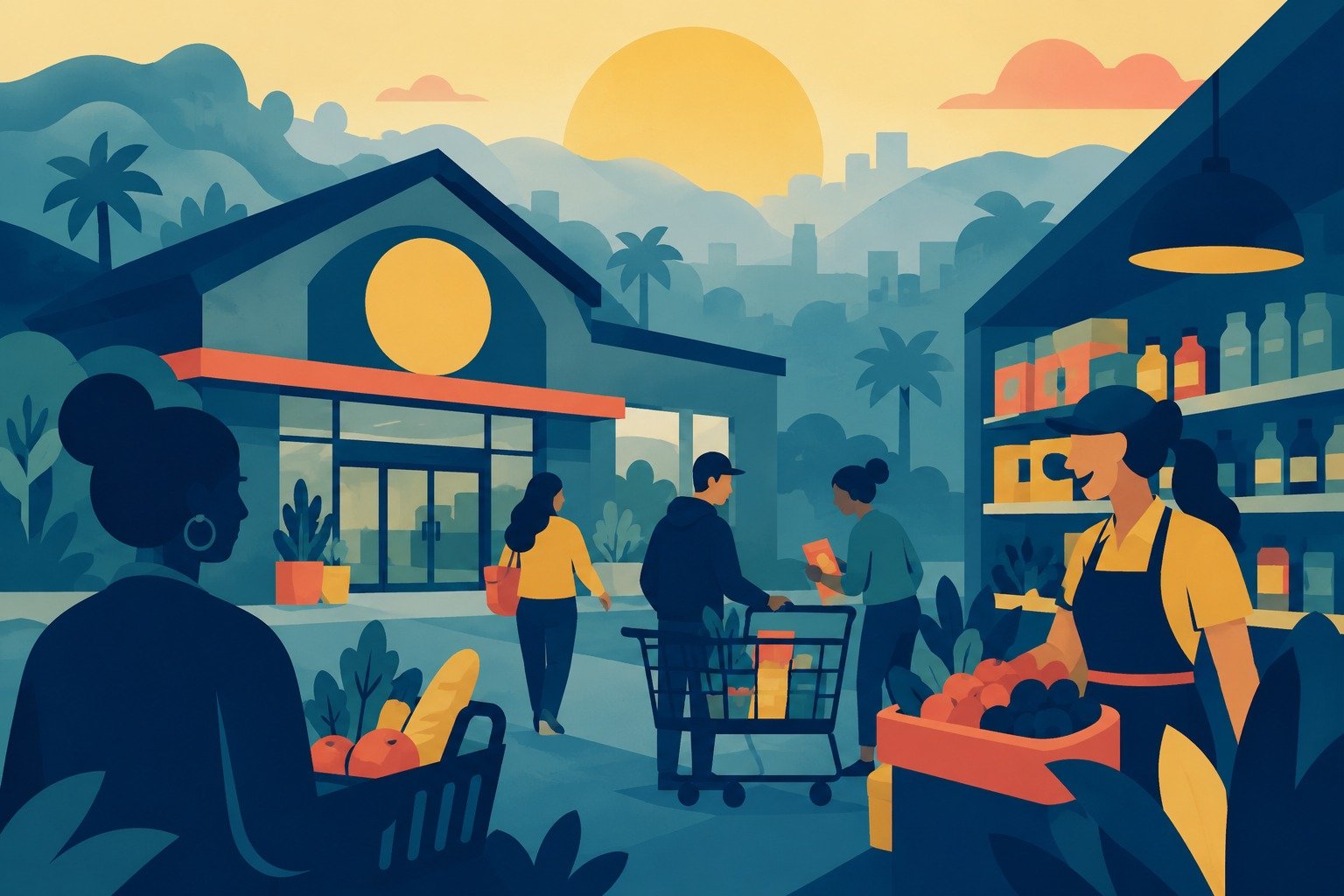
Discover how Trader Joe's built lasting customer loyalty through experience, trust and word-of-mouth instead of advertising.
Looking for a Shorter Overview?
AI Summary
Key Moments
Experience Over Advertising
Trader Joe’s invests in immersive store design, friendly staff, and exclusive products, turning shopping itself into a marketing force.Word‑of‑Mouth Amplification
Satisfied shoppers voluntarily share discoveries on social media, creating organic advocacy that outpaces paid ads.Curated Simplicity
Limited, high‑quality private‑label selection reduces choice overload and builds a sense of scarcity‑driven loyalty.Fearless Flyer Storytelling
A humorous, educational newsletter replaces traditional flyers, engaging customers before they even reach the aisles.Walk into a Trader Joe’s store and one thing becomes immediately clear. It does not look, feel or behave like a typical supermarket. There are no loud promotional banners, no loyalty cards to sign up for, and no endless stream of advertisements following you around online. Yet, despite avoiding many of the marketing tactics that retailers have come to rely on, Trader Joe’s has built one of the most loyal customer bases in grocery retail.
Its success is a reminder that loyalty cannot always be bought through discounts, reward points, or expensive advertising campaigns. Sometimes, it is earned through consistently delivering value, creating memorable experiences and giving customers reasons to return voluntarily. Instead of chasing attention, Trader Joe’s has focused on building trust and delight inside its stores, allowing satisfied customers to become its most effective marketers.
Why Trader Joe’s Doesn’t Need Traditional Advertising
Trader Joe’s has never relied heavily on television commercials, large digital advertising campaigns or aggressive promotional spending. Instead, it has invested in the shopping experience itself. The company believes that if customers consistently discover great products at fair prices in an enjoyable environment, they will naturally tell others about it. Over the years, that philosophy has turned word-of-mouth into one of its strongest marketing channels.
One of the biggest reasons this approach works is consistency. Customers know what to expect every time they visit. Stores remain relatively small and easy to navigate, employees are approachable and knowledgeable, and most products are exclusive to Trader Joe’s. That sense of familiarity creates confidence, while the rotating selection of seasonal and limited-time products keeps every visit interesting.
Interestingly, Trader Joe’s also avoids something that has become standard across retail: loyalty programmes. There are no membership cards, points or exclusive discounts because the company believes every customer should receive the same value every day. Rather than rewarding only members, it focuses on maintaining competitive pricing for everyone. That simple policy reinforces fairness while eliminating the complexity that often comes with promotional pricing.
Instead of weekly sales flyers filled with discounts, Trader Joe’s communicates through its Fearless Flyer, a publication that blends storytelling, product education, recipes and humour. Rather than simply announcing prices, it explains where products come from, how they can be used and why customers might enjoy them. It feels less like advertising and more like a conversation, making shoppers more engaged with the products before they even reach the shelves.
The in-store experience reinforces this approach. Handwritten signs, playful product descriptions, and friendly crew members create a personality that feels authentic rather than manufactured. Product sampling has also long been an important part of the company’s marketing philosophy, allowing customers to experience products directly instead of persuading them through advertising claims.
Another important factor is the retailer’s carefully curated assortment. Trader Joe’s carries far fewer products than a conventional supermarket, with a strong emphasis on private-label items. By reducing choice and focusing on products that meet its quality and value standards, it simplifies decision-making for customers while creating a sense of exclusivity. Many popular products cannot be purchased elsewhere, giving shoppers another reason to return.
Also read: What LEGO Ideas Teaches About Co-Creation
Perhaps the most remarkable aspect of Trader Joe’s strategy is that its customers willingly promote the brand on its behalf. New product discoveries frequently become social media conversations, recommendation videos, and blog posts, all created voluntarily by enthusiastic shoppers. That organic advocacy often carries more credibility than paid advertising because it comes from genuine customer experiences rather than brand messaging.
There is also an important lesson for marketers beyond grocery retail. Loyalty is rarely the outcome of a single campaign or rewards programme. It is built through hundreds of consistent interactions that reinforce a brand’s promise. Trader Joe’s has shown that when customers genuinely enjoy shopping with a business, feel they receive fair value and trust the experience, they often become repeat buyers without needing constant promotional incentives.
In an era where many brands compete for attention through increasingly expensive advertising, Trader Joe’s offers a refreshing alternative. Its success demonstrates that memorable customer experiences, authentic communication and reliable value can create stronger, longer-lasting relationships than traditional advertising alone. Rather than spending heavily to persuade customers, the company has focused on giving them reasons to come back—and, perhaps even more importantly, reasons to bring someone else with them.