What can an innocent drink teach us about marketing? See why a fun brand personality creates untouchable consumer loyalty.
Looking for a Shorter Overview?
AI Summary
Key Moments
Founding Story Success
Three friends quit corporate jobs after positive festival response to their conceptConversational Brand Voice
Unique voice on all packaging with playful jokes, contact info and casual messagingCorporate Acquisition Survival
Coca-Cola preserved Innocent's distinctive branding despite acquiring majority stakeBuilt-in Brand Personality
Brand personality must be integrated into physical products, not just marketing slogansInnocent Drinks proved that you do not need to sound like a corporate lawyer to build a massive business. Most brands try desperately to sound professional. They rely on formal words, polished press releases, and carefully sanitised slogans. They assume that formal, corporate language makes them appear safe and authoritative to the buyer.
But this beverage company took the exact opposite route. From its earliest days, Innocent Drinks built its identity around a friendly, playful, and slightly cheeky way of talking. It never sounded like a massive food manufacturer trying to push units.
Instead, it sounded like a normal person you might actually enjoy sitting next to on a train. That is what makes Innocent Drinks such a powerful branding case study.
They showed the retail industry that personality is not just about choosing a fun tone for a single advertisement. It is about locking in a recognisable character and holding onto it for decades.
How Innocent Drinks Weaponised Casual Conversation
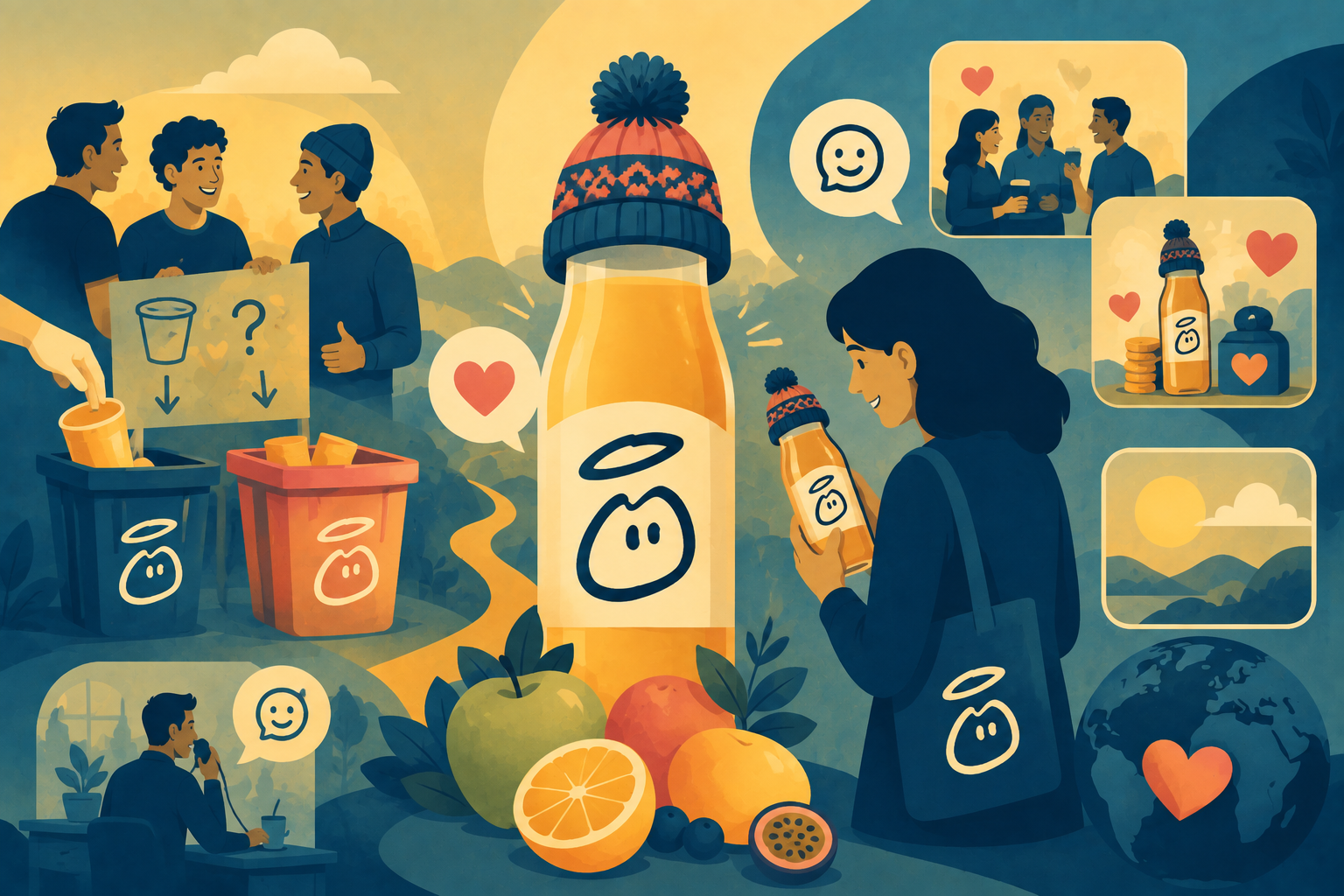
The story actually began in 1998 when three friends, Richard Reed, Adam Balon, and Jon Wright, started working on the idea of selling fresh fruit smoothies. They tested their concept at a music festival in London. They set up a small stall with a simple cardboard sign that asked a very direct question: “Should we give up our jobs to make these drinks?”
Next to the stall, they placed two physical trash bins labelled “Yes” and “No”. At the end of the weekend, the “Yes” bin was filled with empty cups. The response gave them the exact confidence they needed, and the founders quit their corporate jobs shortly after.
That exact conversational tone became their permanent voice. While massive competitors hired expensive legal teams to draft boring paragraphs for their back labels, this brand treated its packaging like a text message from a friend.
If you turn one of their bottles completely upside down, you will likely find a tiny printed sentence on the glass that says, “Stop looking at my bottom.”
The language is friendly without trying too hard, and it is playful without becoming completely random. Most importantly, this casual tone perfectly supports the core product: fresh fruit, healthy smoothies, and a slightly more positive everyday routine.
They hide silly jokes in the ingredients list and write casual updates about the weather at their office. They even print a real phone number on the packaging, inviting buyers to call just to chat.
They also run unique physical campaigns, like putting tiny, hand-knitted wool hats on their bottles every winter to raise money for charity. From a manufacturing standpoint, putting tiny hats on thousands of bottles is an absolute operational nightmare.
But it creates a physical interruption that forces the buyer to stop walking, pick up the product, and feel a genuine connection.
Also read: Why Zoom Branding Won During the Pandemic
This is not just a quirky design choice. It is a ruthless retail strategy. That loyalty is so valuable that when The Coca-Cola Company acquired a majority stake in the business in 2009, they did not dare change the packaging.
Despite becoming part of one of the largest corporate organisations on the planet, Innocent Drinks has continued to operate as a completely distinct brand. The parent company knew that removing that unique communication style would instantly destroy the value of the business.
Brand personality is not something you can fake. It has to be baked directly into the physical product you create. If your packaging sounds like it was written by a team of executives with no emotional connection with the product, your customer will feel absolutely nothing.
You do not always need a massive advertising budget to dominate a crowded market. Sometimes, you just need the courage to talk to your buyers like they are actual people.
–Written by Rajnish Singh, a copywriter and strategist with a background in fast-paced journalism, who explores the gap between what brands promise and how consumers actually behave.