Why brand salience drives buying decisions before comparison begins, and why being remembered matters more than being better.
Looking for a Shorter Overview?
AI Summary
Key Moments
Mental laziness drives purchases
Consumers choose familiar brands requiring minimal thought over better alternatives.Brand salience definition
Being first in mind during problem solves sales better than perfect products.Real-world examples
ENO for acidity, Bisleri for thirst prove mental association beats rational choice.Simplicity strategy
One specific problem focus wins over multi-feature marketing campaigns.Marketing departments invest billions every year trying to make buyers fall in love with their brand. Executives sit in meetings and talk about building deep emotional connections, brand loyalty, and community engagement.
These corporate leaders genuinely believe that ordinary people spend their free time thinking about a company’s vision and logo.
But that is a myth.
The average customer does not care about the company. When a buyer is tired, hungry, or stressed, the brain does not want to analyse a complicated marketing message. People simply want a quick solution to their immediate problem.
This is why the company that wins the sale is rarely the one with the absolute best product. The winner is often the one that comes to the buyer’s mind first. This invisible mental shortcut is called brand salience, and it shapes countless purchase decisions every day.
Brand Salience Overcomes Clever Advertising
Most business owners confuse brand salience with simple brand awareness. Founders often assume that because customers recognise their logo, the job is done. But simply knowing that a company exists is commercially useless if it does not make customers open their wallets.
True brand salience is about linking a brand to a specific, urgent trigger. The customer’s immediate problem should connect directly to the product, pushing competitors out of consideration.
Look at real-world behaviour. When someone eats a heavy, spicy dinner and develops severe acidity at midnight, they do not research the best antacid brands. They simply reach for ENO. Why? Because ENO has become mentally linked with acidity.
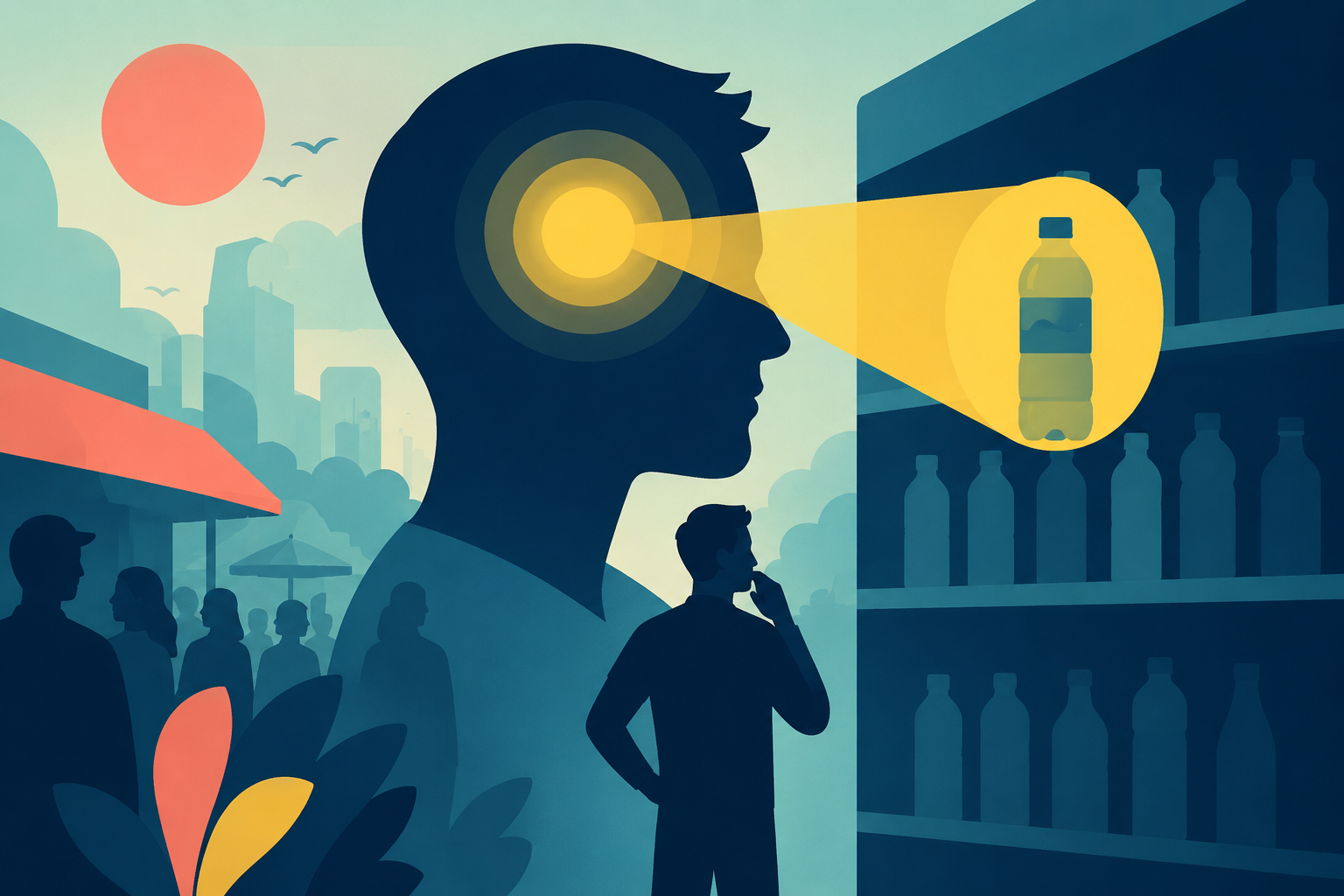
The same thing happens at a crowded railway station on a hot summer day. People do not stop to compare the purification methods of five bottled water brands. They simply hand over twenty rupees to the vendor and say, “Bhaiya, ek Bisleri dena.”
Bisleri does not win that moment because it necessarily has the purest water. It wins because the brand has successfully associated itself with the need to quench thirst.
The biggest mistake many companies make is trying to be everything to everyone. They attempt to sell ten different features at once, cramming premium quality, excellent customer service, and eco-friendly packaging into a single campaign.
Also read: How Nykaa Branding Built Beauty Authority
But they forget a basic psychological truth: when a brand gives too much technical information to a tired brain, most of it is ignored. The brand simply becomes background noise.
To survive, a business has to be brutally simple. It must choose one specific situation and one specific problem, then reinforce that association consistently until customers cannot separate the brand from that need.
When a brand lacks this mental availability, it enters a losing financial battle. It has to rely on heavy discounts to drive purchases and constantly spend on advertising just to stay visible.
A highly salient brand, however, rarely needs to shout. Market leaders do not have to bribe customers with discounts and coupons. Buyers come naturally because their brains have already connected the brand with the problem they need solved.
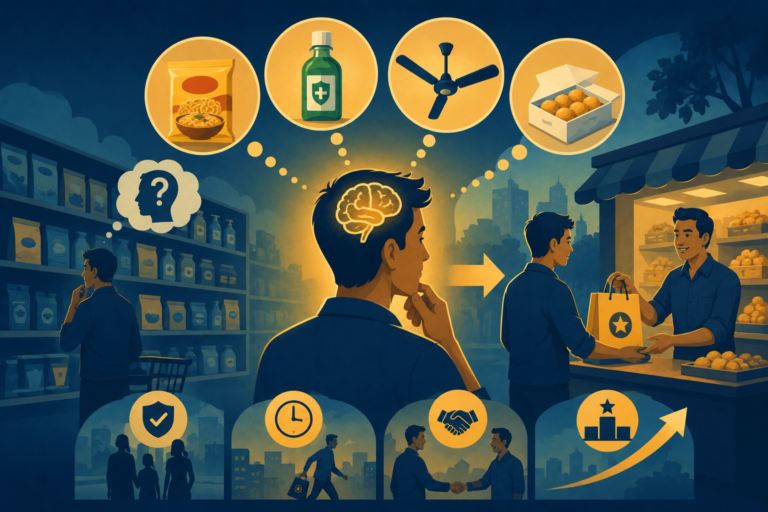
If someone is standing in a supermarket aisle looking at twenty different packets of salt, they will almost always choose the safest and most familiar option because trusting a familiar brand requires almost no mental effort.
Logic does not drive most everyday purchases. Mental laziness does. The human brain is designed to conserve energy whenever possible, especially during routine decisions.
If you want to dominate your industry, stop trying to build a deep emotional friendship with buyers. Instead, focus on becoming the very first brand that comes to mind the moment a customer’s problem appears.
– Written by Rajnish Singh, a copywriter and strategist with a background in fast-paced journalism, who explores the gap between what brands promise and how consumers actually behave.