Discover how AI is reshaping search, brand discovery and marketing, and why authority now matters before customers ever click.
Looking for a Shorter Overview?
AI Summary
Key Moments
Zero-Click Search Revolution
US search zero-click rates reached 68%, fundamentally changing customer behaviorAI Controls Brand Consideration
Generative AI now decides which brands appear in customer consideration setsNeed for Question-Based Strategies
Traditional keyword strategies must evolve to focus on questions customers ask AIMulti-Source Authority Matters
Technical optimization alone can't build authority in AI-generated answersA few weeks ago, I asked ChatGPT a question I would normally have Googled without thinking: Which providers handle emergency medical evacuation for expatriate employees?
It gave me a couple of names, explained what they did, and that was it.
I didn’t visit their websites. I didn’t compare five search results or open twelve tabs (which is usually how my research ends up). I got my answer and moved on.
What struck me afterwards was how completely normal that felt.
And perhaps that’s what marketers should be paying attention to. This isn’t a dramatic change in behaviour. Nobody woke up one morning and decided to stop using search engines. We simply discovered an easier way to get some answers.
People haven’t stopped searching. But increasingly, they’re not behaving like searchers.
The numbers suggest this is more than a personal habit. Research from SparkToro and Similarweb puts the US zero-click rate on Google at roughly 68% in early 2026, compared with about half of all searches in 2019. Pew Research has also found that when Google displays an AI summary, people are much less likely to click through to traditional search results. Links within the AI summaries themselves are clicked only about 1% of the time.
Google AI Overviews and ChatGPT aren’t the same thing, of course. But from where I sit as a marketer, they’re creating a similar problem.
The answer is increasingly sitting between the customer and the brand.
The Shortlist May Already Have Been Made
For years, we understood the search game reasonably well.
Rank higher. Bid smarter. Own the right keywords. Get someone onto your website and then persuade them.
There were ten blue links, and our job was to make ours irresistible.
Now imagine someone asking an AI assistant: “Which providers can support employee health and security across multiple countries?”
They may get three names and a short explanation of each.
That’s a very different customer journey.
If your organisation isn’t one of those names, the problem isn’t that you lost a click. You may never have entered the customer’s consideration set in the first place.
I think that’s the bigger shift hiding underneath all the discussion about zero-click search.
AI isn’t just changing how customers find brands. It is beginning to influence which brands they consider.
Another Acronym Isn’t the Answer
Naturally, marketing has already found a name for all of this: Generative Engine Optimization (GEO).
Research published in 2024 by researchers from Princeton and Georgia Tech showed that techniques such as credible citations, statistics and authoritative quotations could improve visibility in generative answers.
Since then, we’ve accumulated GEO, AEO, LLMO and probably a few others by the time this article is published. I’m less interested in which acronym wins.
The principle underneath is fairly simple.
Look at a lot of corporate websites, and you’ll still find pages full of words like leading, innovative, integrated, world-class and customer-centric.
They sound reassuring to us. They don’t actually say very much.
An answer engine has much more to work with when you give it clear facts, useful explanations, evidence, data and expertise.
But even here, I think we’re asking the wrong question when we ask, “How do we get AI to cite us?”
A citation is nice.
A recommendation is better.
Does an AI know your organisation exists? Does it understand what you actually do? Does it describe you correctly? Does it put you on the shortlist? Would it recommend you when nobody has mentioned your name?
Those are very different things.
There’s a New Gatekeeper in the Funnel
The customer journey we built much of digital marketing around looked roughly like this:
Search → Results → Website → Consideration → Conversion
Now another journey is emerging:
Question → AI Answer → Shortlist → Brand → Conversion
The website hasn’t disappeared. Neither have search, SEO or paid media.
But there is something new sitting upstream of all of them: an algorithm helping decide what deserves to be considered.
That means we have to think about more than whether machines can technically find our content.
They also need to understand it.
If your website describes your business one way, your LinkedIn page another, and third-party sources contain outdated information, which version should an AI believe?
And then comes the harder question: Even if it understands you perfectly, why should it choose you?
That’s where this stops being an SEO conversation.
Reputation matters. Independent research matters. Journalism matters. Expert commentary matters. What customers, analysts and credible third parties say about you matters.
Technical optimisation might make you discoverable.
It can’t make you authoritative.
Maybe We’ve Been Looking at the Wrong Keywords
For years, we’ve built keyword strategies.
I think we now also need question strategies.
Instead of only asking, “What do we want to rank for?”, ask:
“What questions should we have earned the right to answer?”
In my own industry, those could be questions such as:
- How should an organisation protect employees travelling to high-risk locations?
- What should an employer do when an employee has a medical emergency overseas?
- How should a company assess workforce health risks before entering a new market?
Then try something surprisingly revealing.
Ask those questions across ChatGPT, Gemini and other AI assistants without mentioning your company.
See who turns up.
More importantly, see who doesn’t.
That exercise can be uncomfortable, but it tells you something a branded search never will: whether your organisation is actually associated with the problem you believe you own.
So Where Should the Money Go?
I’m not suggesting we suddenly stop spending on paid search. People still search. Transactional intent still converts.
But I do think some money needs to move upstream.
More original research and proprietary data. More genuine expert commentary. More content answering difficult customer questions instead of simply filling an editorial calendar. More PR that builds authority rather than merely generating coverage.
And our dashboards will have to change too.
Traffic, rankings and clicks will remain important, but I expect we’ll increasingly ask: How often are we mentioned in AI answers? Are we being described accurately? Are competitors being recommended more often? What sources are being cited?
And perhaps the most interesting measure of all:
Are we being mentioned, or are we being recommended?
The difference is enormous.
Ironically, Brand Might Matter Even More
There’s another side to this that I don’t think gets discussed enough.
Ask an AI:
“What’s the best company for managing employee travel risk?”
and you’ve allowed the machine to help create your shortlist.
Ask:
“Tell me about XYZ (name of the company).”
and something very different has already happened.
The brand was in your head before the algorithm entered the conversation.
Which makes me wonder whether, in an AI-mediated world, old-fashioned brand building actually becomes more valuable.
If customers know your name, trust your expertise, and associate you with a particular problem, you don’t depend entirely on an algorithm to introduce you.
Also read: Attention got cheap. A point of view didn’t.
One Final Uncomfortable Question
What happens when AI gets your brand wrong?
It can happen. An answer can contain an outdated figure, misunderstand where a company operates, or misrepresent a capability.
And unlike our website, we can’t simply log into the CMS and correct the sentence.
That’s why I don’t see this remaining purely a marketing or SEO issue. It will increasingly involve communications, reputation, digital, legal and data teams as well.
Companies should probably start doing something remarkably simple: regularly ask the major AI platforms what they say about the organisation, its competitors and its category.
You might not like every answer.
But that’s exactly why it’s worth asking.
For twenty years, digital marketing fought relentlessly over the click.
The next battle may happen before the click even exists.
So perhaps the question for marketers is no longer simply:
Can customers find us?
It’s this:
When someone asks a question about the problem we solve, do we deserve to be part of the answer?
Because increasingly, a machine may answer that question before the customer ever reaches us.
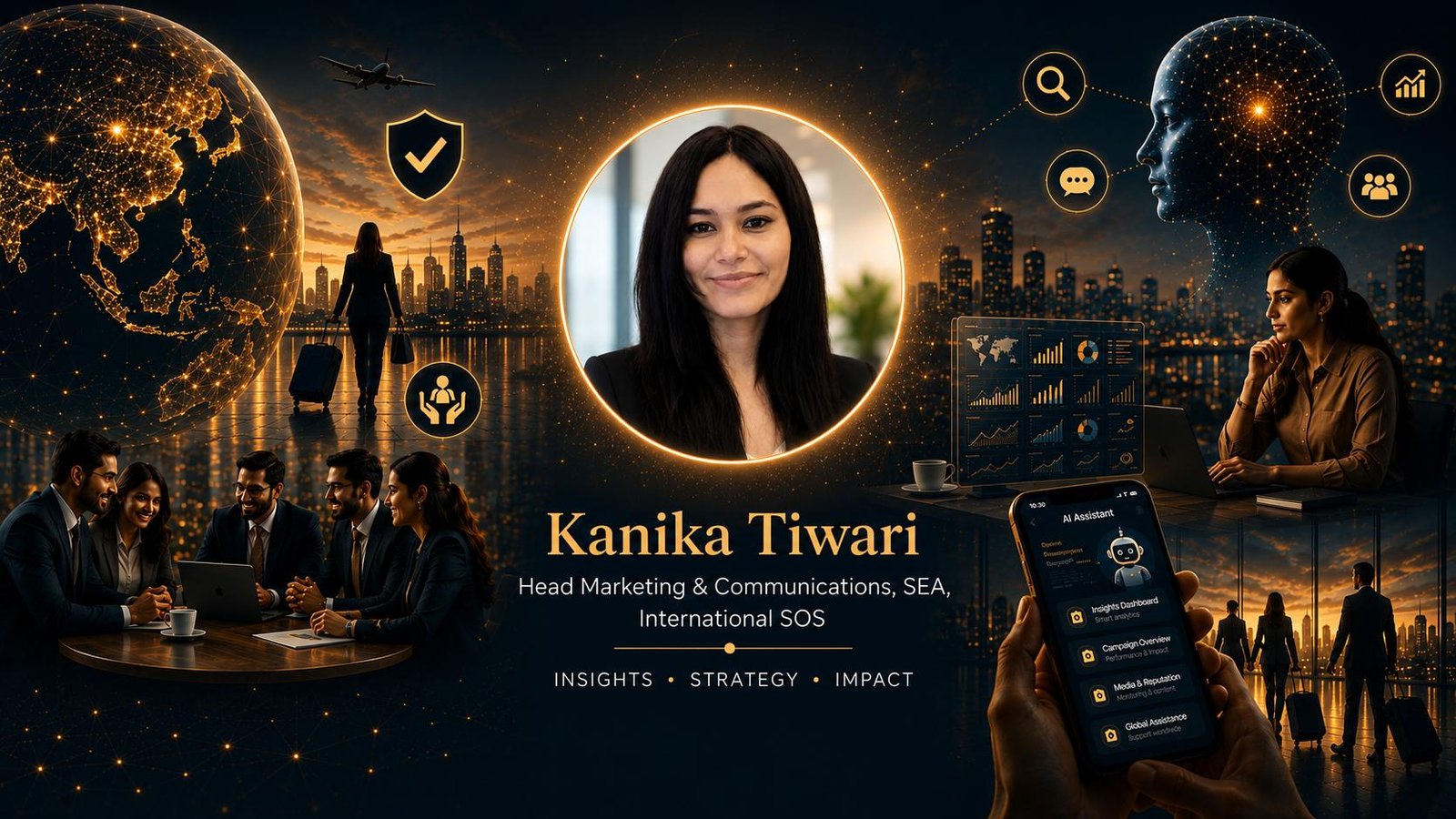
– Written by Kanika Tiwari, Head, Marketing & Communications, SEA, International SOS. She is a brand and growth marketing leader with over 15 years of experience building integrated marketing and communications strategies across diverse global markets. As Head of Marketing & Communications at International SOS, she leads strategy across Southeast Asia, Central Asia, the Indian Subcontinent and Papua New Guinea. Her work sits at the intersection of brand, business growth and digital transformation, with a growing focus on how AI and data are reshaping marketing, reputation and customer engagement.