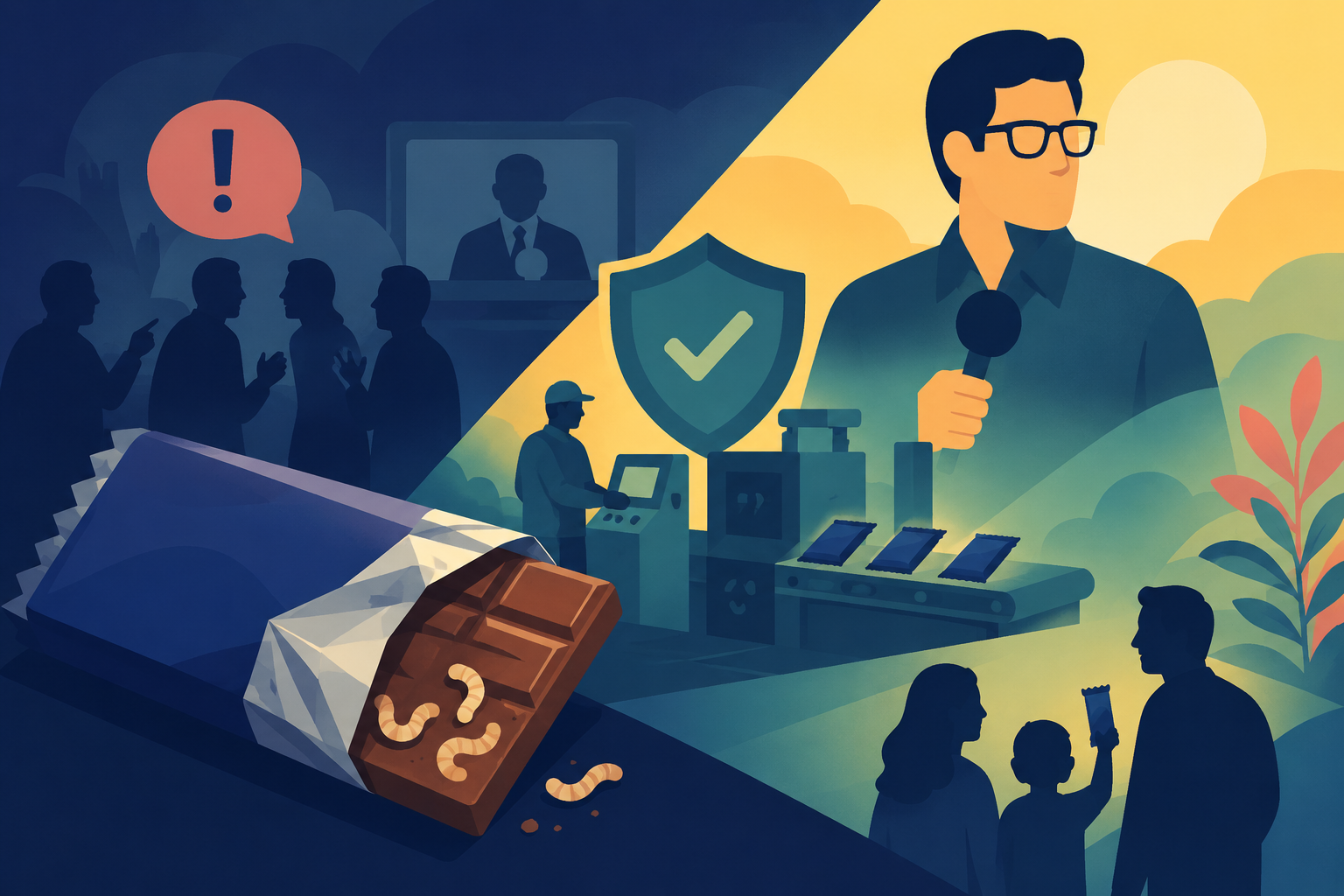
How Cadbury's 2003 worm crisis reshaped Indian brand management, proving trust is rebuilt through action, not words.
Looking for a Shorter Overview?
AI Summary
Key Moments
Worm Infestation Crash
Live worms were discovered in Cadbury bars in 2003, triggering panic and a 30% sales drop.Defensive Ego Response
Cadbury's denial and blame‑shifting in the crisis deepened consumer anger and trust loss.Project Vishwas Pivot
The company spent ₹15 crore on new packaging, absorbed costs, and kept prices unchanged to rebuild credibility.Celebrity‑Backed Recovery
Hiring Amitabh Bachchan to vouch for hygiene restored trust, helping Cadbury regain market share in 90 days.Every single Cadbury Dairy Milk bar sold in India is sealed inside a thick, impenetrable metallic poly-flow foil.
Most consumers assume this heavy packaging is simply designed to keep the chocolate from melting in the brutal Indian summer heat. It is not.
That specific metallic wrapper is a ₹15-crore scar.
It is the permanent, physical reminder of a corporate nightmare that fundamentally changed how multinational companies survive in this country.
In October 2003, just weeks before the peak Diwali gifting season, a few customers in Maharashtra found live worms crawling inside their chocolate bars.
The timing was catastrophic. Cadbury was projecting a 15% increase in sales. Instead, the Maharashtra Food and Drug Administration immediately seized factory stocks.
FDA Commissioner Uttam Khobragade went straight to the press, publicly blaming poor packaging and unhygienic manufacturing.
Within hours, news channels across the country were running the same horrifying visuals on an endless loop.
The fatal ego in the Cadbury crisis
When a brand operates as a virtual monopoly in a country for fifty years, it develops a dangerous ego.
Cadbury’s initial response was a textbook disaster. The company flatly denied the FDA’s claims, stating that it had not even received an official notice. It immediately released highly defensive statements highlighting its stringent factory quality checks.
Instead of taking accountability, Cadbury pointed its finger at the unorganised Indian retail sector. It argued that the chocolates were becoming infested because local kirana shopkeepers were ignoring storage instructions and keeping the bars next to raw grains or inside unhygienic refrigerators.
Factually and scientifically, the company was probably right.
But psychologically, it was a suicide mission. Cadbury forgot that the Indian market is driven more by emotion than logic. Consumers felt completely ignored. The people on the ground, including distributors and sales representatives, were left furious.
They were the ones standing behind the counter dealing with angry buyers while no one at the corporate level accepted responsibility.
No parent in India cared about the complexities of the FMCG supply chain. They simply knew that a Cadbury product contained worms, and the company appeared to be making excuses.
This public dispute caused catastrophic damage. Stakeholders seriously questioned whether the company could ever recover because, within just fifteen days, sales had fallen by 30% during its most profitable month.
Also read: Why Brand Reputation Is Built Faster Than It’s Repaired
The ₹15-crore apology
Cadbury quickly realised that sending corporate lawyers to argue with the FDA on national television was destroying its legacy. So it stopped arguing and executed a bold, expensive operational pivot.
The company launched Project Vishwas.
It didn’t just post an apology. It imported ₹15 crore worth of new machinery to completely overhaul its packaging.
Cadbury moved from a simple foil-and-paper sleeve to the impenetrable, double-sealed metallic wrapper we still see today.
One of the smartest decisions it made was absorbing the entire manufacturing cost without increasing the retail price of the chocolate by even a single rupee.
Then came its final move.
Cadbury hired Amitabh Bachchan. But instead of placing him in a generic happy-family commercial, it dressed him in a crisp shirt, handed him a microphone, and walked him onto the factory floor. He looked directly into the camera and personally vouched for the hygiene and safety of the manufacturing process.
Indian consumers didn’t trust the British multinational corporation anymore. But they trusted Amitabh Bachchan. And they trusted the new, thick metallic wrapper they could physically see and feel in their hands.
The company regained its lost market share within ninety days.
Cadbury proved that when a brand breaks a cultural contract, it cannot negotiate its way out with defensive press releases. It has to stop arguing, invest heavily, and physically rebuild trust from the product itself.
– Written by Rajnish Singh, a copywriter and strategist with a background in fast-paced journalism, who explores the gap between what brands promise and how consumers actually behave.