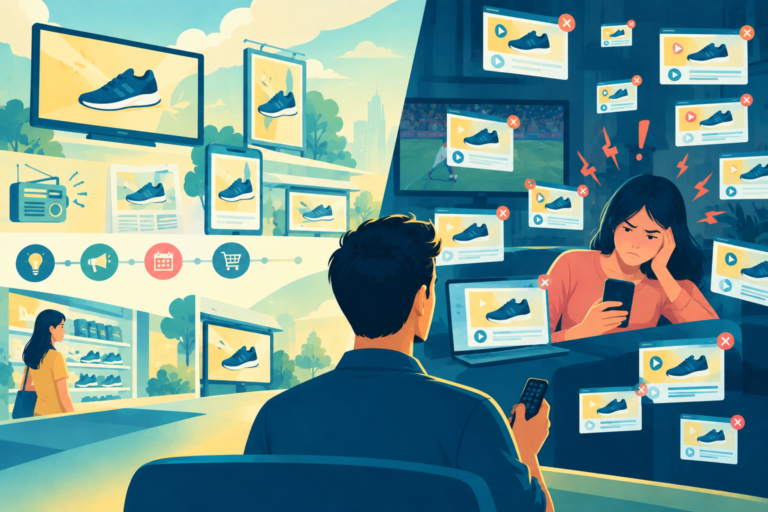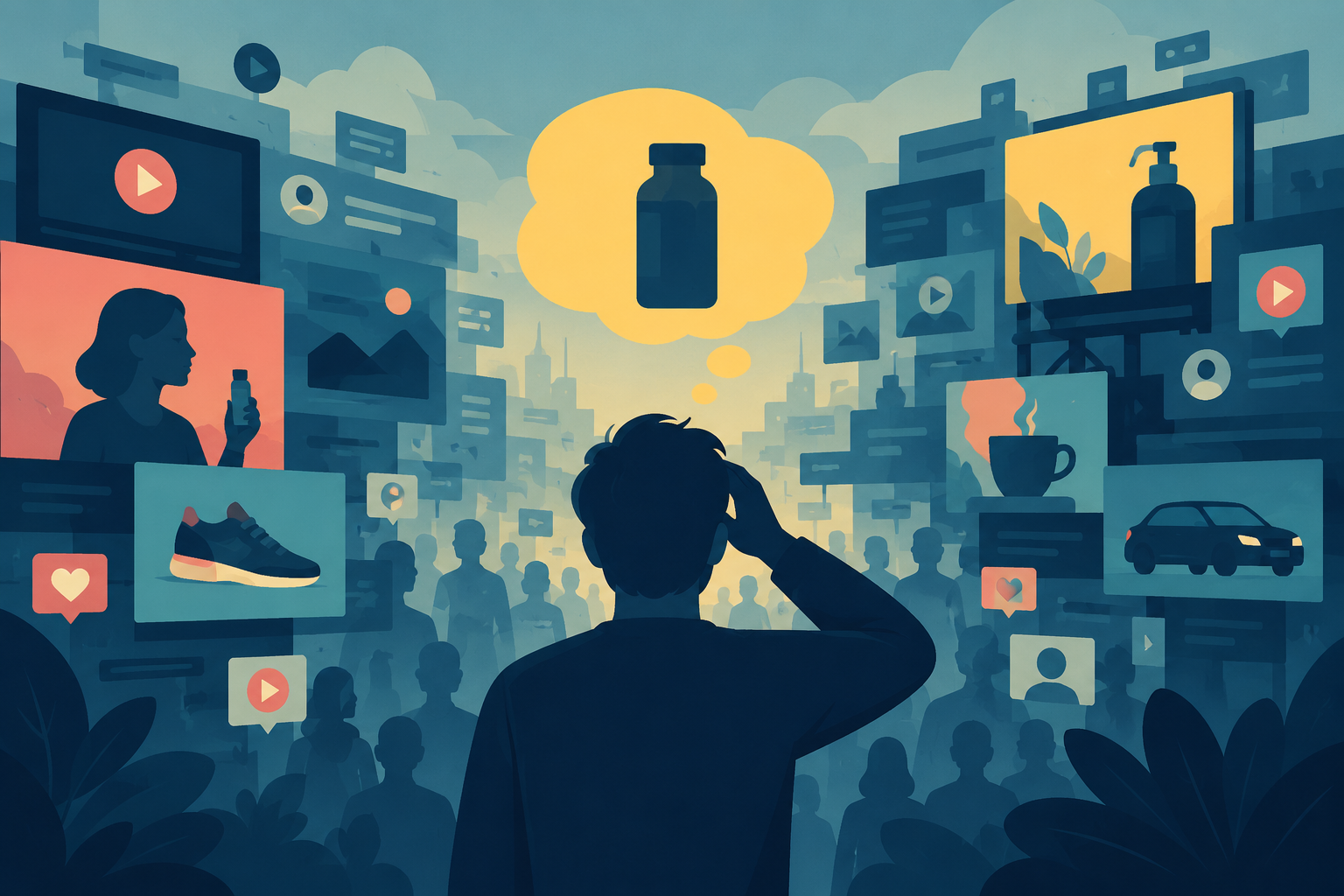
Discover why brand recall is harder than ever and how consistent branding helps businesses stay memorable in a crowded digital world.
Looking for a Shorter Overview?
AI Summary
Key Moments
Fragmented Attention Harms Recall
Endless scrolling fragments attention, leaving little space for brands to stick in memory.Simple, Consistent Messaging Wins
Brands that focus on one core idea and repeat it (e.g., Volvo safety) build lasting recall.Overbranding Confuses Audiences
Frequent shifts in brand promises dilute identity and make it harder for consumers to remember.Marketers Prioritize Memory Over Reach
Campaign success now measured by lasting mental associations rather than just view counts.The other day, a friend asked me if I’d seen the new advertisement for a popular brand. I said yes without thinking. Then he asked me which brand it was. I just stared at him for a few seconds because I genuinely couldn’t remember. I remembered the catchy background music, the celebrity in the video, and even a few scenes, but somehow the brand itself had disappeared from my mind.
That moment made me realise something. We spend hours looking at screens every day, yet very little actually stays with us. We scroll, laugh at a meme, skip an ad, reply to a message, and move on before our brain even gets a chance to process what we’ve just seen. Somewhere in that endless stream of content, brands are trying to make themselves memorable.
That’s why Brand Recall has become such a challenge. It’s no longer enough for people to notice your advertisement. They need to remember your brand after they’ve closed the app, put their phone down, or walked away from the screen.
Why Brand Recall Feels Harder Than It Used To
If you think about it, brands had a much easier job a decade or two ago. Television had limited channels, newspapers stayed on the dining table for hours, and the same hoardings stood on the roads for months. Even if you weren’t paying much attention, you’d end up seeing the same brands again and again until they became familiar.
Today, our attention works very differently. We can watch twenty Instagram Reels in ten minutes, skip two YouTube ads, open WhatsApp, switch to Spotify, and then scroll LinkedIn before we’ve even finished our morning tea. Every platform wants our attention, and every brand is trying to fit into those tiny gaps.
The problem is that seeing something isn’t the same as remembering it. I can probably tell you that I’ve seen dozens of advertisements this week, but if you ask me to list them, I’ll struggle after the first few. That’s exactly where Brand Recall begins. The brands we remember are usually the ones that leave us with one simple thought instead of trying to tell us ten different things.
Fevicol is probably one of the best examples of this. I honestly don’t remember every Fevicol commercial I’ve watched growing up. But whenever someone says “Fevicol,” the first thing that comes to mind is strength. Somehow, every funny advertisement, no matter how different, quietly reinforced the same idea without making it feel repetitive.
Amul has done something similar for years. Every topical ad is based on a completely different event, whether it’s cricket, elections, or a blockbuster film. Yet the Amul Girl, the humour, and the style of communication remain so familiar that you can often recognise the brand before you even notice the logo.
I think many brands make life harder for themselves by constantly trying to become someone new. One campaign tells us they’re affordable. The next one says they’re innovative. A few months later, they’re suddenly talking about emotions because that’s what everyone else is doing. Individually, those campaigns may work, but together they make it difficult to understand what the brand really stands for.
The brands that stay with us usually don’t try to own everything. They choose one idea and patiently build around it. When you think of Volvo, safety comes to mind. Apple makes many people think of simplicity and premium design. Nike has spent decades encouraging people to push their limits. Those associations didn’t appear overnight. They were built through years of consistency.
Also read: The Power of Familiarity Bias in Consumer Buying Decisions
Social media has made this even more challenging because brands aren’t just competing with other brands anymore. They’re competing with creators, influencers, viral memes, breaking news, podcasts, sports highlights, and everything else that fills our feeds. In a world where new content appears every second, being noticed is difficult, but being remembered is even harder.
Maybe that’s why marketers today care so much about memory instead of just reach. A campaign can get millions of views, but if people remember the joke and forget the brand, the job isn’t really done. The brands that win are often the ones that leave behind one clear association that people can recall days, months, or even years later.
In conclusion, I don’t think people remember brands because they saw them the most. They remember the brands that gave them something simple to hold on to. In a world where everything is fighting for our attention, perhaps the biggest achievement isn’t getting someone to look at your brand. It’s giving them a reason to remember it long after they’ve scrolled past it.
– Written by Bhavya Singhal, an Emerging Journalist and a Digital Media and Communication student exploring branding, marketing strategy, and consumer psychology through practical observations and real-world examples.