Discover why Apple's Think Different campaign remains a timeless branding lesson in purpose, identity, and consistency.
Looking for a Shorter Overview?
AI Summary
Key Moments
Apple Shifted from Products to Purpose
Steve Jobs refocused Apple on its identity and brand purpose rather than technical specs when he returned in 1997.Iconic Cultural Association
The 'Here’s to the crazy ones' ad linked Apple to legendary innovators, positioning the brand around creativity, curiosity, and courage.Consistent Brand Experience
Apple aligned design, retail, software, and communications to live the Think Different promise, making the slogan a real customer experience.Sustainable Competitive Advantage
Purpose-driven branding now offers a stronger, lasting edge than feature comparisons in crowded markets.Some advertising campaigns sell products. Others reshape how people think about a brand. Apple’s Think Different campaign belongs firmly in the second category.
When it launched in 1997, Apple was in a difficult position. The company was losing market share, its product strategy lacked direction, and many believed it had lost its relevance. Instead of responding with a long list of product features or price comparisons, Apple chose a very different path. It reminded the world what the company stood for.
Nearly three decades later, Think Different remains one of the most influential branding campaigns ever created. Not because of the slogan itself, but because it showed that the strongest brands compete on beliefs before they compete on products.
Why Think Different Still Matters Today
When Steve Jobs returned to Apple in 1997, he recognised that the company’s biggest challenge wasn’t its technology. It was its identity. People no longer had a clear reason to choose Apple over its competitors. Rather than launching a campaign focused on faster processors or better specifications, Apple chose to communicate something much deeper. Its purpose.
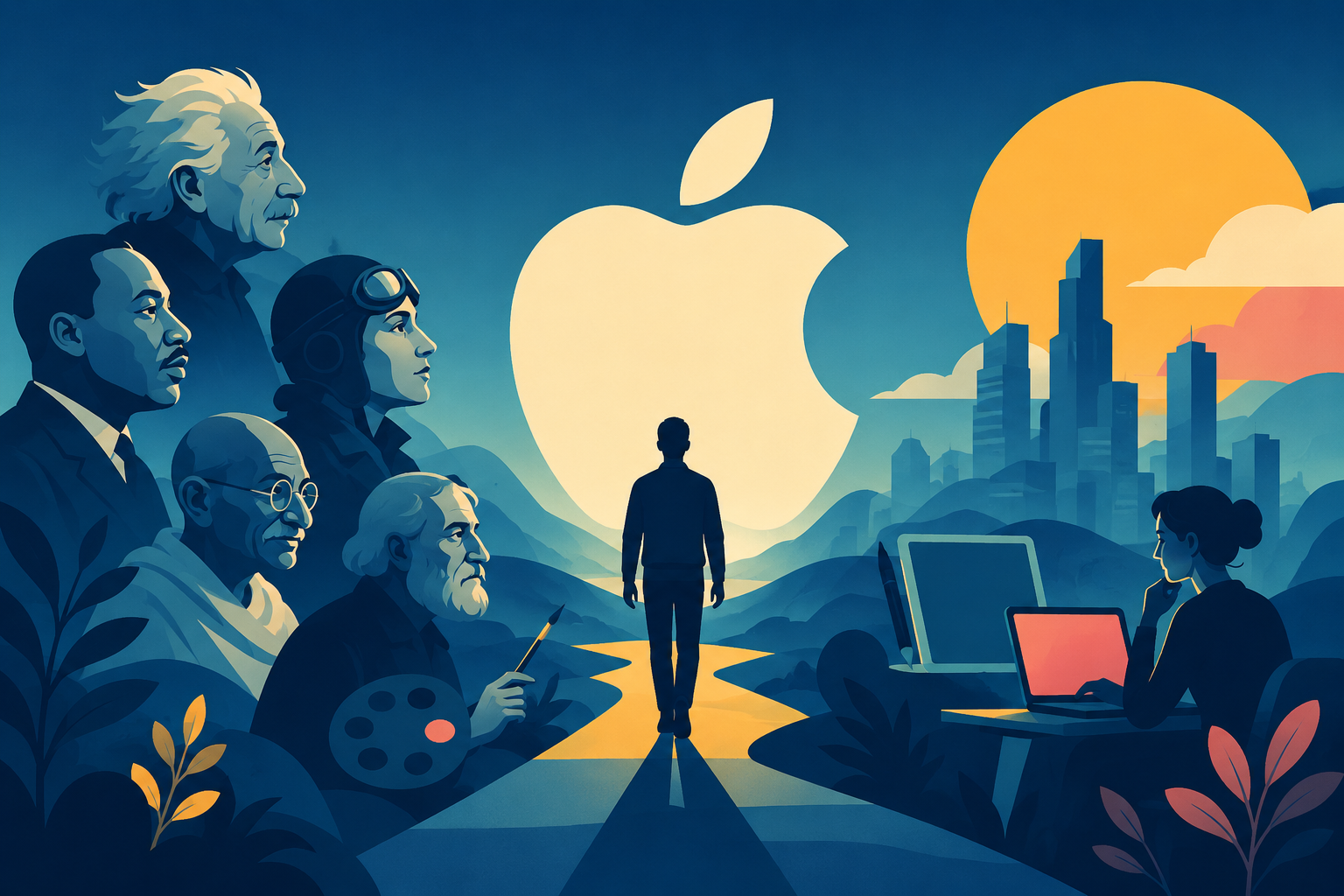
The now-famous “Here’s to the crazy ones” commercial celebrated people who challenged convention and changed the world. Featuring icons such as Albert Einstein, Martin Luther King Jr., Mahatma Gandhi, Amelia Earhart, Pablo Picasso, and Bob Dylan, the campaign wasn’t suggesting these people used Apple products. Instead, it associated Apple with curiosity, creativity, courage, and original thinking.
That was what made Think Different so powerful. Apple wasn’t asking customers to buy a computer. It was inviting them to belong to an idea.
The campaign also demonstrated that people rarely form lasting relationships with product features. They connect with beliefs, values, and identity. Apple understood that buying one of its products wasn’t simply a technical decision. It was an emotional one. The brand positioned itself as the choice for people who wanted to create, question, and innovate.
Just as importantly, the campaign wasn’t only directed at customers. It became a reminder for Apple’s own employees about what the company stood for. At a time when Apple needed clarity and focus, Think Different reinforced that the company wasn’t trying to imitate competitors. Its mission was to challenge convention and build products differently. That mindset influenced everything that followed, from the colourful iMac to the iPod, iPhone, and beyond.
Also read: Why Every Great Brand Has One Thing It Refuses to Compromise On
One of the biggest reasons the campaign continues to be relevant is because Apple consistently delivered on the promise behind it. Many brands create memorable advertising but fail to match it with the customer experience. Apple aligned its product design, retail stores, software, packaging, and communication around the same philosophy. Customers didn’t simply remember the slogan. They experienced it every time they interacted with the brand.
The campaign also proved that true differentiation doesn’t come from claiming to have better features. It comes from standing for something meaningful. In crowded markets where products often look similar, purpose becomes a far more sustainable competitive advantage than specifications alone.
That lesson feels just as important today. Businesses face constant pressure to chase trends, react to competitors, and produce endless content. Yet the brands that leave a lasting impression are usually those with a clear point of view and the discipline to remain consistent.
Apple’s Think Different campaign endures because it wasn’t just clever advertising. It reflected the company’s culture, influenced its strategy, and shaped every customer interaction that followed. The slogan became memorable because the business behind it lived up to the idea.
For modern brands, that’s perhaps the biggest takeaway. Customers may not remember every campaign they see, but they do remember what a brand consistently stands for. And that’s exactly why Think Different still matters today.