Discover why Old Spice broke every deodorant advertising rule and created one of marketing's most memorable brand campaigns.
Looking for a Shorter Overview?
AI Summary
A few weeks ago, while watching YouTube, two deodorant advertisements appeared within a few minutes of each other. By the time the first one ended, it had already disappeared from memory. The second one wasn’t even advertising a deodorant in the way most brands usually do. It was funny, slightly ridiculous, and completely unpredictable. That’s when it hit me.
Most brands don’t struggle because they have bad products. They struggle because they all tell the same story. That’s exactly why the Old Spice campaign became one of the most talked-about campaigns in marketing.
Why the Old Spice Campaign Didn’t Try to Be a Better Deodorant Advertisement
Think about most advertisements in the men’s grooming category.
A man sprays deodorant. People suddenly notice him. Someone compliments him. The product promises confidence, attraction, or freshness. Change the logo, and it’s surprisingly difficult to tell one brand from another.
Old Spice looked at all of that and almost seemed to ask, “What if we stopped taking ourselves so seriously?”
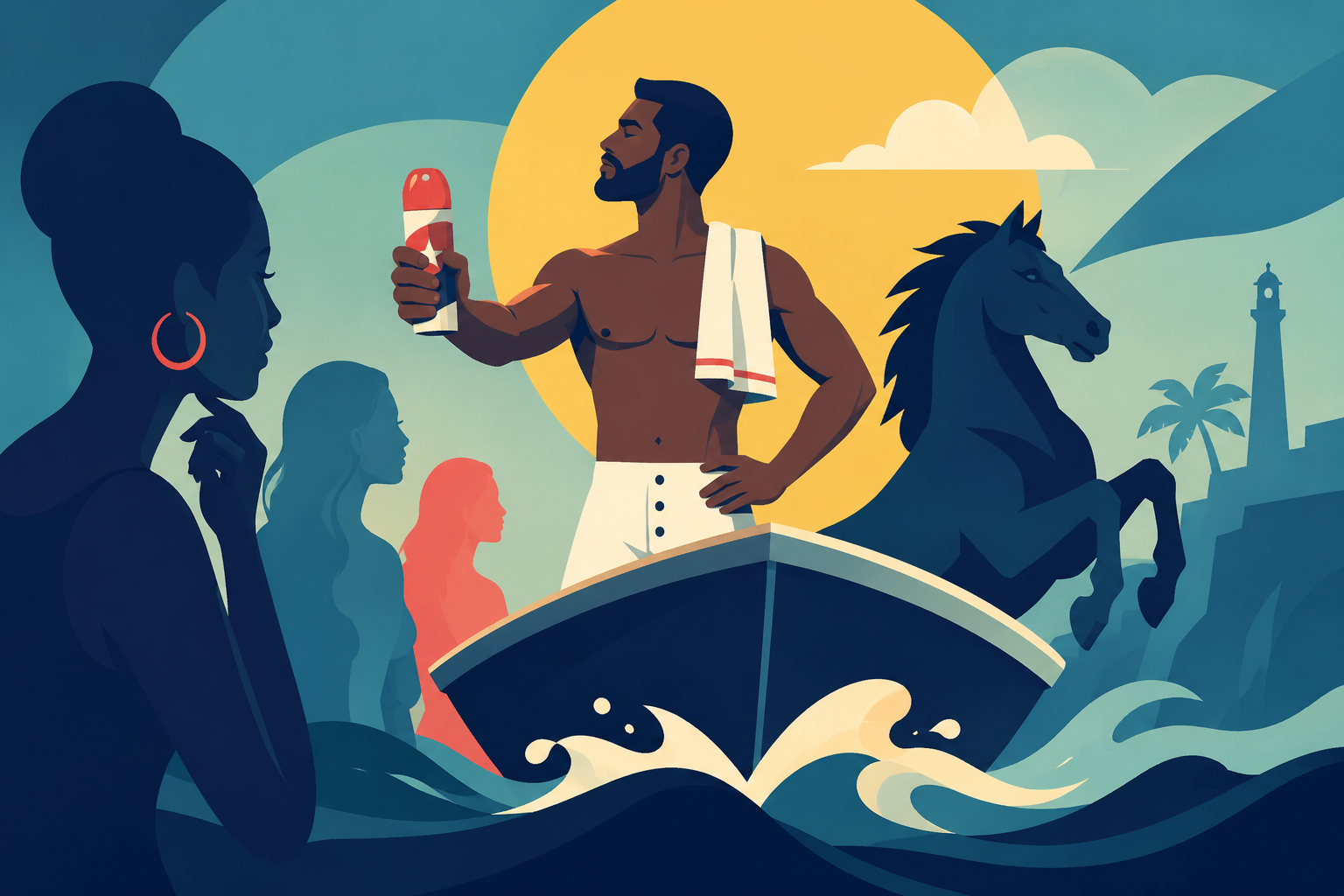
Instead of another stylish commercial, it gave the world The Man Your Man Could Smell Like. A man speaking directly to the camera. A bathroom suddenly turning into a boat. A horse appearing out of nowhere. Nothing about the advertisement followed the usual rules. And maybe that was the point.
People didn’t stop watching because it made perfect sense. They stopped because they genuinely wanted to know what crazy thing would happen next. That’s something advertisements rarely achieve. One detail that often gets overlooked is who the campaign was actually talking to.
Although Old Spice sells products for men, the advertisement famously begins with, “Hello, ladies.”
It sounds strange until you realise many household purchases are influenced, or sometimes even made, by women. Without changing the product, the Old Spice campaign quietly expanded its audience.
That’s smart marketing. Not loud marketing.
Another thing that made the campaign work was commitment. Many brands create one funny advertisement, it performs well, and then the next campaign goes back to looking exactly like every other advertisement. Old Spice didn’t do that.
The same humour appeared on television, YouTube, and social media. The character even started replying to fans with personalized videos. It no longer felt like watching advertisements. It felt like following someone with a very entertaining personality. That’s an important difference.
Also read: Why the Best Brand Storytelling Often Doesn’t Feel Like Storytelling at All
A similar example can be found much closer to home. Think about Fevicol.
Nobody remembers Fevicol because it keeps saying its glue is strong. People remember the overloaded bus, the crowded train, or the chair that refuses to break apart. The stories are exaggerated, almost impossible, but they all communicate the same message without sounding repetitive. Years later, people still smile when those advertisements come up in conversation.
Old Spice achieved something similar. The product stayed the same. The storytelling became unforgettable. Perhaps that’s the biggest lesson here.
Many marketers spend their time studying competitors. They ask, “What kind of advertisements are other brands making?”. Maybe the better question is, “Why do all the advertisements look the same in the first place?” Because that’s usually where the opportunity is hiding.
The Old Spice campaign didn’t become famous because it had the biggest budget or the most expensive production. It became famous because it was willing to sound completely different in a category where everyone had started sounding identical. And maybe that’s what great marketing really is. Not shouting louder than everyone else. Simply giving people something they’ve never seen before.
– Written by Bhavya Singhal, an Emerging Journalist and a Digital Media and Communication student exploring branding, marketing strategy, and consumer psychology through practical observations and real-world examples.