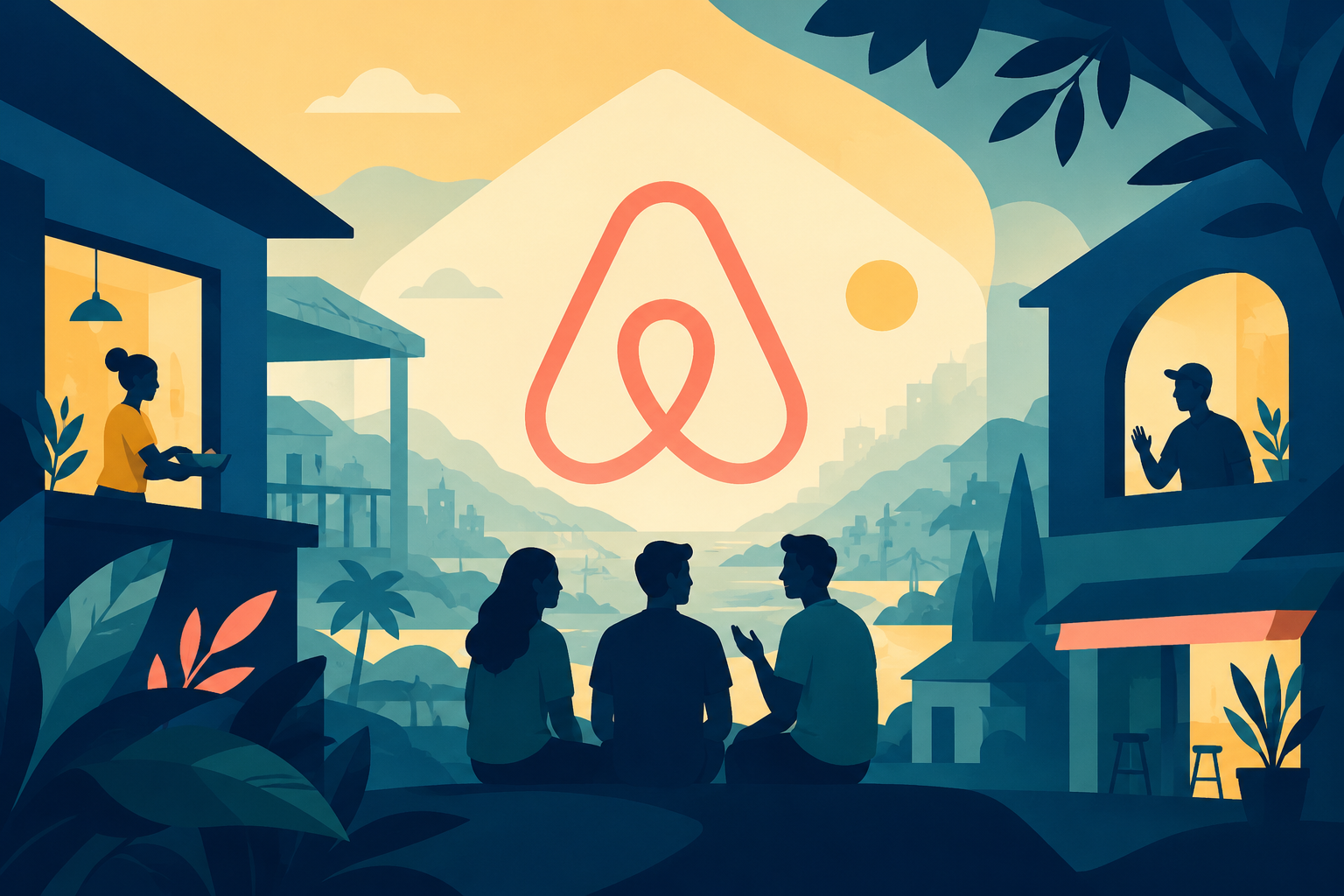
Discover how the Airbnb rebrand turned belonging into a powerful brand strategy, transforming stays into memorable experiences.
Looking for a Shorter Overview?
AI Summary
Key Moments
Shift from Accommodation to Belonging
Airbnb redefined its brand from providing a place to stay to fostering a feeling of home and community for travelers.Story‑Driven Experience Over Generic Rooms
Guests remember personal host stories and local connections, not just hotel room features or price comparisons.New Brand Promise
Airbnb now pledges to help people feel at home even when they’re far from home, replacing a functional promise with an emotional one.Emotional Connection Drives Loyalty
When a brand’s experience matches its promise, it creates feelings that make customers return again and again.Last year, I was planning a short trip with a few friends. Like every trip we’d planned before, we started by searching for hotels. We kept sending each other links, comparing prices, looking at room photos, and checking ratings. After fifteen or twenty minutes, every option began to blur into the next. A bigger room here, a slightly better breakfast there, but nothing really stayed with us.
Then someone said, “Let’s check Airbnb once.”
The conversation changed almost instantly.
Instead of talking about rooms, we started talking about people. One host had turned an old family house into a homestay and wrote about how their grandparents had planted the mango tree in the courtyard. Another had left a guide to the neighbourhood with favourite food stalls that tourists usually miss. Someone else had a dog that guests seemed to mention in almost every review.
At one point, we weren’t even discussing where we wanted to sleep anymore. We were discussing whose story we liked the most. That stayed with me because it felt unusual. We had opened Airbnb looking for accommodation, but somewhere along the way, it stopped feeling like we were booking a place. It felt like we were choosing an experience.
A few days later, I happened to read about the Airbnb rebrand, and suddenly that entire evening made much more sense. The company wasn’t trying to become known for having the biggest collection of homes. It was trying to make people feel that they belonged wherever they travelled. Looking back, I realised that was exactly how we had experienced it without even noticing.
Why the Airbnb Rebrand Feels Different
Whenever a company announces a rebrand, the first thing people usually do is compare the old logo with the new one. Social media fills up with opinions about colours, fonts, and whether the redesign was worth it. We naturally focus on what has changed visually because it’s the easiest thing to notice.
But I don’t think that’s what made the Airbnb rebrand memorable.
What stayed with people wasn’t a new logo. It was a new way of thinking.
Instead of saying, “We’ll help you find a place to stay,” Airbnb quietly started saying, “We’ll help you feel at home, even when you’re far from home.” That’s a very different promise. One is about a building. The other is about a feeling.
The more I think about it, the more I realise that we rarely tell stories about hotel rooms. We tell stories about the elderly host who insisted we try homemade food, the neighbour who recommended a hidden café, or the stranger who made an unfamiliar city feel surprisingly comfortable. Those are the moments that stay with us long after the trip is over.
Also read: The Hidden Cost of Brand Dilution as Companies Expand
I think that’s why the Airbnb rebrand works so well. It doesn’t ask people to remember a product. It gives them something much more human to remember. The home becomes part of the story, but it isn’t the story itself. The people, the neighbourhood, and the feeling of belonging quietly take its place.
Of course, a message like that only works if people actually experience it. If guests feel unwelcome, the idea falls apart. But when the experience matches the promise, the brand starts becoming something bigger than the service it offers. It becomes associated with a feeling that people naturally want to experience again.
Maybe that’s what the strongest brands eventually discover. People might visit because of the product, but they come back because of how the experience made them feel. The Airbnb rebrand wasn’t simply about changing the way the company looked. It was about changing the answer to a much bigger question. Instead of asking, “Where will you stay?” it quietly invited people to ask, “Where will I feel like I belong?” And sometimes, that’s a much more powerful reason to choose a brand.
Written by Bhavya Singhal, an emerging journalist and a Digital Media and Communication student exploring branding, marketing strategy, and consumer psychology through practical observations and real-world examples.