Discover how Liquid Death disrupted bottled water by breaking category norms and proving bold branding can redefine perception.
Looking for a Shorter Overview?
AI Summary
Key Moments
Rule-Breaking Branding
Liquid Death uses dark colors and heavy metal culture to stand out from traditional water brandsExperience Over Product
The can design and brand personality create shareable moments that make drinking water an experienceQuestioning Category Norms
The brand challenges why water must look calm and peaceful, proving humor and boldness workConsistent Brand Personality
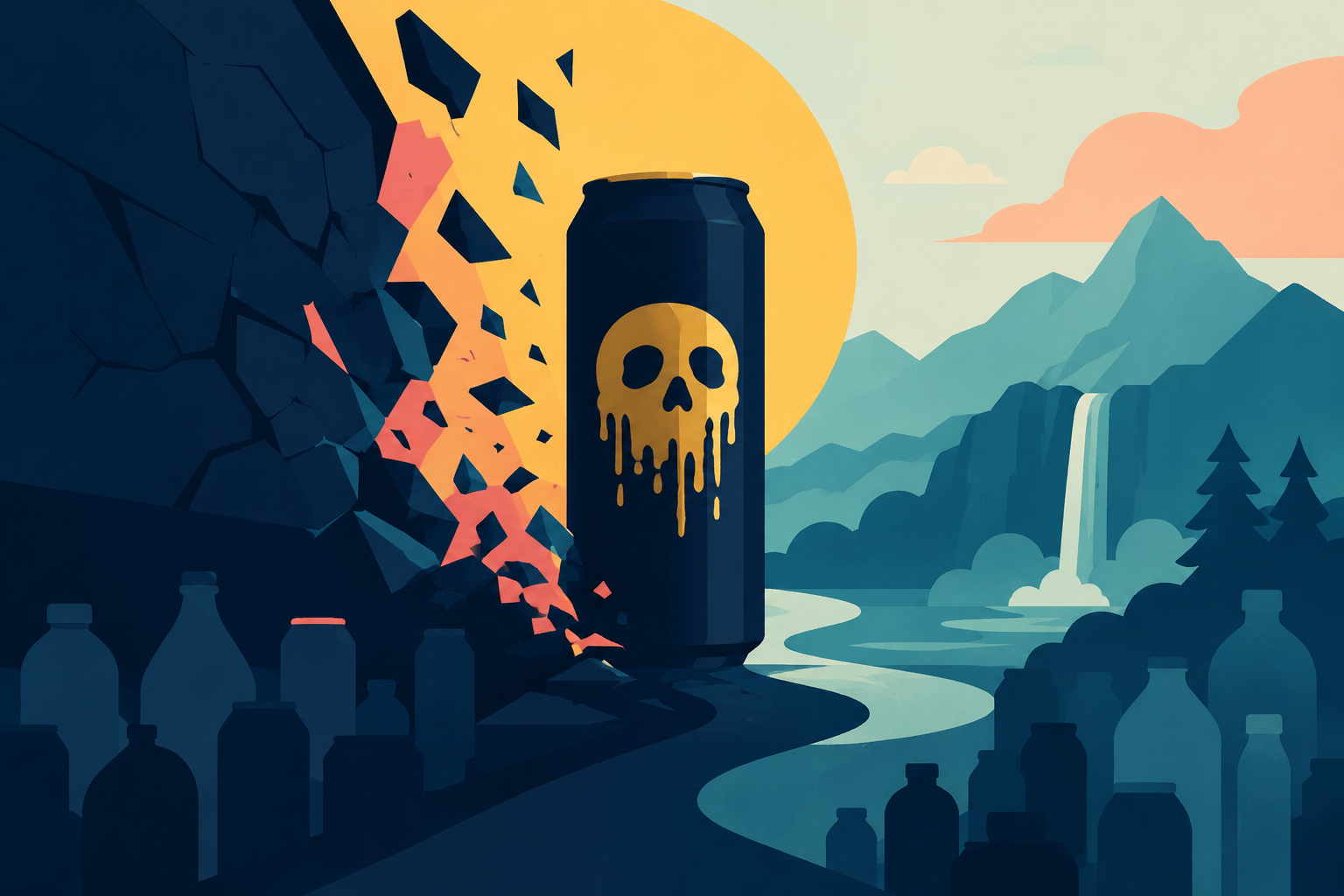
Every touchpoint from ads to merchandise maintains the same edgy, heavy metal identityA few weeks ago, I was casually scrolling through Instagram when a picture made me stop. It was a tall black can with Liquid Death written across it in bold letters. My first reaction was, “This has to be an energy drink.” The design looked intense, the name sounded dramatic, and honestly, nothing about it reminded me of water.
Curious, I opened the comments to see what people were saying. That’s when I realised something that genuinely surprised me. It wasn’t an energy drink, a beer, or even a soft drink. It was just bottled water.
I actually laughed because I had fallen for exactly what the brand wanted me to think. For a few seconds, I forgot that I was looking at one of the simplest products you can buy. It made me wonder how a company selling plain water had managed to grab my attention when hundreds of other water brands never had.
The more I looked into Liquid Death, the more interesting it became. It wasn’t famous because the water was somehow different. It was famous because the brand refused to behave like every other bottled water company. And sometimes, that’s all it takes to stand out.
How Liquid Death Broke the Rules of Its Category
If someone asked you to picture a bottled water advertisement, you’d probably imagine mountains, waterfalls, blue skies, and words like pure, fresh, or natural. After seeing those visuals for years, we’ve almost accepted that this is what water brands are supposed to look like.
Then along comes Liquid Death.
Instead of peaceful landscapes, it uses dark colours. Instead of soft branding, it borrows inspiration from heavy metal culture. Even the name sounds like something you’d expect on an album cover rather than on a can of drinking water. On paper, it almost sounds like a terrible branding decision. That’s exactly why people notice it.
I think we often underestimate how powerful surprise can be. Most products don’t struggle because they’re bad. They struggle because they look and sound exactly like everything else around them. When every brand is following the same formula, the one that breaks it naturally catches your eye.
The interesting thing is that Liquid Death never really changed the product. It’s still selling water.
What changed was the story around the product. Suddenly, drinking water became something that felt bold, funny, and a little unexpected. People weren’t posting pictures because the water tasted different. They were posting pictures because carrying the can itself became part of the experience.
Also read: Why Brands Should Compete for Mental Availability Before Market Share
I think that’s a really important branding lesson.
Category disruption doesn’t always come from inventing something new. Sometimes, it comes from questioning something everyone else has accepted without thinking. Why does water have to look calm? Why does every bottle have to show mountains? Why can’t a water brand have a sense of humour?
Of course, simply being different isn’t enough.
If Liquid Death had only changed the packaging while keeping everything else ordinary, people would probably have forgotten about it. But the advertisements, social media posts, website, merchandise, and even the brand’s jokes all feel like they’re coming from the same personality. Nothing feels out of place.
The more I read about brands like this, the more I realise that the biggest opportunities often exist in categories where everyone has started copying each other. That’s usually where one bold idea can completely change the conversation.
Maybe that’s the biggest lesson from Liquid Death.
The brand didn’t create a new product. It created a new way of looking at an old one. And sometimes, changing the way people think is far more powerful than changing what you’re actually selling.
– Written by Bhavya Singhal, an Emerging Journalist and a Digital Media and Communication student exploring branding, marketing strategy, and consumer psychology through practical observations and real-world examples.