Weak retail partnerships are dangerous See how mastering trade marketing turns ordinary goods into success.
Looking for a Shorter Overview?
AI Summary
Key Moments
Eye-level Shelf Placement Boosts Sales
Eye-level placement can increase sales by up to 35%, according to NielsenIQ research.In-Store Demos Drive Immediate Purchases
Free samples and live demonstrations can lift sales by 70% on the day they occur, per Bain & Company.Staff Training Enhances Product Confidence
Samsung uses trade marketing to train retail staff, helping shoppers feel more confident about their purchases.Collaborative Partnerships Amplify Impact
Brands that co‑create campaigns with retailers share costs and boost visibility, driving profitable growth for both sides.Shoppers visit grocery stores every day, and businesses want their products to stand out on the shelves. While companies may spend heavily on television advertising, retailers control how products are displayed in stores.
Trade Marketing focuses on building relationships with retailers and encouraging them to feature products prominently. By improving visibility at the point of purchase, Trade Marketing can help attract shoppers and increase in-store sales.
How Brands Secure Prime Shelf Placement with Trade Marketing
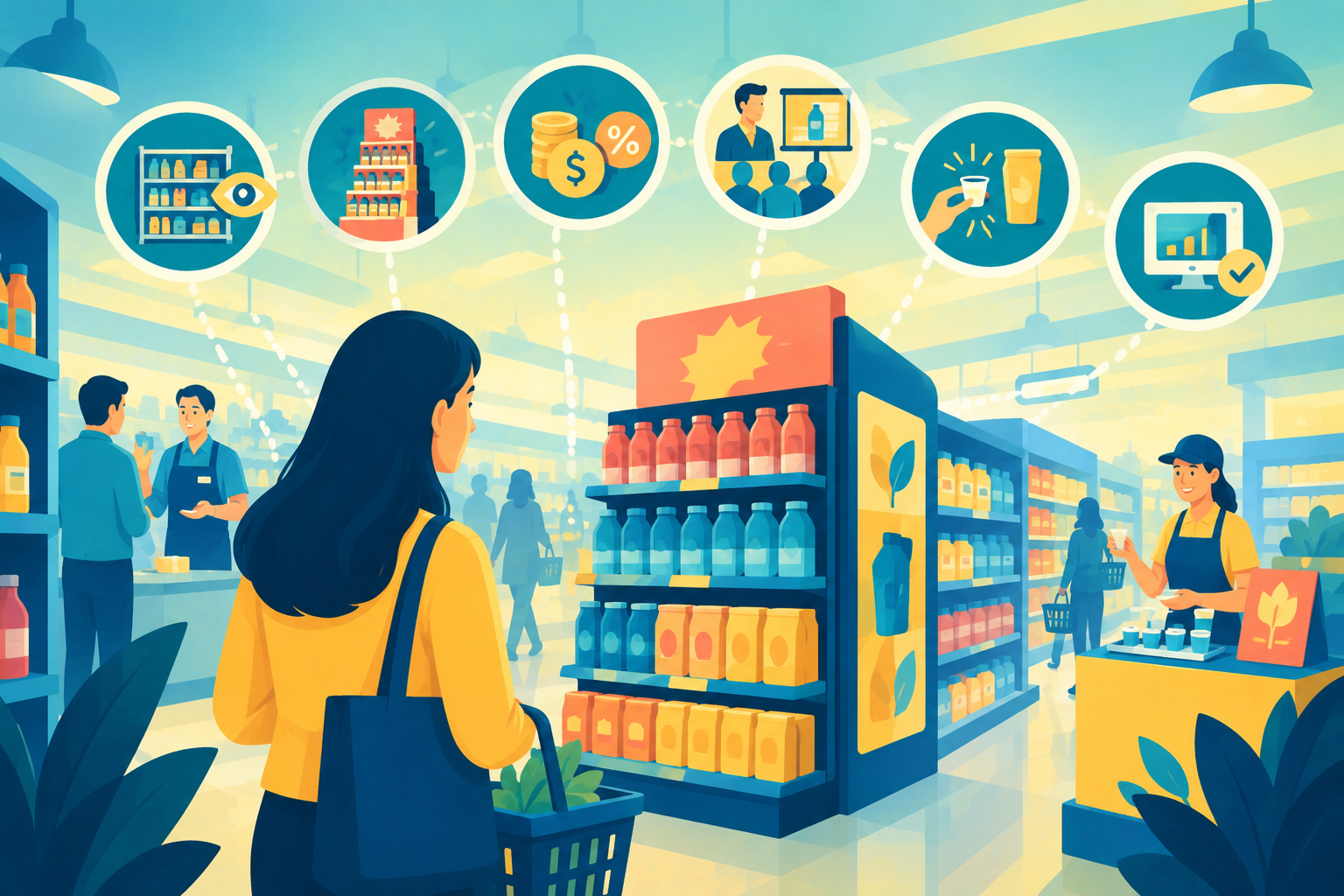
Product placement can have a direct impact on sales. Shoppers are more likely to notice products placed at eye level, so beverage companies may use Trade Marketing to secure prominent shelf space.
For example, a beverage brand might pay a retailer to place its juice boxes at eye level while competing products sit on lower shelves. NielsenIQ research suggests that eye-level placement can increase sales by 35%. Greater visibility can help shoppers spot the product and encourage them to choose it.
Grocery stores often have unused spaces near their aisles, which brands can use to draw shoppers’ attention. Coca-Cola, for example, uses Trade Marketing to place large red cardboard displays filled with cans in prominent areas of local stores.
These displays catch shoppers’ eyes before they reach the main aisles. The retail trade association Shop! reports that 76% of shoppers make their final purchase decisions in-store, so eye-catching displays can influence customers who are still deciding what to buy.
Retailers want to maximize their profits, while manufacturers want their products to stand out in stores. To encourage a retailer to stock its soap, a factory might offer a special discount. This kind of Trade Marketing can help increase the product’s availability in the store.
NielsenIQ reports that consumer goods companies spend about 20% of their annual revenue on retail promotions. Because these programs require significant investment, marketers need to track their results carefully. Discounts may attract shoppers and benefit both the retailer and the manufacturer, but businesses should measure whether the added sales justify the cost.
Electronics stores sell complex products, and shoppers often rely on store staff to explain their features. To help employees answer questions about its televisions, Samsung uses Trade Marketing to train retail staff.
Samsung sends experts to local electronics stores to explain the screen technology and key product features. Better-informed employees can then give shoppers clearer recommendations, helping them feel more confident about choosing a Samsung television.
Shoppers are often drawn to free food samples. Food companies use Trade Marketing by hiring demonstrators to prepare products in stores and offer small portions to passing customers. Once shoppers taste the food, they may be more inclined to buy a full package.
Bain & Company research suggests that in-store demonstrations can increase sales by 70% on the day they take place. By letting customers try a product before purchasing, these demonstrations can help turn interest into immediate sales. Retailers need accurate systems to keep popular products in stock. For example, a clothing company could provide a store with free inventory-tracking software to monitor its blue cotton shirts.
This type of Trade Marketing helps the retailer manage stock and avoid empty shelves. If the software proves useful, the store may be more inclined to order additional shirts from the supplier, supporting ongoing sales for both businesses.
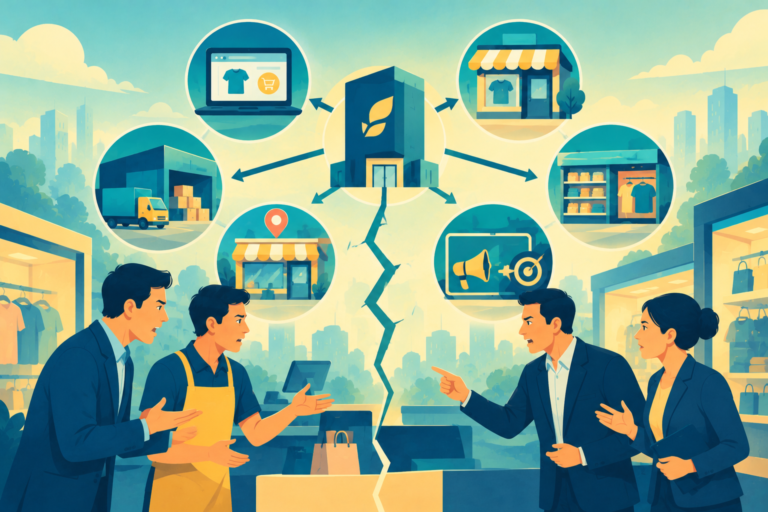
A strong Trade Marketing strategy depends on close collaboration between brands and retailers. Instead of paying one-off fees for temporary shelf space, companies can plan campaigns together and share the costs of targeted loyalty offers, local catalog promotions, and digital app ads.
This kind of partnership can strengthen retailers’ commitment to the brand, improve product visibility in stores, and support profitable growth for both sides.
Loved this article? Read more insightful articles on Brand Custodian.
–Written by Rajnish Kumar, a copywriter and strategist with a background in fast-paced journalism, who explores the gap between what brands promise and how consumers actually behave.