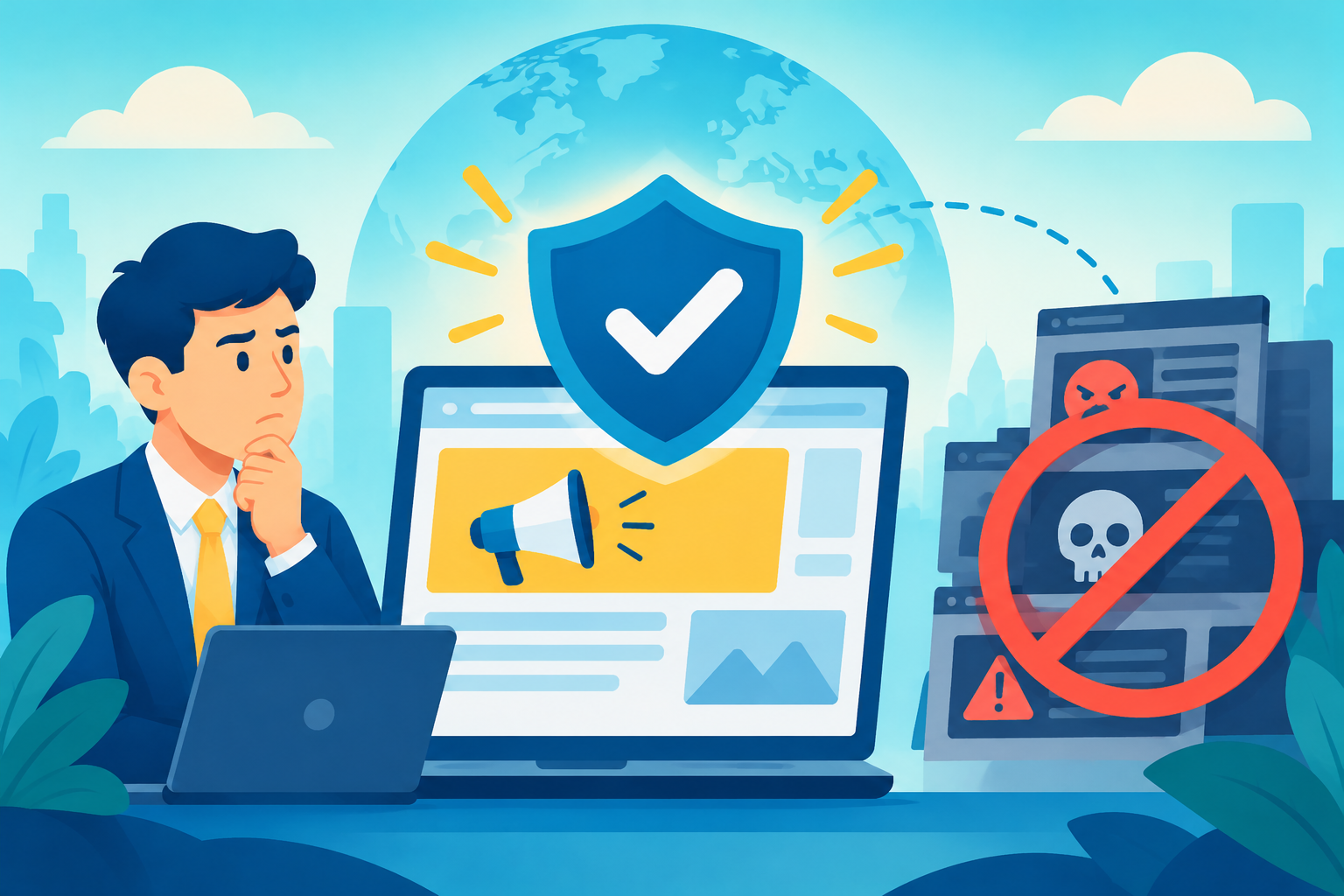
Are risky programmatic placements hurting you Discover why brand safety is the ultimate media secret.
Digital ad software places millions of banners across websites every second. When automated systems look for cheap clicks without checking page content, company ads often appear next to fake news or hate speech. Keeping company ads away from harmful online content is called Brand Safety.
Without strong Brand Safety rules, a respected business can accidentally fund extremist websites while damaging its own reputation with everyday shoppers.
How Brands Stop Automated Ad Buying From Threatening Brand Safety
Years ago, marketing teams bought ad space directly from trusted newspapers and magazines. Today, programmatic ad networks place ads across thousands of websites automatically based on user browsing habits rather than page quality.
Because software focuses on reaching specific audiences at low prices, ads frequently appear on unverified blogs or pirated video sites. According to industry reports from Integral Ad Science, media quality and contextual alignment remain top priorities because programmatic ad placements happen faster than human editors can review individual web pages.
Furthermore, a 2023 study by the Association of National Advertisers found that made-for-advertising websites absorb 15% of programmatic ad spend while delivering poor real viewer attention.
When companies ignore Brand Safety, ad budgets get spent on websites that most business owners would never support publicly. Several major global brands have faced public criticism after advertisements appeared beside harmful online videos. In 2017, companies including AT&T, Verizon, and Johnson & Johnson paused advertising spending on YouTube after investigations showed brand ads running next to extremist content.
More recently, major advertisers paused budgets on social media platforms when ads appeared alongside hate speech and conspiracy posts. Just as we noted in our earlier guide on Brand Identity, building a strong public reputation takes years of consistent work, yet one bad ad placement can hurt consumer trust quickly.
Shoppers rarely understand how automated ad exchanges work in the background. When a viewer sees a bank or airline logo right beside a scam article, that viewer assumes the company approved that website.
Studies from Integral Ad Science show that consumers hold brands directly responsible for the websites where ads appear. A negative page environment lowers ad recall and makes buyers less likely to purchase the advertised product.
Even worse, angry consumers often take screenshots of misplaced ads and share them on social media, turning a small media buying mistake into a public relations problem. Strong Brand Safety protects both advertising budgets and customer perception at the same time.
Many marketing teams try to protect Brand Safety by blocking simple negative words like “crash,” “crime,” or “virus.” However, basic word lists often block safe news publishers writing serious journalism while missing harmful pages that use coded slang.
Modern Brand Safety works better with contextual verification tools. Instead of just scanning single words, contextual software reads the entire page’s meaning, tone, and visual content before bidding on an ad slot. Pairing contextual filters with approved lists of verified publishers ensures ads run only on credible websites. Businesses should also separate strict Brand Safety rules from brand suitability settings, so campaigns avoid harmful content without losing valuable reach on legitimate news sites.
Automated ad tools offer speed and scale, yet human oversight remains essential for every digital campaign. Marketing teams should review domain placement reports every week to remove low-quality websites and made-for-advertising pages from their media plans.
Working with independent verification partners such as DoubleVerify or Integral Ad Science helps filter unsafe video feeds and unverified mobile apps before ads appear. Setting clear contract rules with media agencies before launching new campaigns also keeps ad spending transparent.
Also read: Shopify SEO Strategy: How Does an Ecommerce Platform Attract Entrepreneurs Through Search?
Updating approved publisher lists every month also ensures ad budgets support reliable journalism and relevant industry websites. When finance and marketing leaders review these reports together, companies stop wasted ad spending early. By setting clear Brand Safety standards and checking placement reports regularly, businesses keep advertisements in trusted digital spaces and protect customer loyalty.
Loved this article? Read more insightful articles on Brand Custodian.
–Written by Rajnish Kumar, a copywriter and strategist with a background in fast-paced journalism, who explores the gap between what brands promise and how consumers actually behave.